


Sold as:

from £10.95

Sold as:
from £19.99
 5 Star Service Rating




 Secure, One-Tap Checkout
 5 Star Feefo Rating
 Hand Picked, Delivered to Your Door!
 1 Year Bareroot Guarantee
 Platinum Trusted Service Award 2026
 Mail Order Plant Experts - Est. 1949
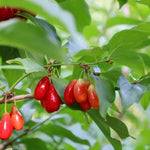
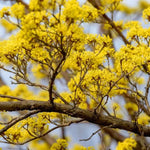
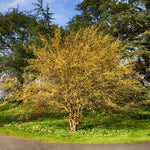

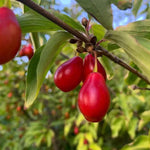





Cornelian Cherry carries clusters of tiny yellow flowers on its bare branches in late winter, earlier than almost anything else. Glossy red, sharp-tasting fruit follows, and the leaves turn purple in autumn. It is on the RHS Plants for Pollinators list.
Cornus mas, the Cornelian Cherry, or edible dogwood, is a small tree or large shrub and is ideal as either a specimen or as part of a mixed hedge. It flowers early in the year (which is great for bees), usually starting in February, sometimes January, with loads of small, yellow, witch hazel-like flowers appearing on the bare branches. It looks fantastic when the morning or afternoon sun is behind it and shines through the branches. The flowers ripen into bright red, acidic, edible cherry-like fruits, which give this tree its common name of Cornelian Cherry (Cornel is another word for dogwood). The leaves turn a lovely reddish-purple in the autumn to finish off the show: it doesn't have brightly coloured new bark, but mature plants have moderately interesting, flaky brown bark. All of which make it one of those "three tricks in one" garden plants that help create year round interest.
It can reach 5 metres if it's pruned into a tree, but about 3 metres is typical for a shrub in the wild.
Browse all of our other varieties of Dogwood, our selection of shrub hedging or our full range of hedging plants.
Delivery season: Cornelian Cherries are delivered bareroot from late autumn to early spring, November to April.
Dogwoods are tough shrubs that thrive in damp soils near water, but once established are also fine in dry, poor soil. They won't flower much in more than partial shade, so if you are planting them as a specimen, the more sun the better.
To be clear, this dogwood should not be hard pruned down to ground level every spring as you would with an ornamental dogwood like midwinter fire, although it's fine to hard prune it if it gets overgrown.
Formerly classified as Cornus mascula, four of its cultivars hold the RHS Award of Garden Merit, but the plain species does not.
Little is known of its origins in Britain, except that it has been naturalised here for several hundred years and is native to Southern Europe and Turkey.
The fruit tastes like a sharp plum when fully ripe, but even slightly under ripe ones are too sour to enjoy fresh, and they do not all ripen at the same time, so it is often made into jams (you will need to add pectin).
In the past, the fruit was commonly preserved in brine like an olive, and it's making a bit of a comeback in permaculture gardens, especially on wet ground where most fruit trees struggle.
There is caffeine in the seeds, which can be roasted and ground into a powder.
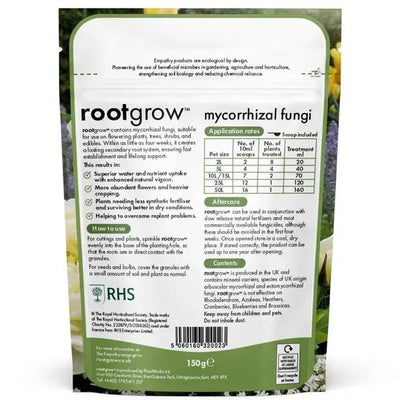
Plant it with Hazel, whose catkins open at the same time of year. For a hedge of Dogwoods grown for their winter stems, see our Dogwood hedging, but prune those differently. Dust the roots with Rootgrow as you plant.
Hedging and young trees are not a sideline here: your Cornelian Cherry plants are grown for us by specialist growers. Bareroot plants are lifted to order while dormant and guaranteed for 12 months. Ashridge has sold plants since 1949 and is a Which? Best Plant Supplier 2025.
Yes. The fruit is sharp even when ripe, so it is often made into jam, with added pectin.
In late winter, on bare branches, usually from February and sometimes in January.
No. Unlike the Dogwoods grown for coloured stems, it should not be cut to the ground each spring. Cut it back hard only if it gets overgrown.
2.5 to 4 metres tall and as much across. It is slow, and takes 10 to 20 years to get there.
Yes. It flowers so early that it is one of the first sources of nectar in the year.
No. It comes from southern Europe and Turkey, but it has grown wild in Britain for several hundred years.
Bareroot only, from November to April, while the plants are dormant. You can order at any time of year and your plants are lifted and sent once the season opens.




 Sign In
 Saved items