


Sold as:

from £10.95

Sold as:
from £19.99
 5 Star Service Rating




 Secure, One-Tap Checkout
 5 Star Feefo Rating
 Hand Picked, Delivered to Your Door!1 Year Bareroot Guarantee
 Platinum Trusted Service Award 2026
 Mail Order Plant Experts - Est. 1949
 1 Year Bulb Guarantee


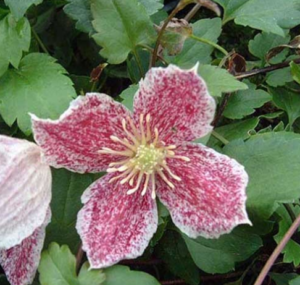
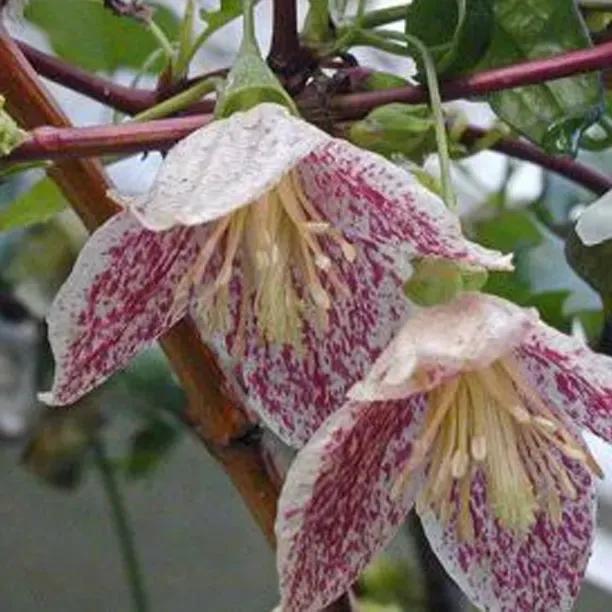
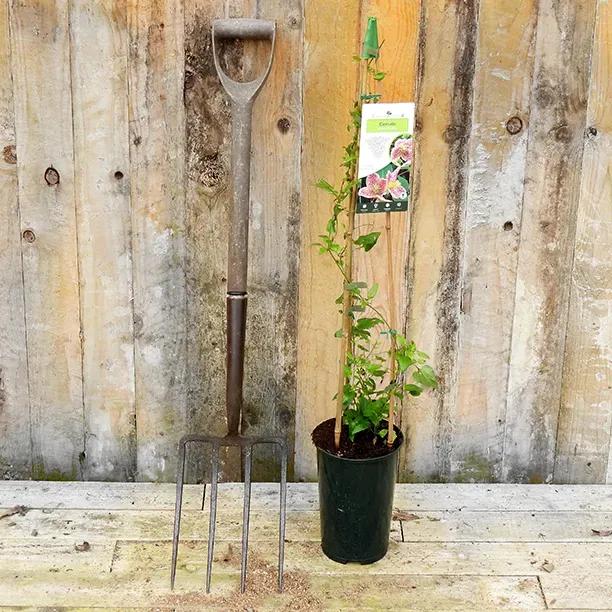




Winter-flowering clematis. There are almost no others. From November through to February, while every other climber in the garden sits dormant, Freckles produces hanging cream bells that are heavily freckled with red-purple on the inside. You have to look up into them to see the markings, which is why it works best trained over a porch, an arch, or a pergola you walk underneath.
The foliage is evergreen, finely divided and fern-like, with a bronze tint through winter that sets off the pale flowers. RHS AGMs are only awarded to outstanding and reliable plants. Say no more.
Cirrhosa clematis are Mediterranean by origin. Clematis cirrhosa used to be known as Clematis balearica which is a pretty strong clue as to where it was originally found. It is happiest with shelter so a south or west-facing wall is helpful and good drainage is essential.
Heavy clay soil will need grit worked in at planting. Cold north or east winds can damage the buds, so shelter matters more than it does for most clematis. Get the position right and Freckles is no trouble at all. BTW - it can work very well climbing up the south side of a large, deciduous tree trunk.
Mediterranean rhythm. Grow and flower through the cool months, siesta in summer. In a hot dry year the foliage goes brown. Not dying. Resting. Doing what it evolved to do in the Balearic hills. Fresh green reappears in autumn once temperatures drop and the rain comes back. If Freckles shares a wall with a summer-flowering climber, the browning is hidden behind something else. On its own, you will get the odd summer when it looks rough. That is the trade-off for winter flowers.
November to February flowers, then the summer gap. Fill it. The President does May to September in rich purple, a strong contrast to the cirrhosa's cream. The two take turns on the same wall without competing. I have one at home growing into my favourite repeat flowering rambler Narrow Water. Scented honeysuckle (Serotina or Graham Thomas) on an adjacent wall handles July to October with evening fragrance. The result is a wall that earns its keep in every month of the year.
Buying the plant is the easy part. But... which wall? How deep? When to prune? What went wrong? We do use a chatbot, called Rose, but her knowledge is simply a distillation of our knowledge gained over decades. And we also have real people on support. Just in case.
November to February. Peak around Christmas. One of very few clematis that flowers in winter at all. The blooms form on last year's wood, so do not prune in autumn or you cut off next winter's buds. On a good south-facing wall, first flowers sometimes in late October.
Pot level. No deeper. The crown rots if you bury it. Opposite of the rule for most clematis. Our growing guide has the detail.
Not dying. Resting. Cirrhosa clematis go dormant in summer heat. Hot year, the leaves brown or partly drop July and August. Fresh growth September. Leave it alone.
Mostly. Fern-like foliage stays through autumn, winter, spring, and most summers. Hot dry summer, some or all of the leaves may brown. That is not leaf-drop in the deciduous sense. The plant never deliberately sheds. The browning is drought response, not seasonal habit. Call it evergreen with an asterisk.
The plant, yes. Hardy to about minus 10°C with drainage and shelter. The flower buds are the weak point. Sharp December frost can damage whatever is open, but the plant makes more to replace them. South or west wall. In the colder parts of the UK, a fleece over the buds in the worst weather. Our climbers and walls guide covers choosing the right spot.
Spring. After the last flowers. Only if it needs it. Cut the longest shoots back to a pair of healthy leaves, March or April. Do not hack into bare old wood; it may not come back from that.


 Sign In
 Saved items