


Out of Stock
Sold as:

from £6.99

Sold as:
from £19.99
 5 Star Service Rating




 Secure, One-Tap Checkout
 5 Star Feefo Rating
 Hand Picked, Delivered to Your Door!
 1 Year Bareroot Guarantee
 Platinum Trusted Service Award 2026
 Mail Order Plant Experts - Est. 1949


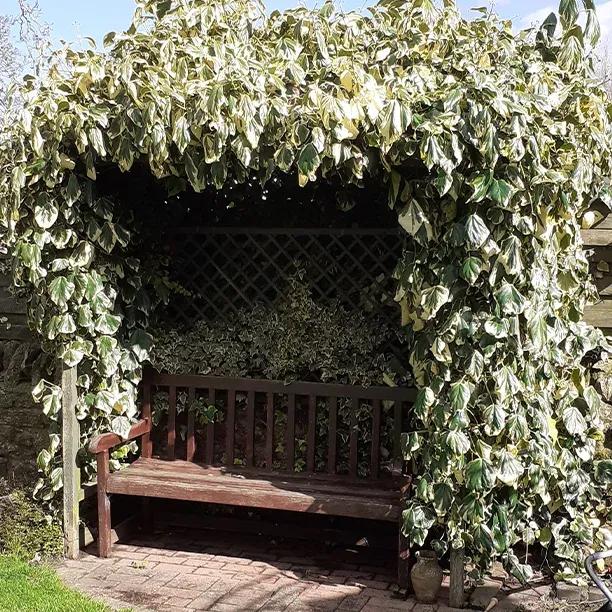
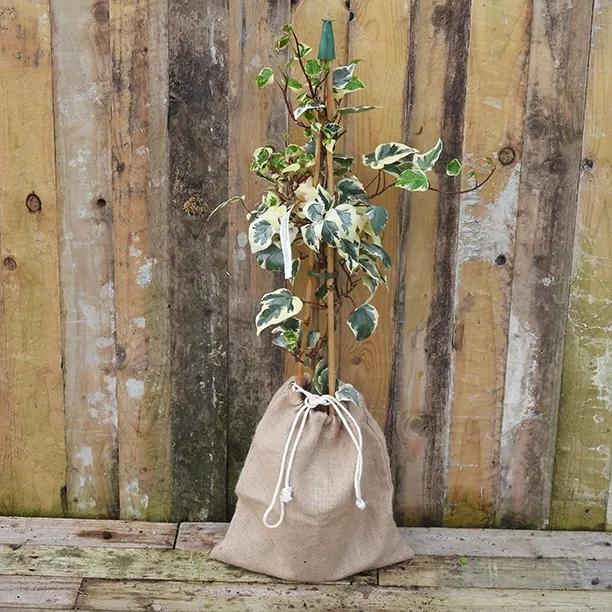
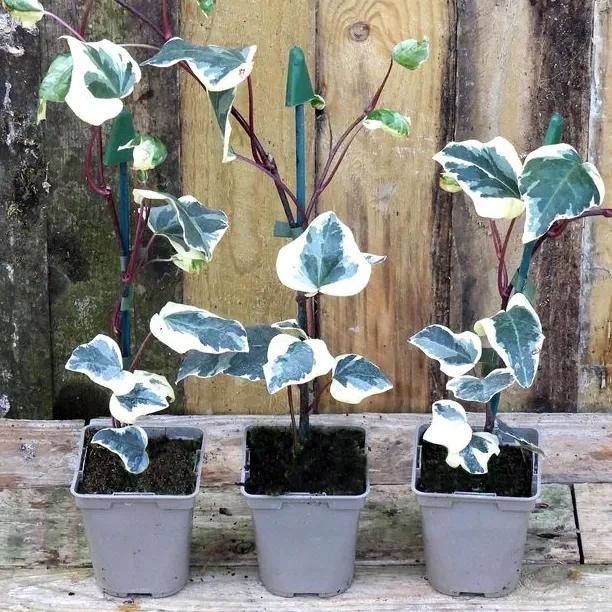




Most people underestimate ivy. Gloire de Marengo is the one that changes their mind. The leaves are large, glossy, and handsomely variegated in dark green and cream, the brightest of the variegated ivies and handsome on any wall. It is evergreen, self-clinging, and once established it covers ground quickly without asking for attention. It originates from the Atlantic coast of North Africa and the Canary Islands (it is also sold as Hedera canariensis), and it holds an RHS Award of Garden Merit.
This is a plant with a particular talent for covering things. Give it a couple of years to get going and it will disappear an ugly concrete outbuilding, screen a breeze-block wall, or fill a dark corner with foliage that actually looks good. It reaches about 4m, which is more modest than common green ivy and rather more manageable. The variegation shows well even in shade. Small black berries follow fairly insignificant flowers in autumn; the flowers are good for late-season bees and the berries feed birds through winter. It comes from the Mediterranean, so in the southern half of the country and in sheltered spots further north it is completely at home. It grows well along the west coast of Scotland and, like many ivies, is happy near the sea. In colder inland areas where hard frosts are routine, Sulphur Heart is the safer choice.
Ivies do not damage just any wall. They utterly ruin walls in a bad state of repair, getting into crumbling mortar and loose pointing and making the problem very much worse. So if your wall has not been repointed in the last fifty years and you were hoping to hide that fact, ivy will not be your friend. But if you have a wall in good repair, ivies can stay in place for decades without doing any damage at all, and Gloire de Marengo is prominent amongst those. Its aerial roots grip the surface but do not penetrate sound masonry. For the full explanation, see our guide to whether climbing plants damage walls.
The great advantage of an ivy-covered wall is that it provides a permanent green (and cream) backdrop for other plants. A deciduous clematis planted alongside looks superb flowering against the variegated foliage: Étoile Violette (dark purple, July to September) or Polish Spirit gives rich colour against the cream and green. For another evergreen alongside, Sulphur Heart ivy has golden-centred leaves that contrast well with Gloire de Marengo's cream edges. At ground level, shade-tolerant perennials like hostas and ferns complete the picture.
All our ivies are raised from cuttings taken from our own stock plants. Ivies are among the easiest climbers to propagate and the plants establish quickly. We grow in peat-free compost with biological pest controls, and every member of the Ashridge team plays a part in climber production. We are a Which? Gardening Best Buy supplier and a Feefo Platinum Partner. Every plant is guaranteed. Browse the full ivy range or our complete selection of climbing plants.
Not if the wall is in good condition. On sound masonry with intact pointing, ivy can remain in place for decades without causing harm. On a wall with crumbling mortar, loose render, or deteriorating brickwork, the aerial roots will exploit the weakness and accelerate the decay. Check your wall first. If you are uncertain, see our guide on climbing plants and wall damage.
Yes. It keeps its leaves year-round, which is one of its main advantages as a wall covering. The variegation remains attractive through winter, though the cream areas may take on a slightly pink flush in cold weather.
Plant it at the base of the wall and lean the stems against the surface. In the first few months you may need to guide it with temporary ties or short canes, but once the aerial roots make contact with the wall it will cling on its own. No permanent support structure is needed. On a painted surface, bear in mind that the aerial roots will leave marks if the plant is ever removed.
Slowly in its first year while it establishes, then with increasing speed. Expect it to cover a 2m-wide wall section within three to four years. It is less vigorous than common green ivy (Hedera helix), which is an advantage if you want something manageable rather than rampant.
Very good. Ivy is one of the most valuable wildlife plants in a British garden. It provides dense nesting cover for birds, sheltered hibernation sites for insects, late-season nectar for bees and butterflies (the flowers open in autumn when little else is available), and winter berries for thrushes, blackbirds, and redwings. Planting an ivy is one of the best things you can do for garden biodiversity.


 Sign In
 Saved items