


Sold as:

from £10.95

Sold as:
from £19.99
 5 Star Service Rating




 Secure, One-Tap Checkout
 5 Star Feefo Rating
 Hand Picked, Delivered to Your Door!
 1 Year Bareroot Guarantee
 Platinum Trusted Service Award 2026
 Mail Order Plant Experts - Est. 1949
 1 Year Bulb Guarantee
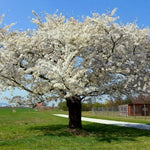
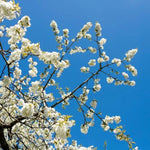
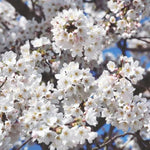


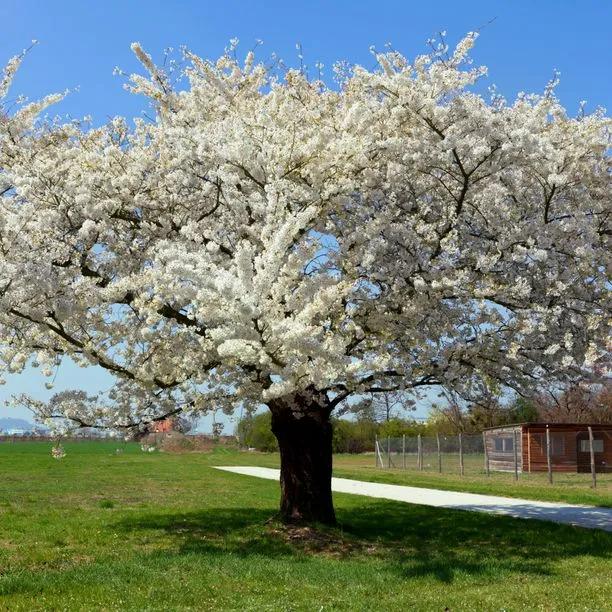
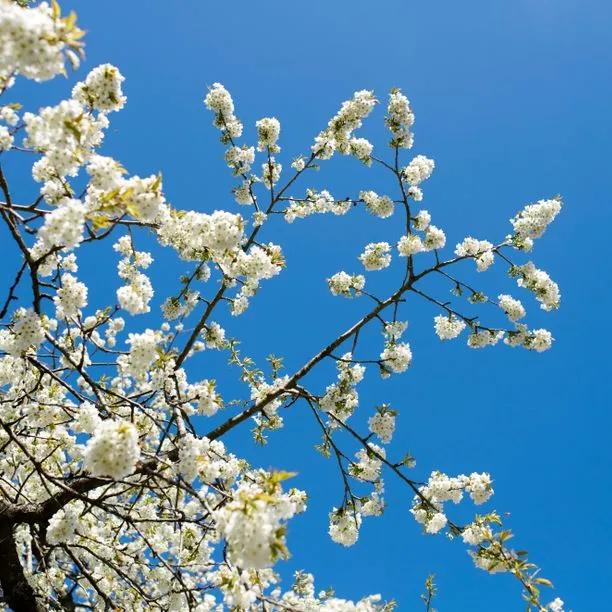
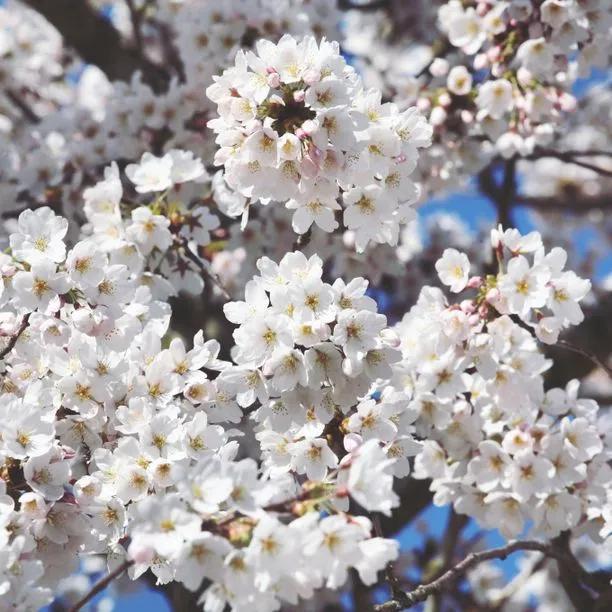




Tai-haku, the Great White Cherry, carries the largest flowers of any Cherry: single, pure white and up to 6cm across, opening in April against deep bronze-red young leaves. It makes a broad tree, 4 to 8 metres tall and wider than that, and holds the RHS Award of Garden Merit.
Tai-haku is known as the Great White Cherry tree. It's a medium sized, spreading tree with large, fragrant, pure white blossom that appears on younger trees than most other cherry blossoms. It grows vigorously and is low maintenance. This is a good sized tree with a flat canopy and spreading branches. The large, white, scented flowers are up to 6cm across and absolutely cover the tree in April, just as the new, coppery coloured leaves are peeking out. Many gardeners consider it to be the best white flowering cherry tree. The dark bark is an attractive feature in winter, especially on a snowy day.
Young trees are upright and goblet shaped, but old trees will often be wider than they're tall, to about 7 by 7 metres, with a canopy that is both uneven and elegant, like the profile of a rolling mountain.
Browse our variety of cherry blossom trees or our full range of ornamental trees.
Delivery season: Ornamental cherry trees are delivered bareroot from late autumn to early spring, November to April.
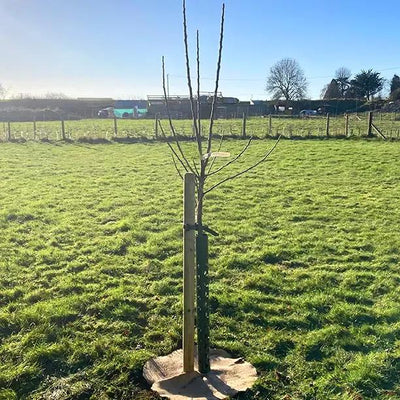
Choosing a size: Small trees are cheaper, easier to handle and more forgiving of less than ideal aftercare, so they're best for a big planting project. If instant impact is your priority, or if you are only buying a few plants for use in a place where it's convenient to water them well in their first year, then you may as well use bigger ones. All our bareroot trees are measured by their height in centimetres above the ground (the roots aren't measured).
Suitable for any well drained soil, and tolerant of urban pollution, it can handle light shade without affecting the flowers much, but as with most ornamental flowering trees it'll give you the most value in full sun.
A little formative pruning to remove ingrowing branches in its early years will help it to develop an attractive form.
We think that Tai-haku is an honorary native tree. It was extinct in Japan and thought to be lost to the world, until Captain Collingwood Ingram identified one specimen in Sussex in 1923. Every Taihaku alive in the world today comes from that single plant, and it was re-introduced to Japan in 1932. This tree has most deservedly won the RHS Award of Garden Merit.
The main photo is shown with the kind permission of the talented Jasper Tupman.
Standard trees are measured by their girth in centimetres 1 metre above ground level: their trunk's waist measurement. Unlike sapling trees and hedge plants, standards aren't measured by their height, which will vary quite a bit both between and within species.
So, a 6/8cm standard tree has a trunk with a circumference of 6-8cm and an 8/10 standard has a trunk 8-10cm around. This measurement makes no difference to the tree's final height.
On average, standard trees are 2-3.5 metres tall when they arrive, but we cannot tell you precisely how tall your trees will be before we deliver them.
Plant it with Shirotae, another white, and Ukon, whose flowers are an odd green-yellow: white, white and the curiosity. A white-stemmed tree from the Birches repeats the colour below the blossom. Dust the roots with Rootgrow as you plant.
Ashridge has sold trees since 1949 and is a Which? Best Plant Supplier 2025. Your Great White Cherry comes as a bareroot tree, lifted to order while dormant and guaranteed for 12 months. Plant it between November and April, and it will establish readily.
Tai-haku. The flowers are single and pure white, up to 6cm across, and the National Collection of Flowering Cherries at Keele calls it the largest of any Cherry.
Great white. The name was given in 1925, two years after Collingwood Ingram found the last known tree in a Sussex garden.
About 7 by 7 metres.
Only if you can spare the width. It is not tall, but the crown spreads wider than the tree is high, so give it room on all sides.
Yes. Tai-haku is a Plant for Pollinators, unlike the double-flowered Kanzan. If the bees matter to you, this is the Cherry to choose.
Bareroot only, from November to April, while the trees are dormant. You can order at any time of year and your tree is lifted and sent once the season opens.




 Sign In
 Saved items