


Sold as:

from £10.95

Sold as:
from £19.99
 5 Star Service Rating




 Secure, One-Tap Checkout
 5 Star Feefo Rating
 Hand Picked, Delivered to Your Door!1 Year Bareroot Guarantee
 Platinum Trusted Service Award 2026
 Mail Order Plant Experts - Est. 1949
 1 Year Bulb Guarantee

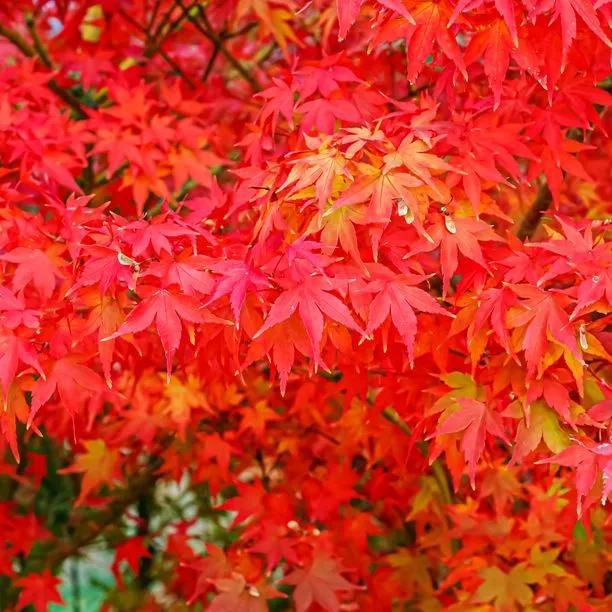
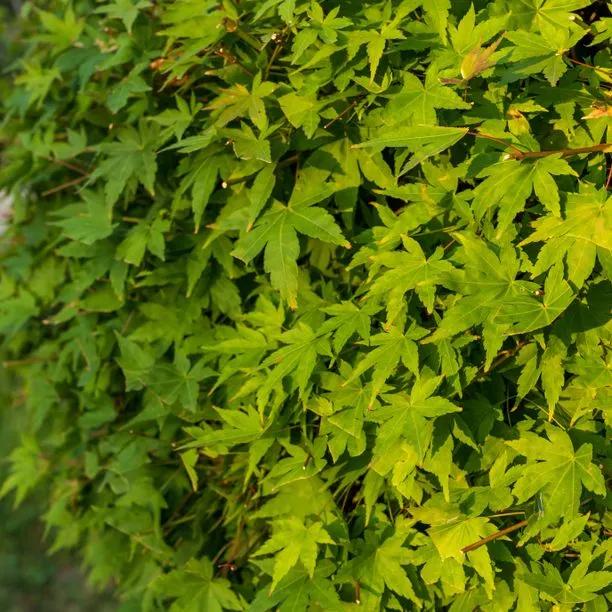
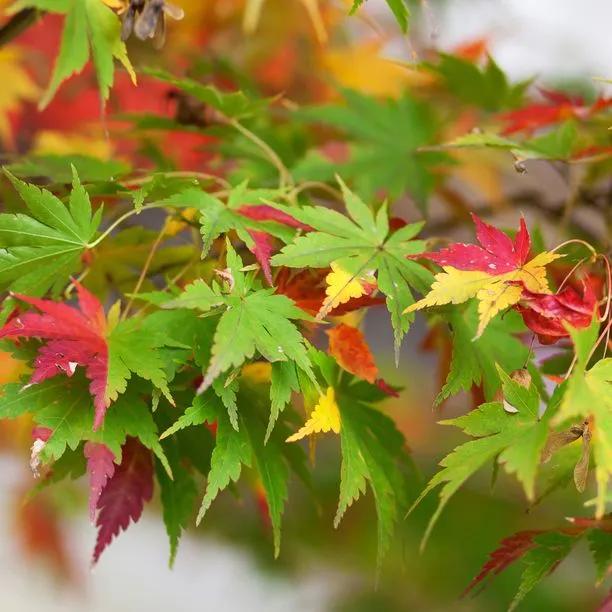



Japanese Maple is a slow, graceful small tree with deeply lobed green leaves that colour well in autumn. These are seed-raised saplings of the species, so each one differs a little, and they want a sheltered place in partial shade on moist, acid or neutral soil.
Japanese Maple is a charming small ornamental tree with sinuous branches and a graceful rounded canopy, often grown as a large multi-stemmed shrub.
This slow-growing tree reaches up to 5 metres, perfect for smaller gardens and the back of a large border.
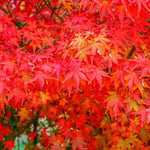
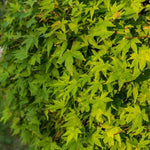
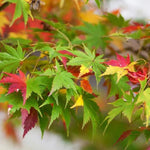
The delicate palmate leaves emerge bright green in spring, maintaining a fresh appearance through summer before transforming into spectacular autumn colours ranging from golden yellow to brilliant orange and deep red.
Japanese Maple's smooth bark becomes more textured with age, and the branching pattern is magical, naturally creating a flowing winter silhouette.
The compact size is ideal for patios, courtyards, and small gardens.
Browse our other Maple varieties, other small garden trees or all of our trees.
Japanese Maple thrives in partial shade with consistently moist soil, preferring cool, humid conditions similar to its native woodland habitat.
It performs best in sheltered positions, protected from wind and hot afternoon sun, which can scorch the delicate foliage, but it handles sun as long as it's also protected from wind.
Young trees establish slowly, and generally require no maintenance.
Use as a focal point, or as an elegant specimen in mixed ornamental plantings.
Perfect for container growing on patios and terraces, where its compact size and ornamental qualities can be appreciated up close.
The slow growth and naturally artistic form make it an excellent subject for bonsai.
Combine with other shade-loving plants like hostas, ferns, and rhododendrons for attractive woodland-style plantings.
Also called Smooth Japanese Maple to distinguish it from cultivars with rough bark like Acer 'Arakawa', this tree has been cultivated for so long, into so many forms, that it's hard to be certain what the wild tree looks like.
Our trees are grown from seed, which about as close to wild as you can get.
It's native from Russia to Japan, down through parts of China to Korea, where it grows in mountain woodlands and forest margins.
It was named by Carl Peter Thunberg (1743-1828) during his fifteen or so months in Japan in 1775-6.
The first specimen was brought to Britain in the 1820's, and by the start of the Victorian era it was the tree to have, prized for its exotic appearance and thrilling autumn display.
Today, Japanese Maples are one of the most collected ornamental trees in the world.
There are hundreds of varieties in widespread commercial cultivation, over a thousand officially registered cultivars, and perhaps 3000 varieties in total.
Palmatum means "like a hand", which refers to the five fingered shape of the leaves.
Its Japanese names kaede and momiji make the same comparison, and maple viewing, momiji-gari, is a cherished autumn tradition there, similar to cherry blossom viewing in spring.
The wild species does not hold an RHS Award of Garden Merit, though a good number of its named varieties do. Ours are grown from seed, so they are the species rather than any named variety.
Former botanical names include Acer polymorphum and Acer jucundum.
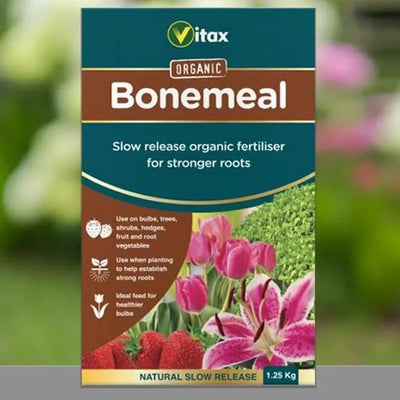
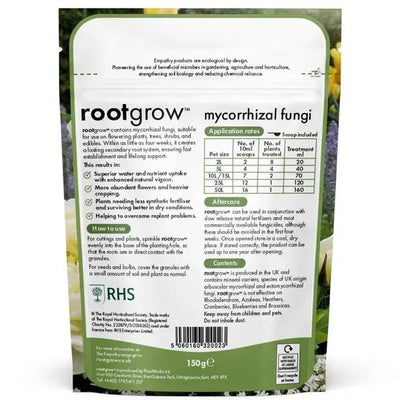
Japanese Maple looks most at home in woodland-style planting with hostas, ferns and rhododendrons, and it is excellent in a large pot. For a bigger tree in the same family, Field Maple is the native one. See our plants for small gardens and pots, and dust the roots with Rootgrow as you plant.
Hedging and young trees are not a sideline here: your Japanese Maple saplings are grown for us by specialist growers. Bareroot plants are lifted to order while dormant and guaranteed for 12 months. Ashridge has sold plants since 1949 and is a Which? Best Plant Supplier 2025.
No. It is a specimen tree, and it is not for hedging or screens. We sell it as a young sapling for growing on.
Slowly, to about 5 metres in most gardens, within a band of 4 to 8 metres tall and wide, reached in 10 to 20 years.
They are grown from seed, so they are the green-leaved species and they vary a little from plant to plant. The autumn colour is where they shine.
In a sheltered spot. Leaf colour is best in partial shade, and full sun is tolerated if the soil stays moist. Dry soil or too much exposure scorches the leaves.
Moist but well-drained, and acid or neutral. Water it in a dry summer.
No. The species holds no award, although many of its named varieties do, and ours are seed-raised, so they are none of those varieties.
Bareroot only, from November to April, while the plants are dormant. You can order at any time of year and your plants are lifted and sent once the season opens.




 Sign In
 Saved items