


Sold as:

from £6.99

Sold as:
from £19.99
 5 Star Service Rating




 Secure, One-Tap Checkout
 5 Star Feefo Rating
 Hand Picked, Delivered to Your Door!
 1 Year Bareroot Guarantee
 Platinum Trusted Service Award 2026
 Mail Order Plant Experts - Est. 1949
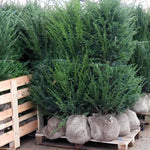
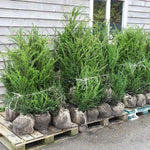
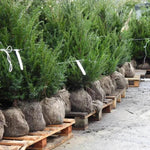
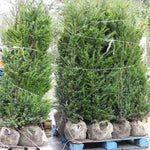

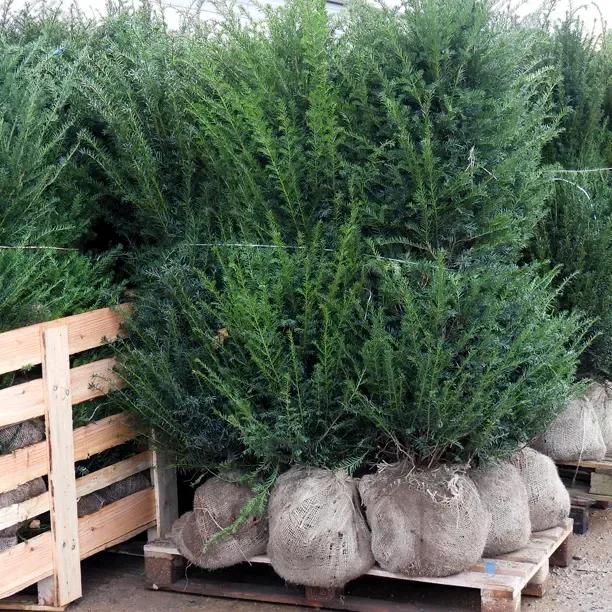
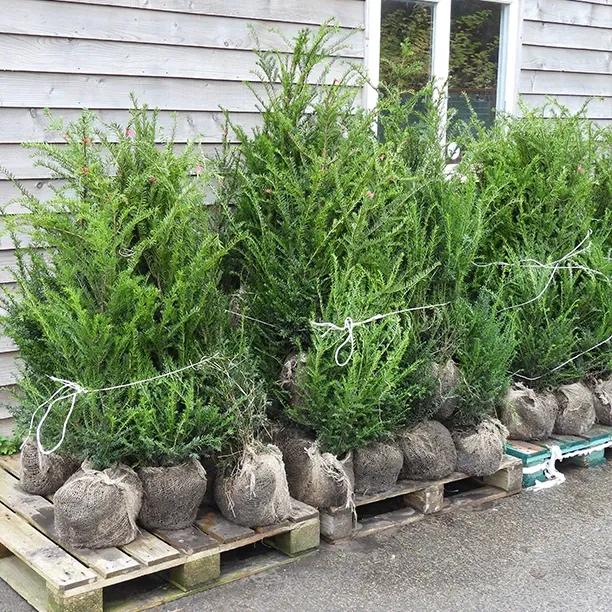
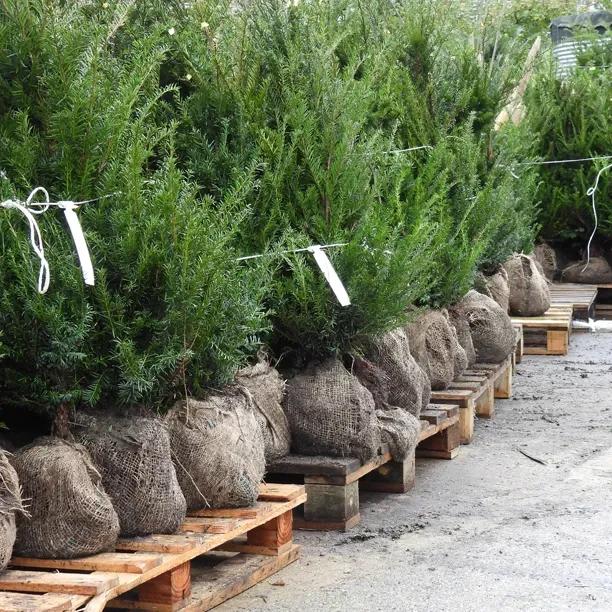
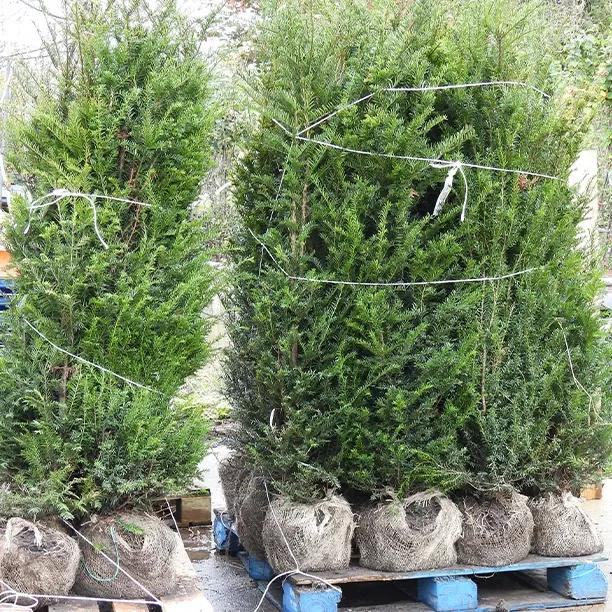





Rootballed yew hedging (Taxus baccata) is the fast route to a mature, dense evergreen boundary — established plants lifted with their full root system intact, rather than young bareroot whips that take years to thicken. It's the same deep green, tight-clipping species as our standard yew hedging, just supplied at a size and with a root system built for immediate impact.
Bareroot planting is the cheaper, lower-input route to any hedge, but evergreens like yew transplant poorly as bareroot plants once they reach any real size — the root loss involved in lifting a large bareroot evergreen is too much for it to recover from reliably. Rootballing solves that: the plant is lifted with its root system and surrounding soil intact, so it establishes with far less shock even at 80/100cm or 120/150cm. That's the trade-off in a sentence — pay more, wait less.
Because the guarantee that covers our bareroot hedging depends on plants establishing from a bare root system, it doesn't extend to rootballed stock. That isn't a mark against the product — it's simply a different way of buying a hedge, with the cost of instant size built into the price rather than into a longer wait.
Young bareroot yew is genuinely vigorous — plants can put on a metre of growth in under three years, faster than yew's reputation for slowness would suggest. Rootballed yew exists for the customer who can't or won't wait even that long: a new-build garden that needs privacy immediately, a boundary that's been bare all summer, or simply someone who wants the finished look now rather than in five years. If time isn't the constraint, our standard bareroot yew hedging reaches the same destination for considerably less outlay.
Rootballed yew is almost always planted alone as a dense, formal, all-year backdrop — a border of climbing roses or bright perennial planting reads far more strongly in front of solid yew than a fence. Within the range, it sits alongside our standard bareroot yew for mixed-size planting on a single job, and pairs editorially with hornbeam or green beech where a deciduous alternative is wanted for part of a boundary. Browse the full evergreen hedging range for other instant options.
We're one of the UK's largest sellers of bareroot and rootballed hedging, grown under contract by specialist UK growers to our own specification. Stock is lifted to order and held in a purpose-built cold store. Established 1949, and a Which? Gardening Best Plant Supplier.
Rootballed yew gives an instant, mature hedge rather than young whips that take several years to thicken — the right choice where privacy is needed straight away. It costs more than bareroot for the same reason.
No — the guarantee applies to bareroot hedging and winter-delivered deciduous potted plants. Rootballed evergreens, including this yew, sit outside it.
Yes — every part except the soft red flesh around the seed is highly toxic, including dried clippings from a trim. Never plant near grazing livestock, and keep dogs and children away from cuttings.
Roughly October to early May — a longer window than bareroot planting, since a rootballed plant carries its own soil and root system rather than depending on full winter dormancy.
Yes — uniquely among common conifers, yew regrows reliably from old wood, so even a large rootballed hedge can be hard-renovated in early spring if it eventually needs reducing.
3 plants per metre for a standard dense screen; larger rootballs can be spaced up to 50cm apart and will still knit together into a solid hedge.


 Sign In
 Saved items