








 Sign In
 Saved items
 Secure, One-Tap Checkout
 5 Star Feefo Rating
 Hand Picked, Delivered to Your Door!
 1 Year Bareroot Guarantee
 Platinum Trusted Service Award 2026
 Mail Order Plant Experts - Est. 1949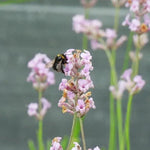


Select form
Select a product

Single Plants
Select Size
About Pink English Lavender Plants
- Variety: Rosea
- Species: Lavandula angustifolia (English lavender)
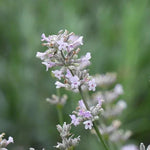
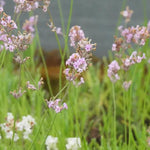
- Colour: Pale pink — soft rose-pink spikes above bright green calyces
- Foliage: Evergreen, aromatic, grey-green — slightly greener than most English lavenders
- Height: 50–70cm (20–28in)
- Spread: 45–60cm
- Flowering: June to August
- Scent: Strong, sweet English lavender. Good for cooking, drying, and bags
- Hardiness: Fully hardy throughout the UK
- RHS AGM: No
- Introduced: Before 1937. Also sold as 'Jean Davis' in some nurseries
- Sold as: Pot-grown plants (P9 and 2L available depending on season)
- Plant outdoors: From late April onwards when soil is warming
- Delivered: From April/May, weather dependent
Rosea Lavender — Pink Without Trying Too Hard
Most people expect lavender to be purple, and most of the time it is. Rosea is an exception that proves it does not have to be. The flowers are a soft, pale pink — closer to old rose than to anything else — and they sit above green calyces that give the whole spike a fresher, lighter look than purple varieties. It is still unmistakably lavender: the shape, the scent, the silver-grey foliage, the bees. But the colour shifts the mood of a border from Mediterranean to cottage garden in a way that no amount of purple can.
As a plant, Rosea behaves like any other English lavender. It is fully hardy, wants sun, needs drainage, flowers in summer, and clips very well. The foliage is a shade greener than Hidcote's silvery grey, which is subtle but noticeable when you plant them side by side — and planting them side by side is exactly what a lot of people do. A hedge alternating Rosea and Hidcote, pale pink then deep purple, is one of the easiest and best-looking low hedges you can make. The flowers are smaller than Hidcote's and Mrs Ashridge - who makes the lavender bags and has a nose like a bloodhound - does not think the pink smells as strong.
An Heirloom English Lavender
Rosea has been in cultivation since at least the 1930s — the earliest references date it to before 1937. You will sometimes see it listed as 'Jean Davis' in North American nurseries, which appears to be the same cultivar under a different name. It has no dramatic origin story, no famous garden attached to it, and no breeder's name to drop. It is simply a pink sport of English lavender that has been quietly growing in gardens for the best part of a century. That kind of persistence says more about a plant than any marketing campaign.
Planting Companions
The obvious combination is with Hidcote — alternating pink and purple for a two-tone hedge. This works at three plants per metre for each variety, planted alternately (so six plants per metre in total, two rows or a single alternating line). Beyond that, Rosea's softer colour sits well with other pastel plants: white roses, hardy geraniums, and pale catmint. For a pink-themed border, pair it with old shrub roses and rosemary — the blue rosemary flowers in spring, the pink lavender in summer. For an all-lavender combination with white, try it alongside Arctic Snow.
Why Buy Ashridge?
Your Rosea lavender is grown here and sent out when conditions are right. We deliver next-day, every plant has our guarantee, and if you need planting advice there are real people in the office here in Somerset to ask. See the full English lavender range or all our lavender plants. We hold a Feefo Platinum Service Award, which we mention because our customers gave it to us.
Frequently Asked Questions
What is the difference between Rosea and Hidcote lavender?
Colour, mainly. Rosea is pale pink, Hidcote is deep purple-blue — they are the two ends of the English lavender colour range. Rosea is slightly taller (50–70cm vs 45–60cm) and its foliage is a shade greener. In terms of hardiness, flowering time, and general behaviour, they are very similar although Rosea's flowers are smaller. Plenty of people plant them together for a two-tone hedge, which is probably the best use for pink lavender.
Is Rosea lavender good for cooking?
In terms of taste, it is as good as any other English lavender, and the paler flowers look great if they are used as a garnish on biscuits, cakes and ice cream. For cooking, we would also recommend Munstead, which has the same culinary qualities in a more compact plant.
Does Rosea lavender come in a mixed pack?
We sell a mixed English lavender hedge pack that includes varieties like Hidcote, Loddon Pink and Arctic Snow. Rosea is not currently in that pack, but you can of course buy it separately and create your own combination.
Can I grow Rosea lavender in a pot?
Certainly. At 50–70cm, Rosea is well within the size range that does well in containers. A pot 30cm across with gritty, free-draining compost is all it needs. The pink flowers work beautifully on a sunny doorstep or terrace. More detail in our lavender growing guide.
When does Rosea lavender flower?
June to August, roughly the same window as Munstead and a little earlier than Hidcote. In a warm year, the first flowers can open in late May. If you cut the spent spikes promptly, you may get a smaller second flush later in summer.