

Sold as:

from £6.99

Sold as:
from £19.99
 5 Star Service Rating




 Secure, One-Tap Checkout
 5 Star Feefo Rating
 Hand Picked, Delivered to Your Door!
 1 Year Bareroot Guarantee
 Platinum Trusted Service Award 2026
 Mail Order Plant Experts - Est. 1949
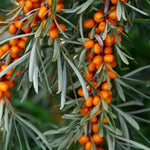
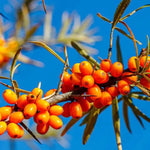
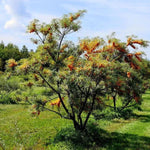
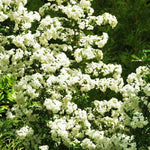






Sea Buckthorn is a thorny, silver-leaved native shrub for sunny, windy sites by the sea, where it makes a tall, secure hedge on poor, sandy soil. Female plants carry thick clusters of bright orange berries, and both male and female plants are needed for a crop.
Sea buckthorn is a large, thorny shrub that makes a great hedging plant for sunny sites on the coast. It tolerates chalk, poor, sandy soil and very exposed locations.
Sea buckthorn is good for tall hedges and can reach up to about 6 metres high when it grows freely.
Browse all of our other varieties of Buckthorn hedge plants.
Sea buckthorn hedge plants are delivered bareroot during winter (Nov-April).
All our hedge plants are measured by their height in centimetres above the ground (the roots aren't measured).
Plant Sea buckthorn hedging at 3 plants per metre, 33cm apart.
You can also plant Sea buckthorn at 6 plants per metre in a staggered double row, with 33cm between each plant along the row and 40cm between the rows.
This tall, native shrub is very prickly, with big, tough thorns. The branches are stiff and upright, forming an attractive shrub or a dense, secure hedgerow. It has narrow, silver-green leaves that are adapted to cope with strong winds and salt spray. Its flowers are too small to have ornamental value, but they attract plenty of bees and ripen into thick clusters of orange berries that contrast beautifully with the light grey leaves.
View our selection of coastal hedging plants or see our full range of hedging.
Did You Know?
The berries are edible and high in vitamin C, although they taste quite sharp: a good alternative to lemon. We suggest blending them with other fruits into a smoothie.
They're a bit tricky to harvest: cutting off branches, freezing them, then beating them inside a sack before they defrost (which knocks off the berries but hardly any leaves) is a good method.
Only female Sea Buckthorn plants produce berries, and the plants we deliver will be a random mix of roughly 50-50 male and female. Female plants will start bearing fruit when they're about five or six years old, so the plants we deliver are too young for us to know which sex they are.
Sea Buckthorn is excellent for stabilising the loose soil on sand dunes and rocky slopes.
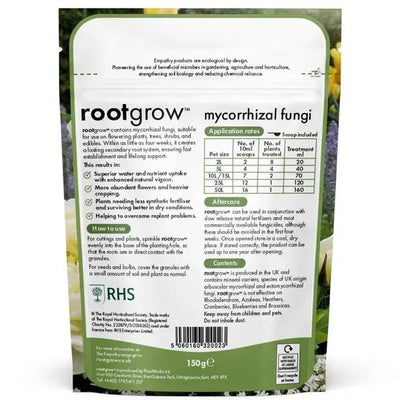
For a seaside hedge or shelter belt, Sea Buckthorn's natural partners are Oleaster, which has the same silver leaf, Tamarisk and the Red Ramanas Rose. On the poorest, driest ground, Gorse adds an evergreen and a second set of thorns. Dust the roots with Rootgrow as you plant.
Hedging is not a sideline here: your Sea Buckthorn is grown for us as hedging by specialist growers. Bareroot plants are lifted to order while dormant and guaranteed for 12 months. Ashridge has sold plants since 1949 and is a Which? Best Plant Supplier 2025.
No. Only female plants fruit, and both male and female plants must be grown for a good crop. Ours are too young to sex, so you receive a mix. A hedge of several plants will hold both.
Yes. They are edible, high in vitamin C and sharp, a good stand-in for lemon. Freezing cut branches and knocking the berries off is the easy way to pick them.
Yes. It copes with salt spray and strong wind, and it is used to hold sand dunes together. It suits exposed sites in full sun, on well-drained sand or loam.
Left unpruned, it grows 4 to 8 metres tall and wide, usually about 6 metres, in 20 to 50 years.
Three plants per metre, 33cm apart, in a single row. For a thicker hedge, plant a staggered double row with 40cm between the rows.
No. It belongs to a different family from Alder Buckthorn and Purging Buckthorn, and it is not a food plant of the Brimstone butterfly.
Bareroot only, from November to April, while the plants are dormant. You can order at any time of year and your plants are lifted and sent once the season opens.




 Sign In
 Saved items