


Only 1 Left
Sold as:

from £6.99

Only 3 Left
Sold as:
from £19.99
 5 Star Service Rating




 Secure, One-Tap Checkout
 5 Star Feefo Rating
 Hand Picked, Delivered to Your Door!
 1 Year Bareroot Guarantee
 Platinum Trusted Service Award 2026
 Mail Order Plant Experts - Est. 1949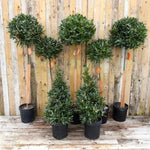
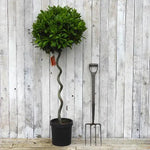
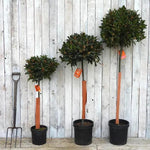
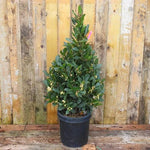
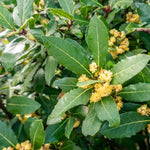


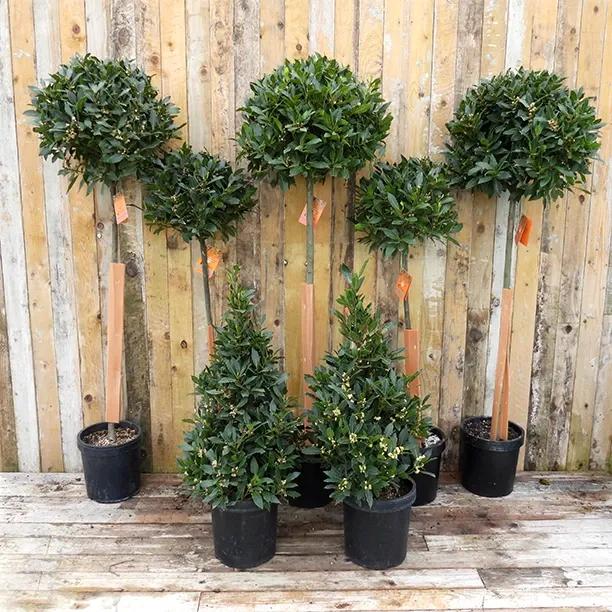
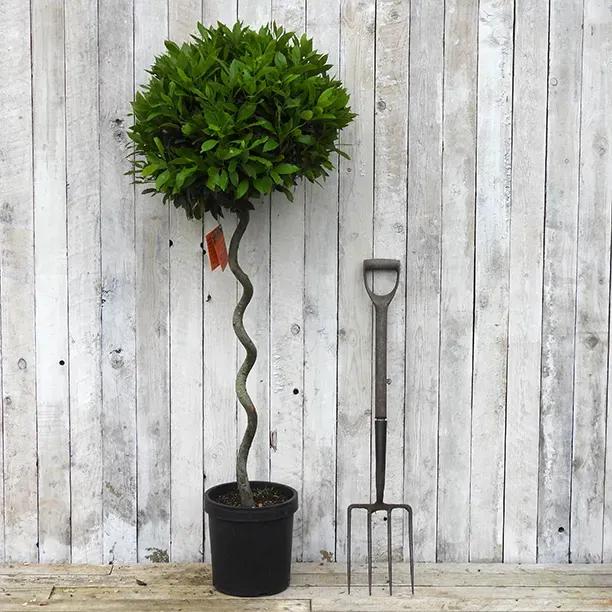
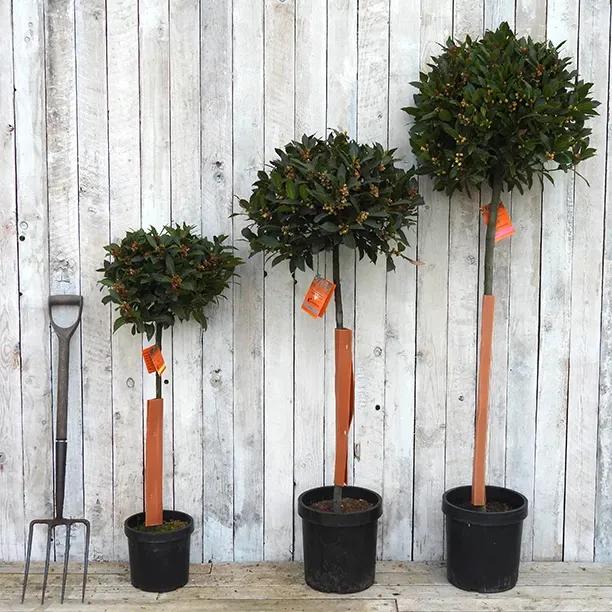
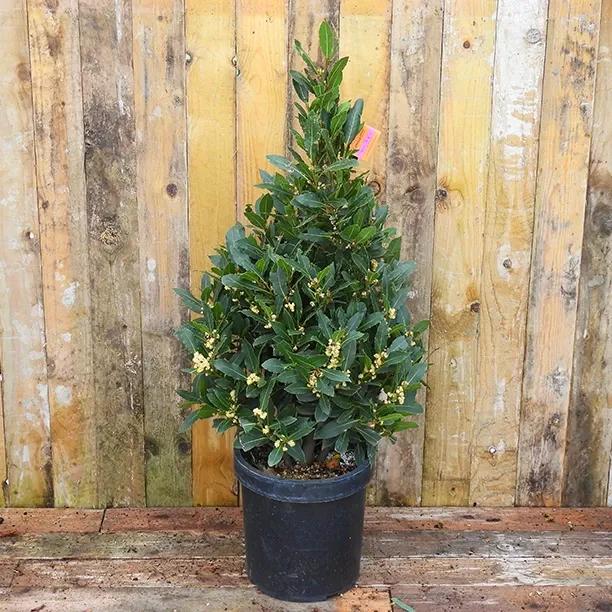
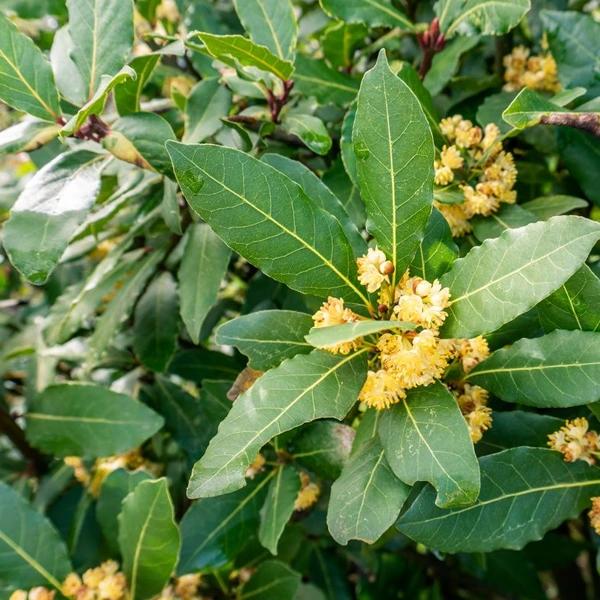




Dark, glossy, aromatic evergreen leaves on a clipped stem, in shapes from a 100cm pyramid to a 160cm lollipop. The one plant that is equally at home flanking a doorway and sitting in a casserole.
Laurus nobilis is an evergreen tree with dark, leathery, strongly aromatic leaves, trained here into lollipops, pyramids and spirals between 100cm and 160cm tall. It holds the RHS Award of Garden Merit and appears on the RHS Plants for Pollinators list. Clipped, it stays exactly where you put it. Left alone for thirty years, it becomes a 7.5m tree, which is the fate of very few Bays in this country.
Most people who buy Bay trees get two. They go either side of a door, a gate, or a flight of steps, and the whole point is that they match. That sounds obvious until you try to buy a matched pair from two different places, or two years apart, and discover that stem girth and head diameter drift. Ours are grown on together in the same batch under the same conditions in Somerset, which is the only reliable way to get two plants that look like siblings rather than distant cousins.
Growing them on to that standard takes time. It is why a trained Bay costs what it does, and why we would rather sell you one good one than two cheap ones.
The ancient Greeks believed Bay laurel was sacred to Apollo. Ovid tells you, in the first book of the Metamorphoses, the nymph Daphne, fleeing the god, is turned into a laurel. Daphne, of course, is simply the Greek word for Bay laurel. Apollo took it as his emblem, and its evergreen leaves have been the crown for poets and victors pretty much ever since. That is where "poet laureate" comes from, and it is the reason a plant with such a modest flower has spent two thousand years standing beside important doorways. They are also a culinary must-have. Use dried if you must, but nothing tastes quite like a stew made with a Bay leaf, or two picked 15 seconds before it went into the pot.
Bay sits with the other Mediterranean evergreens, all of which do best in the same conditions: sun and sharp drainage. Rosemary is the natural partner and doubles the kitchen value of the same corner (or doorway). An olive tree gives you silver against the Bay's dark green, though it is fussier about winter wet than Bay. For the planting at their feet, apart from Rosemary, English lavenders such as Hidcote or Munstead from our lavender collection will enjoy the same dry, sunny spot and flower for months. There are more ideas in our evergreen collection.
We buy young plants from a specialist nursery and grow them on in Somerset so they are acclimatised and, crucially, uniform, which matters when you buy two. Our quality and service are great; Which? named us a Best Plant Supplier.
Yes, Bay is hardy across most of Britain and rated H4 (to -10°C). Cold, dry winter wind browns the leaves more often than frost does, so shelter it from the east.
Yes, and most trained Bays live in pots permanently. Use a 40cm pot or larger, soil-based compost with added grit, and feed from spring to midsummer. Repot every second year and stand the pot on feet over winter.
Use secateurs, not shears, and clip in summer. Shears cut straight through the big leaves and leave a rim of brown edges across the head. Secateurs take each shoot back to a bud, so every leaf stays whole. Full method in our Bay tree care guide.
Nothing: a lollipop is the everyday name for a standard, a single clear stem with a clipped ball of leaves on top. We say lollipop because that is exactly what it looks like.
That is Bay sucker, an insect that thickens and curls the leaf margins from May to October. It looks alarming and does no lasting harm, so the RHS advises no treatment. Pick off the worst leaves. Other causes are in our guide to Bay tree problems.
We cannot promise berries. Bay is dioecious; male and female flowers sit on separate plants, and only females carry the small black fruit. Trained plants are grown for shape, not sex, so treat berries as a bonus. They are ornamental, not edible.
Yes, from the day it arrives. Bay is evergreen, so you can pick year-round. Fresh leaves are stronger than dried, so use about half what a recipe assumes, and take the whole leaf out before serving. Only ever pick from true Bay: cherry laurel (Prunus laurocerasus) is an obviously different but poisonous plant.


 Sign In
 Saved items