
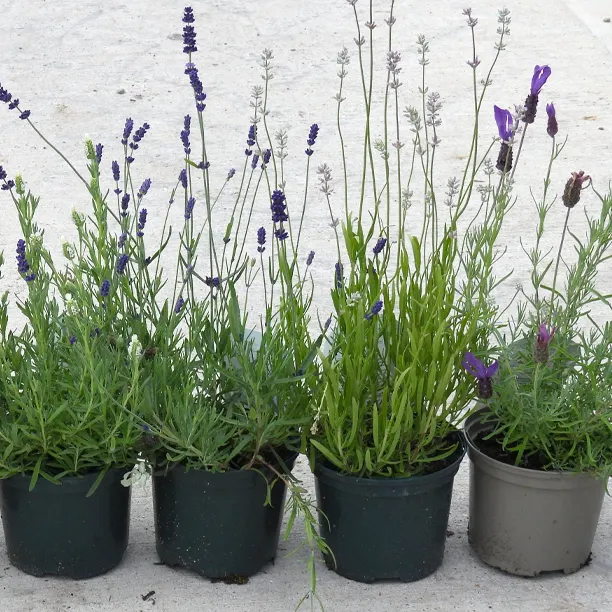
Which lavender is best, and how do you choose the right one?
The best lavender for your garden depends entirely on what you want it to do. A variety that makes a superb clipped hedge may be a poor choice for the kitchen, while the most fragrant oil-producing lavender often grows too large for a windowsill pot. This guide cuts through the confusion by matching the right varieties to the right jobs — so you spend less time guessing and more time enjoying the results.
Related guides
- Harvesting Lavender Flowers
- How to Cut Back Lavender Plants in Late Summer
- How to grow lavender — planting, feeding, soil and year-round care
- How to Water Lavender — When, How Often, and How Much
- Is Lavender Native to the UK?
Which lavender is best for hedging?
For a reliable, long-lived lavender hedge, English lavenders (Lavandula angustifolia) are the first choice — they clip well, cope with hard winters, and hold their shape for many years. The key is picking a variety with a naturally compact, upright habit that responds well to regular trimming without dying back to bare wood.
Hidcote is the classic hedging lavender in British gardens for good reason: it stays compact (around 40–50 cm), produces deep violet spikes over a long season, and tolerates hard annual pruning. Munstead is slightly shorter and earlier to flower — ideal if you want colour from late May into June. For something a little different, Melissa offers soft lilac flowers on a tidy mound, while the mixed English lavender hedge pack blends Hidcote, Munstead, and others for a naturalistic ribbon of colour.
Dutch hybrid lavenders (Lavandula × intermedia), sometimes called lavandins, grow larger — often 60–90 cm — and can also be used for informal or low-boundary hedges, particularly on sunny banks where their drought tolerance is an asset. Phenomenal is especially storm- and rain-tolerant for a lavandin, making it a good choice for exposed sites.
| Variety | Height | Flower colour | Hedge suitability |
|---|---|---|---|
| Hidcote | 40–50 cm | Deep violet | ★★★★★ |
| Munstead | 35–45 cm | Blue-purple | ★★★★★ |
| Melissa | 40–50 cm | Soft lilac | ★★★★☆ |
| Phenomenal | 60–90 cm | Blue-violet | ★★★★☆ (informal) |
Browse the full best lavender for hedging collection, or read our dedicated guide on planting a lavender hedge — spacing, varieties and getting a solid line in the first year.
Which lavender is best for pots and containers?
Compact English lavenders are the safest choice for pots because they stay small, are winter-hardy, and can be pruned to shape without difficulty. Avoid large lavandins in small containers — they will become pot-bound and woody very quickly.
Little Lady is one of the most popular dwarf lavenders for pots, reaching only 25–30 cm with neat, deep-violet spikes disproportionately large for the plant. BeeZee Dark Blue is another excellent compact variety, growing to around 30 cm with rich blue flowers that attract pollinators even on a small balcony. Havana offers a slightly taller option (35–40 cm) with a tidy habit that suits larger terracotta pots or half-barrels.
French butterfly lavender (Lavandula stoechas) can also be grown in pots and looks spectacular — but remember it is less cold-hardy than English lavender, so you may need to bring pots under cover or into a cool greenhouse over winter in colder parts of the UK.
Use a free-draining, gritty compost in terracotta or stone pots with generous drainage holes. Plastic pots retain moisture for too long and increase the risk of root rot. For full pot-growing advice, see our guide on growing lavender in pots and containers.
| Variety | Height | Winter hardiness | Pot suitability |
|---|---|---|---|
| Little Lady | 25–30 cm | Fully hardy | ★★★★★ |
| BeeZee Dark Blue | 30 cm | Fully hardy | ★★★★★ |
| Havana | 35–40 cm | Fully hardy | ★★★★☆ |
| Lusi Purple | 40–50 cm | Half-hardy | ★★★☆☆ |
Which lavender is best for cooking?
Only English lavender (Lavandula angustifolia) varieties should be used in cooking — they have a clean, floral scent with low camphor content, which means their flavour is pleasant rather than medicinal. Dutch hybrid lavandins and French stoechas varieties contain significantly higher levels of camphor and can taste harsh, soapy, or even unpleasant in food.
Munstead is the go-to culinary lavender: it has a mild, balanced flavour with just enough sweetness for use in shortbread, sugar, herb blends, and drinks. Hidcote is slightly more intense but still well within the pleasant range and equally useful in the kitchen. Miss Katherine, with its soft pink flowers and gentle scent, is another lovely culinary choice — its restrained flavour makes it forgiving for those new to cooking with lavender.
A useful rule: if a lavender smells powerfully camphorous (think mentholated), it will taste medicinal in food. Always taste a petal or two before cooking with any variety you haven’t used before. For the kitchen, less is almost always more — a few flower heads go a surprisingly long way.
Browse our best lavender for cooking collection, and see the related guide on harvesting lavender flowers for the best time to pick for food use.
Which lavender is best for scent and oil?
For maximum essential oil yield and the richest, longest-lasting fragrance — whether for cutting, pot-pourri, sachets, or distilling — the Dutch hybrid lavandins are the undisputed champions. They produce two to five times the oil volume of English lavender, with bold, penetrating scent that carries well across a garden.
Grosso is the most widely grown lavender in Provence and the world’s primary commercial source of lavender oil. Its large, fat spikes are heavily loaded with essential oil and dry beautifully for sachets and bundles. The scent has a slightly camphorous edge that many people associate with classic lavender products. Phenomenal is a newer, disease-resistant lavandin with similarly large spikes and a scent profile many gardeners find slightly more refined than Grosso.
If you prefer a softer, more delicate fragrance without camphor notes — closer to what perfumers value as fine lavender — then Miss Katherine or Hidcote are the English lavender picks. The oil yield is lower, but the quality is exceptional.
| Variety | Type | Oil yield | Scent character | Best use |
|---|---|---|---|---|
| Grosso | Dutch hybrid | Very high | Bold, camphor notes | Sachets, bundles, distilling |
| Phenomenal | Dutch hybrid | Very high | Bold, slightly refined | Sachets, bundles, distilling |
| Hidcote | English | Moderate | Sweet, classic | Fine fragrance, garden scent |
| Miss Katherine | English | Moderate | Soft, floral, sweet | Fine fragrance, cutting |
See the best lavender for oil harvest collection for varieties specifically suited to cutting and distilling.
Which lavender is best for bees and pollinators?
Almost every lavender is attractive to bees, but some varieties consistently draw larger numbers for longer periods. The most pollinator-friendly lavenders combine accessible flowers (not obscured by bracts), a long flowering season, and abundant nectar.
BeeZee Dark Blue was specifically selected for exceptional bee attraction — it was trialled and verified through RHS pollinator studies. Its relatively small, compact form makes it perfect for gardens of any size, including pots on a balcony. Munstead and Hidcote are both consistently rated as excellent pollinator plants, flowering reliably from late May with a second flush possible after summer pruning.
The Grosso lavandin flowers later than English lavenders (typically July–August) and its large spikes attract bumblebees and honeybees in enormous numbers. Because it flowers when many earlier-blooming plants are fading, it provides a vital late-summer nectar source.
French butterfly lavender (Papillon) has a different flower structure — the prominent flag petals attract butterflies as well as bees, and it flowers very early in the season (sometimes from April). The trade-off is lesser winter hardiness.
For the most bee-friendly planting overall, consider combining an early-flowering French lavender, mid-season English lavenders, and a late-season lavandin — this gives continuous nectar from April through to September.
Which lavender has the best colour variety?
Most people picture purple when they think of lavender, but the colour range extends from deep indigo through pink and lilac to pure white — with some unusual bicolour varieties in between. Mixing colours creates a naturalistic, meadow-inspired planting that looks spectacular in full bloom.
Deep violet/blue: Hidcote and BeeZee Dark Blue are the most intense blues in the English lavender range — bold, rich, and classic.
Soft lilac/lavender: Melissa is the definitive soft lilac — a cooler, more delicate tone that complements silver and grey foliage planting beautifully.
Pink: Miss Katherine produces warm rose-pink flowers that are genuinely unusual in the lavender world. Loddon Pink is the other well-known pink English lavender — paler and more pastel than Miss Katherine.
White: Arctic Snow is a clean-white English lavender that provides striking contrast when planted alongside purple varieties. Edelweiss is the white-flowered lavandin — taller and later-flowering than Arctic Snow, with the bold spike habit of the Dutch hybrids.
Exotic/unusual: Papillon French butterfly lavender has distinctive flag petals in dark purple and pale purple, giving it a tropical appearance quite unlike traditional lavender spikes. Lusi Purple is another stoechas type with deep, rich colouring and prominent flags.
| Colour | Best variety | Type | Notes |
|---|---|---|---|
| Deep violet-blue | Hidcote | English | Classic, reliable |
| Soft lilac | Melissa | English | Cool, elegant tone |
| Rose-pink | Miss Katherine | English | Warm, distinctive |
| Pale pink | Loddon Pink | English | Pastel, traditional |
| White | Arctic Snow | English | Clean, bold contrast |
| White (tall) | Edelweiss | Dutch hybrid | Large spikes, late-season |
| Bicolour flags | Papillon | French stoechas | Exotic, early-flowering |
English, Dutch, or French — which type is right for me?
The three main groups of lavender behave quite differently in the garden, and choosing the right type is as important as choosing the right variety. Here is a straightforward summary to help you decide.
English lavender (Lavandula angustifolia) is the most versatile all-rounder for UK gardens. It is fully hardy, clips well, works in hedges and pots, is suitable for cooking, and comes in the widest colour range. Most people growing lavender in the UK should start here. See the full English lavender range.
Dutch hybrid lavender / lavandin (Lavandula × intermedia) is larger, later, and produces more essential oil. It makes an impressive garden statement and is the best choice for oil production, late-season bee forage, and dramatic cutting. It is hardy in most of the UK but not ideal for small pots. See the Dutch hybrid lavender range.
French butterfly lavender (Lavandula stoechas) is the most visually exotic, with its distinctive flag petals, and it flowers earliest — sometimes from April. It is less hardy, however, and is best suited to sheltered, sunny gardens in milder parts of the UK, or to pot-growing where it can be protected in winter. See the French butterfly lavender range.
For a full technical comparison of the three types, read our guide on the differences between English, French and Dutch lavender.
Quick-reference: which lavender for which situation?
If you want a single table to settle the question, here it is. Each recommendation is based on the variety’s proven performance for that specific purpose.
| Purpose | Top pick | Runner-up | Shop link |
|---|---|---|---|
| Hedging | Hidcote | Munstead | Hedging lavender |
| Pots & containers | Little Lady | BeeZee Dark Blue | Garden lavender |
| Cooking | Munstead | Hidcote | Cooking lavender |
| Scent / oil | Grosso | Phenomenal | Oil lavender |
| Bees & pollinators | BeeZee Dark Blue | Grosso | Garden lavender |
| Colour variety / mixing | Mixed hedge pack | Miss Katherine | All lavender |
| Small / first-time garden | Munstead | Hidcote | English lavender |
Frequently Asked Questions
What is the best lavender for a UK garden overall?
Hidcote and Munstead are the most reliably versatile choices — hardy, compact, fragrant, and suitable for hedging, borders, and general garden planting throughout the UK.
Which lavender smells the strongest?
Grosso lavandin produces the highest volume of essential oil and carries the most powerful scent. For a sweeter, less camphorous fragrance, Hidcote English lavender is preferred.
Can you eat all types of lavender?
No — only English lavender (angustifolia) varieties are suitable for cooking. French and Dutch types contain high camphor levels that taste harsh and unpleasant in food.
Which lavender is best for small pots?
Little Lady and BeeZee Dark Blue are the most compact English lavenders, both reaching around 25–30 cm — ideal for small terracotta pots or window boxes.
Does lavender come back every year?
Yes — all English and Dutch hybrid lavenders are perennial and fully hardy in the UK. French stoechas types are perennial but less cold-hardy and may need winter protection in colder regions.
Which lavender flowers the longest?
English lavenders such as Munstead and Hidcote often produce a second flush after pruning. French stoechas types, like Lusi Purple, have the most extended individual season in mild conditions.
Which lavender is best for bees?
BeeZee Dark Blue was specifically trialled for bee attraction. Grosso is also outstanding, providing late-summer nectar when many other plants have finished flowering.
Is Hidcote or Munstead better?
Hidcote is slightly taller with deeper violet flowers and a longer season. Munstead is earlier-flowering and a touch shorter. Both are excellent — choose Hidcote for maximum impact, Munstead for earliest colour.
What is the best white lavender?
Arctic Snow is the best compact white English lavender. For a taller, later-season white, Edelweiss Dutch hybrid provides dramatic large spikes from midsummer.
Which lavender is best for a low formal hedge?
For a neat, clipped formal hedge up to 50 cm, Hidcote is the classic choice. Browse the full hedging lavender range for spacing and quantity guidance.
Can I mix lavender varieties in a hedge?
Yes — mixing works well in informal hedges. The mixed English lavender hedge pack combines complementary varieties that flower at slightly different times for extended colour.
Which lavender is best for chickens?
Lavender planted around chicken runs acts as a natural pest deterrent and stress-reducer for the birds. See our dedicated best lavender for chicken runs collection for recommended varieties.
Related Products
- Shop All Lavender
- English Lavender
- Dutch Hybrid Lavender
- French Butterfly Lavender
- Best Lavender for Hedging
- Best Lavender for Cooking
- Best Lavender for Oil
- Best Garden Lavender
- Best Lavender for Chicken Runs
- Hidcote English Lavender
- Munstead English Lavender
- Grosso Dutch Lavender
- Little Lady Lavender
- Miss Katherine Lavender
- Mixed English Lavender Hedge Pack
Related Articles
- How to grow lavender — planting, feeding, soil and year-round care
- Types of lavender — the differences between English, French and Dutch lavender
- Planting a lavender hedge — spacing, varieties and getting a solid line in the first year
- Growing lavender in pots and containers — which varieties, what compost, and how to keep them happy
- How and when to prune lavender — including woody plants and different types
- Harvesting Lavender Flowers
- How to Cut Back Lavender Plants in Late Summer
- How to Water Lavender — When, How Often, and How Much
- Is Lavender Safe for Cats and Dogs?
- Lavender Diseases — Causes and Treatment
Leave a Reply