






 Sign In
 Saved items

February 26th 2026•
Bulbs
How to Grow Bulbs
Spring bulbs are among the most forgiving things you can grow. Horticultural experts agree that e...
Read More
 5 Star Service Rating




 Secure, One-Tap Checkout
 5 Star Feefo Rating
 Hand Picked, Delivered to Your Door!
 1 Year Bareroot Guarantee
 Platinum Trusted Service Award 2026
 Mail Order Plant Experts - Est. 1949
17/03/2026
Dahlias are the most generous flowers in the summer garden — plant a single tuber in May and by July it will be throwing out armfuls of blooms that keep coming until the frost cuts them down in autumn. They are tender perennials from Central America, which means the tubers survive from year to year but need protection from frost. That means either lifting them in November or mulching them well, which is what we do. Much less trouble but may not work as well in the North.

This guide covers everything you need to grow dahlias successfully in UK conditions: when and how to plant the tubers, feeding, staking, pinching out, deadheading, cutting for the vase, and dealing with pests. For container growing, we have a separate growing dahlias in pots piece of advice. For winter care, read overwintering dahlias one short late autumn evening. If you want to give your tubers a head start by pushing them into growth indoors, read starting dahlia tubers in spring.
If you're a collector, have a look at the full range of dahlia tubers where there are about 100 to choose from. And if you don't know your pompom from your dinnerplate, then you will just love the guide to the different types of dahlia to understand all those flower forms before you buy!
Yes, dahlia species grow in the highlands of Mexico and Guatemala where frosts are rare, so a cold British winter (if we ever see one again) means they need protection.
The practical upside is that a dahlia tuber you plant this spring will multiply underground over summer, giving you a bigger clump to lift, divide, and replant the following year. A single tuber bought today can become five or six plants within two seasons. The practical downside is that you need to either lift the tubers and store them frost-free over winter, or protect them in the ground with a thick mulch. We cover both approaches in detail in our overwintering dahlias guide.
Dahlias need full sun and well-drained soil to flower their best. Give them at least six hours of direct sunlight a day. Like cosmos which also hail from Mexico, the more sun they get, the more flowers you get. A south or west facing border is ideal. They will tolerate light afternoon shade, but flower production drops noticeably in anything less than half a day's sun, and varieties with dark foliage like David Howard lose their bronze colouring without strong light.
Plant in good, thoroughly prepared soil enriched with well-rotted compost or manure. Dahlias are hungry plants. The bigger the flower, the more food they need, and investing half an hour in soil preparation repays itself all summer. Dig the planting area over to at least a spade's depth, breaking up any compaction, and work in a generous barrow-load of organic matter per two or three square metres.
On heavy clay, where drainage is bad, you need to improve drainage or they will rot. If you plan on cutting lots for the house and have the space, consider building a low raised bed and filling it with a mix of compost, leafmould, and something like coconut coir to retain moisture. Break up the clay underneath and add grit (not sand) to improve drainage. Don't confuse clay and heavy soil. The latter is rich and your dahlias will enjoy themselves provided it drains in winter. They will turn up their toes in soil that puddles after rain.
On light, sandy soils, the priority is moisture retention. Add organic matter generously and mulch around the plants after the shoots emerge. Sandy ground warms up faster in spring, which dahlias appreciate, but it dries out quickly, so you'll be watering more often from June onwards.
Plant dahlia tubers outdoors after the last frost, when the soil has warmed to roughly 10°C. In southern England, that's typically late April. For most of the midlands and Wales, mid-May is safer. In northern England, colder inland valleys, and Scotland, hold off until late May or even early June.
We deliver your dahlia tuber from mid-March onwards. That is considered to be too early to plant them straight out, although there is a trick... We plant ours deep with at least 15cm (6 ins) of soil covering the top of the crown. By the time the dahlia has stuck its nose(s) about soil level, which will be in May, you are unlikely to see a frost in the south. Otherwise the best approach is to pot them up indoors in small pots (2–3 litres is perfect) and keep them in a frost-free greenhouse, conservatory, or bright porch. This gives them a running start: by the time the soil warms up, your dahlias will already have a head start with roots and shoots, and they'll hit the ground running when you plant them out.
If tubers are planted into cold soil, say in February, they sit dormant and may rot. If they've already sprouted and a late frost hits, the shoots will be killed — the tuber usually survives and reshoots, but it wastes weeks of growing time. Getting the timing right is the single most important thing you can do for your dahlias.
Plant each tuber with the crown (the knobbly bit where the old stems were cut off) facing upwards, about 10cm deep — roughly a hand's depth from the soil surface to the top of the tuber. If the eyes have already started to swell or sprout, try to get them just below soil level so the shoots reach the light quickly. For more on identifying eyes and crowns, see our tuber anatomy guide.
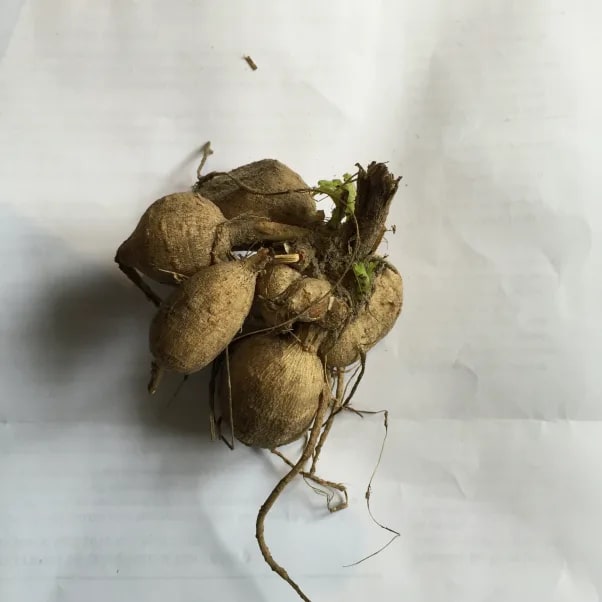
Spacing depends on the mature size of the variety. Compact dahlias under 90cm tall need about 45cm between plants. Medium varieties (90–120cm) want 60cm. The big decorative dinnerplate types that reach 120cm or more need a full 75–90cm — they spread wide and need air circulation to stay healthy. In a mixed border, treat dahlias as you would any substantial perennial and give them room to breathe.
Drive your stakes in at planting time, not three months later when the plant has flopped over and you're trying to wrestle a brittle, top-heavy stem back upright. A single stout bamboo cane is enough for compact varieties. Taller decorative and semi-cactus types need something more substantial such as a sturdy wooden stake, a metal support ring, or a purpose-built dahlia frame. We build triangular bamboo frames. Three uprights and three horizontals about 60cm above ground level. It helps to have a granddaughter in the Brownies with a knot badge.
Open-centred support rings, or our cane frames, are better than criss-cross grid supports. They let the plant move naturally in the breeze rather than looking trussed up, and they're easier to deadhead through. Secure stems to stakes with soft garden twine, wrapped around several times — dahlia stems are hollow and snap easily if tied too tightly.
Water dahlias consistently through the growing season, especially once flower buds begin to form. The bigger the flower, the thirstier the plant. A dinnerplate dahlia in full bloom drinks far more than a pompon. In dry spells from June onwards, water deeply every two or three days rather than a light sprinkle every day. Varieties with smaller flowers and shorter stems are noticeably more drought-tolerant than the big showy ones.
Feed with diluted tomato fertiliser (or any high-potash liquid feed) from June onwards. Do it every week. Dahlias respond dramatically to feeding and the difference between fed and unfed plants is obvious by mid-July. A balanced NPK feed (10:10:10) is fine in the early weeks while the plant is establishing, but once buds appear, switch to a potassium-rich formula to fuel flower production.
If you prefer a lower-maintenance approach, work a handful of slow-release granular fertiliser into the planting hole at the start, then top-dress with another handful in mid-June. You won't get quite the same results as weekly liquid feeding, but it's a good compromise for a busy gardener.
Pinch out the growing tip of each shoot when it has formed three or four pairs of leaves; usually at about 15–20cm tall. This removes the dominant central shoot and forces branching from lower down, producing a bushier plant with more flowering stems. Without pinching, you get a few tall stems each with a single bloom at the top, which you want only when growing for exhibition.
Use your thumb and forefinger or a clean pair of snips. Pinch just above a leaf pair and the two buds in the leaf axils below will each grow into a new stem. On vigorous varieties, you can pinch those secondary stems again once they've produced a few leaf pairs, doubling the number of flowering shoots. The trade-off is that each individual flower will be slightly smaller. More stems means smaller blooms but most gardeners are happy with that deal.
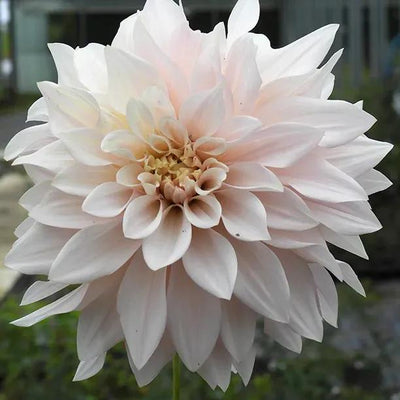
For the biggest possible individual flowers, the kind that win prizes on the show bench, don't pinch at all. Instead, do the opposite and remove all side buds on each stem and allow only the central terminal bud to develop. This technique is called disbudding, and it concentrates the plant's energy into fewer, larger blooms. It's mainly used by exhibitors and for giant dinnerplate varieties like Cafe au Lait or Fairway Spur where sheer size is the point.
Deadhead dahlias as soon as individual flowers begin to fade; don't wait until they're completely spent. Cut above the first set of leaves below the dead flower, using secateurs rather than pulling. This redirects the plant's energy from seed production into new buds, and a well-deadheaded dahlia will keep flowering for months longer than a neglected one. If your dahlia is too large, you can reduce its size and keep it flowering by making your cut further down each stem.
The trick is telling the difference between a spent flower and an unopened bud. The two can look very similar from a distance. A spent dahlia head is round and firm, with the petals clamped shut; an incoming bud is pointed and slightly soft to the touch. If in doubt, leave it a day — buds open quickly and you'll know by tomorrow.
Try to make deadheading part of your regular garden routine, especially when flowers are in full production from July onwards. If you let spent heads accumulate, the plant reads this as "job done" and starts winding down for the season. Five minutes with secateurs every couple of days makes a dramatic difference to the length and quality of the flowering season.

Dahlias are superb cut flowers. They last well in water and look spectacular in everything from a kitchen jam jar to a formal dining table arrangement. Cut them in the early morning when the stems are fully turgid and the air is cool.
Cut horizontally with sharp secateurs right above a set of leaf nodes and side buds — this is effectively deadheading as you go, and the plant will push out new flowering stems from the buds below the cut. Try to cut flowers when they are about 90% open; dahlia buds don't open much further once cut.
Once inside, strip any leaves that would sit below the waterline. Then, holding the stems underwater in a basin, make a fresh diagonal cut across the bottom of each stem. Keep the cut ends submerged — move them quickly from the basin into the vase without exposing the stems to air. Dahlia stems are hollow, and if air gets into the vascular system it blocks water uptake and the flower wilts within hours.
Change the water every day (again, move the stems quickly from old water to fresh), and add a small amount of flower food or make your own: a squirt of lemon juice, a pinch of sugar, and a single drop of bleach. You're coaxing the flower into living a little longer with a shot of energy while preventing bacteria from clogging the stem.
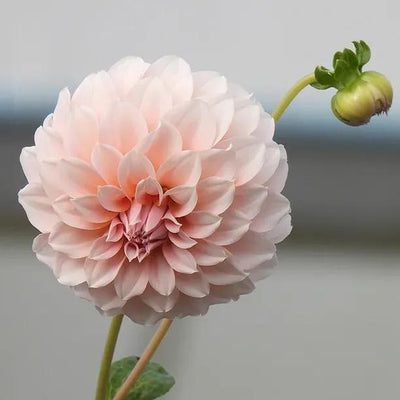
The Karma series of dahlias were bred specifically for the cut flower trade. They have very long, straight stems with upward-facing flowers that don't nod in the vase. But almost any dahlia is good for cutting. The compact ball and pompon types like Nescio and Small World are particularly charming in small arrangements.

Dahlias are generally robust plants, but a few pests and diseases are worth watching for. Catching them early makes all the difference. Prevention is better than you know what.
Slugs dream about new dahlia shoots emerging in spring. Protect them from the moment the first green tips appear above the soil until the stems toughen up and get taller. Then, by late June, the slug threat diminishes considerably. Organic slug pellets, copper tape around the base, beer traps, or nightly torch-lit patrols all help. If you started your tubers in pots, the young plants will already be too tall for most slugs by the time you plant them out, which is another reason to start tubers early.
Earwigs are the dahlia grower's number one enemy. They eat petals particularly on ball, pompon, and decorative types, but needs must and any dahlia petal will do. The little blighters leave ragged holes that ruin the flowers. The frustrating thing is that earwigs also eat vast numbers of greenfly, so you don't want to eliminate them entirely; relocation is better than eradication.
The classic traps are small terracotta plant pots stuffed with straw or crumpled newspaper, placed upside-down on a cane among your dahlias. Earwigs crawl in overnight for shelter and can be shaken out each morning. Put them somewhere useful. Wherever you have aphid problems or, as a public service, onto roadside lime trees.

Greenfly and blackfly cluster on young shoot tips and flower buds. A strong jet of water from a hose dislodges most of them. Ladybirds and hoverflies and their larvae are voracious aphid predators, so avoid broad-spectrum insecticides if you can. Deal with a serious infestation with a spray of soapy water or a garlic drench.
Mosaic patterns on the leaves, stunted growth, and distorted flowers can indicate dahlia virus, which is spread by aphids. There is no cure. Affected plants should be dug up and destroyed, not composted, to prevent the virus spreading to healthy tubers. Another reason to stay on top of aphid control.
A white, dusty coating on the leaves, most common in late summer when nights are cool and the air is still. It looks alarming but rarely kills the plant. Improve air circulation by not planting too closely, water at the base rather than overhead, and remove badly affected leaves. By the time powdery mildew appears, the flowering season is usually well advanced and the plant has done most of its work. BTW, mildew is usually a sign of stressed plants. Most usually, your watering regime will be wrong. Too much or too little.
Dahlias typically begin flowering in early to mid-July and continue without a break until the first hard frost. That is usually late October or early November in most of the UK. In mild coastal areas, they can still be going strong in late November. That's four to five months of non-stop colour from a single tuber.
Plants that were started in pots indoors will flower earlier than tubers planted directly into the ground, sometimes by two or three weeks. This is another possible advantage of starting tubers early in spring as you gain weeks at the beginning of the season. However, as most gardens are at their best in June and July, I am not sure it is worth the effort. We don't bother.
Dahlias don't set an internal clock for dormancy. Unlike many plants that shut down as day length shortens, dahlias simply keep growing and flowering until frost kills the top growth. This makes them extraordinarily valuable in the late-summer and autumn garden, when most other flowers have finished.
Dahlias look their best with plants that provide textural contrast. The bold, rounded flower heads benefit from lighter, airier neighbours — and because dahlias have virtually no scent, it's worth planting something fragrant nearby. They are also really useful for covering up the remains of plants that have already done their stuff. Paeonies would be an obvious example, but late-flowering tulips have leaves that need hiding as well.
Ornamental grasses like Miscanthus and Stipa are natural partners as their movement and fine texture softens a dahlia border beautifully, and they share the same late-summer peak season. Lavender loves the same sunny, well-drained conditions and provides the scent that dahlias lack. Cosmos is a brilliant budget companion — lighter and airier than dahlias, flowering at the same time, and perfect for filling gaps in a new border while the dahlias establish. Low-growing heucheras in dark or lime foliage make excellent front-of-border partners, and their leaves help cover up dahlia "legs" — the bare stems that inevitably develop at the base as the season progresses.
For vertical interest, train sweet peas up an obelisk or wigwam near your dahlias. They flower at the same time, and the sweet pea fragrance compensates wonderfully for the dahlia's scentlessness. Allium bulbs planted amongst the tubers give early-season structure before the dahlias emerge; the dried allium seed heads look striking among the dahlia blooms later in summer.

January–May:
Order your dahlia tubers for spring delivery. The most popular varieties sell out early, so order sooner rather than later. Plan where they'll go in the garden and remember, full sun and good drainage.
March:
Tubers begin arriving. Pot them up in 2–3 litre pots with ordinary multi-purpose compost and keep them in a frost-free greenhouse, conservatory, or bright porch. Water sparingly until you see shoots. See our starting tubers in spring guide for the full method.
April:
In the south, the soil begins to warm up towards the end of the month. Plant out tubers, at about 15cm deep, to protect from late frosts. In most of the UK, keep them in pots a little longer. Prepare the planting site: dig in compost, drive in stakes.
May:
Main planting window for most of the UK. Plant out all remaining tubers once the frost risk has passed. Water in well. Pinch out the growing tip when plants reach 15–20cm tall.
June:
Growth accelerates. Start liquid feeding with high-potash fertiliser every 7–10 days. Tie stems to supports. Watch for slugs on young growth and aphids on shoot tips. Early varieties may produce their first buds towards the end of the month.
July:
Flowers begin. Start cutting and deadheading immediately. Keep feeding and watering. Set earwig traps among the plants. Pinch out side buds on dinnerplate varieties if you want the biggest possible blooms.
August:
Peak flowering. Cut regularly for the house — the more you cut, the more they flower. Keep feeding, watering, and deadheading. Tie in tall stems after rain, when the flower heads are heavy with water.
September:
Flowering continues strongly. Reduce feeding to fortnightly. Earwig damage is often worst this month — keep traps topped up. Start planning where to store your tubers if you're lifting them.
October:
The first light frosts may blacken the foliage. Flowering slows but doesn't stop until a hard frost hits. In mild areas, dahlias can still be blooming at the end of the month.
November:
Once frost has killed the top growth, cut stems to about 10cm. Decide whether to lift and store or mulch in place. See our overwintering guide for both approaches. If leaving in the ground, apply a thick layer of straw or dry leaves.
December:
Check stored tubers monthly. Feel each one and discard any that have gone soft. A cool, dark, frost-free space (5–10°C) is ideal. Stored tubers should feel firm, like a potato.
Yes, provided the tubers survive the winter. Dahlias are tender perennials, not annuals, and the tubers live from year to year, multiplying underground each season. Either lift and store them frost-free over winter or protect them in the ground under a thick mulch. Our overwintering guide covers both methods in detail.
They do best in full sun or at least six hours of direct sunlight daily. Light afternoon shade means fewer flowers and leggier growth are the inevitable trade-off. Dark-foliaged varieties need strong sun to develop their best leaf colour.
About 10–15cm deep, with the crown (the top of the tuber where the old stems were cut) facing upwards. If the tuber has already sprouted, position the eyes just below the soil surface so shoots reach the light quickly. See our tuber anatomy guide if you're unsure which end is up.
Dahlias are mildly toxic to dogs and cats. If eaten they can cause mild gastrointestinal upset and skin irritation. They are not considered seriously dangerous, but it's sensible to discourage pets from chewing on the plants or digging up the tubers. We have to say this, but with 4 children we have had any number of cats, dogs, pet rabbits and even a tortoise. None of them ever showed the slightest interest in my dahlias.
Absolutely, and they can look spectacular. Choose compact varieties under 90cm tall and give them a pot of at least 10 litres. Bigger varieties need bigger containers. Be prepared to water frequently in summer and feed regularly. Our dedicated growing dahlias in pots guide covers variety selection, pot sizes, and care in detail.
Diluted tomato feed (such as Tomorite), applied weekly from June onwards. The high potassium content fuels flower production. Home-made comfrey liquid works just as well. In the early weeks, a balanced feed is fine, but once buds form, switch to high-potash.
Browse our full range of dahlia tubers — we stock over 40 varieties across every flower form, from tiny pompons to giant dinnerplate decoratives, all supplied as A-grade Dutch-grown tubers that we double-check before dispatch.





Comments (0)
Add a commentLeave a comment
Please note, comments need to be approved before they are published.