
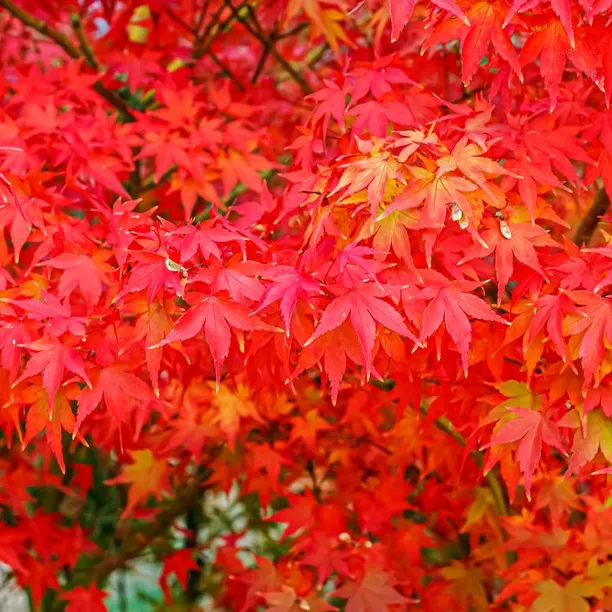
What are the best trees for autumn colour in the UK?
The best trees for autumn colour in the UK include maples, rowans, cherries, crab apples, and beech — all of which reliably transform gardens and landscapes with fiery reds, burning oranges, and rich golds between September and November. Choosing the right species and variety for your soil type, garden size, and aspect makes the difference between a brief flicker of colour and a genuinely spectacular seasonal display. This guide covers the top performers, what conditions they need, and which varieties to choose for the most reliable results in British gardens.
Related guides
- Best Trees for Small Gardens — Buying Guide
- Flowering Cherry Trees: Best Ornamental Cherries for UK Gardens
- How to Choose and Plant a Garden Tree
Why do leaves change colour in autumn?
Leaves change colour in autumn because shortening days and cooling temperatures trigger trees to break down chlorophyll — the green pigment — revealing the underlying yellow and orange pigments that were always present, while red and purple pigments are produced fresh from sugars trapped in the leaf.
Chlorophyll dominates leaves throughout summer, masking the carotenoids (yellows and oranges) entirely. As days shorten in late August and September, a corky layer called the abscission zone forms at the leaf stalk, cutting off the flow of sugars to the rest of the tree. Sugars already in the leaf are converted into anthocyanins — the red and purple pigments most vivid in maples and cherries. The intensity of colour depends heavily on weather: warm sunny days combined with cool but frost-free nights produce the brightest displays, as more sugar is trapped and converted. A mild, overcast autumn tends to give muted tawny tones rather than the fiery reds you might hope for.
This is also why the same tree can vary noticeably from year to year, and why some species (particularly those of North American origin) often outperform British natives in pure intensity of colour — they evolved alongside more extreme autumn temperature swings.
Which maples give the best autumn colour?
Maples are the undisputed champions of autumn colour, with species and varieties ranging from compact garden shrubs to large parkland trees, offering shades from deep scarlet and burgundy through to amber, gold, and orange — often on the same tree simultaneously.
The genus Acer is exceptionally broad. For pure spectacle, the North American red maple (Acer rubrum) and the Freeman maple hybrids are difficult to beat. They colour up reliably even in the UK’s often mild autumns, turning vivid crimson to orange-red before other trees have barely begun. The native field maple (Acer campestre) offers a subtler but no less beautiful clear yellow, and is supremely easy to grow on almost any soil.
| Variety | Autumn Colour | Mature Height | Best For |
|---|---|---|---|
| Autumn Blaze Maple | Intense orange-red | 12–15 m | Large gardens, avenues |
| Red Maple | Scarlet to crimson | 15–20 m | Parkland, large gardens |
| Field Maple | Bright butter yellow | 10–15 m | Any garden, hedging |
| Amur Maple | Fiery orange-red | 4–6 m | Small gardens, pots |
| Armstrong Maple | Orange-red | 10–14 m | Narrow spaces, streets |
| Celebration Maple | Gold to orange | 10–12 m | Medium gardens |
For gardens where space is limited, the Amur Maple is one of the best choices available — a genuinely small tree that still produces an exceptional autumn show. The Crimson Sentry Maple offers a fastigiate (upright) habit if you need height without spread, while the Royal Ruby Field Maple gives deep wine-red summer foliage that then turns rich amber in autumn — a double season of interest.
Browse our full range at Maple Trees.
Which native British trees have the best autumn colour?
Britain’s native trees may not match North American maples for sheer intensity, but species such as rowan, wild cherry, beech, field maple, and hawthorn all provide genuinely beautiful autumn colour — with the added benefit of outstanding value for wildlife.
Native trees are often overlooked for autumn colour, but they deserve a place in any planting scheme. The rowan (Sorbus aucuparia) turns from green to gold-orange-red, and its berries provide brilliant colour from late summer. Wild cherry (Prunus avium) flares deep crimson in October — among the most vivid of all native trees. Beech (Fagus sylvatica) turns a rich, burnished copper-bronze that holds on the branches well into winter if the tree is young or clipped. Hawthorn colours to tawny orange-red and carries bright berries simultaneously.
| Native Tree | Autumn Colour | Bonus Feature | Soil Tolerance |
|---|---|---|---|
| Rowan | Gold, orange, red | Bright berries | Most soils, acid to neutral |
| Beech | Copper-bronze | Dead leaves persist all winter | Free-draining, chalky or sandy |
| Wild Cherry | Deep crimson | Spring blossom | Most well-drained soils |
| Field Maple | Bright yellow | Good for hedging | Very adaptable, chalk to clay |
| Hawthorn | Tawny orange-red | Berries for wildlife | Almost any soil |
| Silver Birch | Clear lemon yellow | White bark all year | Sandy, acid soils preferred |
You can explore the full range at our Native British Trees collection.
What are the best small trees for autumn colour in gardens?
For gardens with limited space, the best small trees for autumn colour include crab apples, rowans, the Amur maple, ornamental cherries, and the Japanese maple — all of which reach manageable sizes while still delivering a genuinely striking seasonal display.
Small trees are often the most useful in a domestic garden context. The crab apple is a particularly valuable choice, offering spring blossom, autumn colour in shades of gold and orange, and persistent decorative fruits that carry interest through winter. Ornamental cherries such as Prunus ‘Autumn Glory’ change colour early and intensely. Japanese maples (Acer palmatum) are among the most breathtaking of all small trees in autumn, turning crimson, orange, or gold depending on the variety; they grow slowly and suit containers as well as borders. Rowans are similarly compact and multi-season, with berries often appearing before the leaves have even finished their colour change.
Browse our Small Garden Trees collection for a curated selection. If you want to grow any of these in containers, our article on 15 Ideal Trees for Growing in Pots is a helpful starting point.
Which trees for autumn colour grow well on clay soil?
Field maple, hawthorn, rowan, oak, alder, and many ornamental cherries all cope well with clay soils, making them reliable choices for autumn colour even in heavier, wetter gardens.
Clay can be challenging — it is slow to drain, prone to waterlogging in winter, and bakes hard in summer. However, many of the best autumn-colour trees are surprisingly tolerant once established. The field maple is particularly adaptable; it grows naturally on clay in Britain and colours well regardless of soil pH. Hawthorn is similarly tough and will establish readily even on heavy, poorly drained sites. For a larger specimen, oak is extremely robust on clay, though its autumn colour (yellowing brown) is more understated than spectacular. Alder is the best choice for very wet clay or seasonally flooded ground.
See our dedicated guide to Trees for Clay Soils for a more detailed breakdown.
How can you maximise autumn colour from trees?
To get the most vivid autumn colour from your trees, choose varieties specifically selected for colour intensity, plant them in full sun, avoid excess nitrogen fertiliser in late summer, and ensure good drainage — stressed or waterlogged trees colour poorly.
Several practical steps make a real difference:
- Sunlight: Trees in full sun consistently produce more vibrant autumn colour than those in heavy shade. Even a few extra hours of direct sun can markedly improve display.
- Avoid late nitrogen feeds: High-nitrogen fertilisers applied after midsummer encourage soft, green leafy growth and delay the onset of colour change. Use a balanced or potassium-rich feed in early spring instead.
- Soil drainage: Waterlogged roots stress the tree in an unproductive way that tends to produce dull, early leaf drop rather than colour. Improving drainage before planting pays dividends for decades.
- Variety selection: Within any species there is wide variation. Varieties such as Autumn Blaze and Red Maple are selected specifically for reliable, intense autumn colour in British conditions.
- Patience: Young trees often colour less dramatically than established ones. A maple in its third or fourth year will typically be far more impressive than in its first autumn.
When do different trees colour up in autumn?
Autumn colour begins in earnest in late September in the UK, peaks through October, and lingers into November depending on the species — with some trees changing weeks earlier than others, so thoughtful planting can extend the season considerably.
| Tree | Colour Peak (approx.) | Colour |
|---|---|---|
| Wild Cherry | Late September – early October | Deep crimson |
| Amur Maple | Late September – October | Orange-red |
| Autumn Blaze Maple | October | Intense orange-red |
| Rowan | October | Gold, orange, red |
| Crab Apple | October – early November | Gold to orange |
| Beech | Late October – November | Copper-bronze |
| Field Maple | Late October – November | Butter yellow |
| Oak | November | Tawny brown-gold |
By combining early-colouring species such as wild cherry with later-peaking trees like beech and field maple, you can maintain a vivid display from late September through to the end of November in many parts of Britain.
What are the best trees for autumn colour in large gardens and parkland?
In larger spaces, the most impressive autumn-colour trees are large maples, sweet chestnuts, limes, poplars, and oaks — trees that reach substantial size and create genuinely dramatic landscape-scale colour across October and November.
The Red Maple is among the finest parkland trees for autumn colour in the UK, reliably turning scarlet even in mild years. The Autumn Blaze is similarly impressive and slightly faster-growing, making it popular for new plantings where an impact is wanted within 10–15 years. Sweet chestnut turns a warm buttery yellow and is superb for large-scale planting. Lime trees turn clear yellow and are excellent for formal avenues. Poplars offer quick-establishing height with gold autumn foliage.
Browse our Large Garden & Parkland Trees collection for a full selection.
How do the top autumn-colour trees compare overall?
The table below summarises the most important factors — colour, size, soil tolerance, and wildlife value — for the most popular trees for autumn colour, to help you make a direct comparison before buying.
| Tree | Colour Intensity | Mature Size | Soil Tolerance | Wildlife Value |
|---|---|---|---|---|
| Autumn Blaze Maple | ★★★★★ | Large | Good | Medium |
| Red Maple | ★★★★★ | Large | Good (tolerates wet) | Medium |
| Amur Maple | ★★★★★ | Small | Good | Medium |
| Wild Cherry | ★★★★☆ | Medium–large | Moderate | High |
| Rowan | ★★★★☆ | Small–medium | Good | Very high |
| Crab Apple | ★★★☆☆ | Small | Very good | Very high |
| Beech | ★★★★☆ | Large | Well-drained only | High |
| Field Maple | ★★★☆☆ | Medium | Excellent | High |
When and how should you plant trees for autumn colour?
Bare-root trees for autumn colour are best planted between November and March when dormant; container-grown trees can be planted at any time of year, though autumn and early spring remain optimal for establishment in the UK.
Planting during the dormant season gives roots time to establish before the demands of spring growth and summer heat. Dig a hole no deeper than the root ball but two to three times as wide — this breaks up surrounding soil and encourages lateral root spread. Avoid adding compost or fertiliser to the planting hole itself; the roots need to grow outwards into the native soil rather than sitting in a rich pocket. Water in thoroughly after planting and mulch generously to retain moisture and suppress weeds, keeping the mulch clear of the trunk to prevent rot.
Stakes should be used for standard trees on exposed sites. Our guide on How to Plant a Tree with a Stake covers this in detail. In the first two or three seasons, watering during dry spells in May, June, and July is the single most important thing you can do to ensure good establishment — and a well-established tree will colour far more reliably than a struggling one.
Frequently Asked Questions
Which tree has the most vivid autumn colour in the UK?
For sheer intensity, the Autumn Blaze Maple and Red Maple are the most reliably vivid, turning intense scarlet-orange even in mild British autumns.
Do autumn colour trees need full sun?
Full sun produces the most intense autumn colour by maximising sugar production in the leaves. Most autumn-colour trees will still perform in partial shade, but expect noticeably less dramatic results.
What is the best small tree for autumn colour?
The Amur Maple is an outstanding choice for small gardens, reaching just 4–6 m with fiery orange-red colour. Rowan and crab apple are excellent native alternatives with added wildlife value.
Do maples grow well in the UK?
Yes. Native field maple and many ornamental maple varieties thrive throughout the UK. North American and hybrid maples generally perform well too, particularly in the south and midlands.
Which trees colour up earliest in autumn?
Wild cherry and Amur maple typically begin colouring in late September — often two to three weeks ahead of most other trees. This makes them useful for extending the autumn display season.
Can I grow autumn colour trees in containers?
Yes — smaller varieties such as the Amur Maple and Japanese maple grow well in large containers. See our guide to 15 Ideal Trees for Growing in Pots for full advice.
Does beech keep its autumn leaves?
Young beech trees and clipped beech hedges retain their dead copper-brown leaves throughout winter — a phenomenon called marcescence. This makes beech one of the longest-lasting autumn-colour plants available.
Which trees for autumn colour tolerate wet or clay soil?
Field maple, hawthorn, rowan, alder, and red maple all tolerate heavier soils well. See our Trees for Clay Soils guide for more detail.
Is the Norway maple good for autumn colour?
The Norway Maple turns clear yellow in autumn. It is a tough, adaptable tree, though its colour is less intense than red or Freeman maples.
What is the fastest-growing tree with autumn colour?
The Autumn Blaze Maple is among the fastest-growing trees that also deliver exceptional autumn colour, typically adding 60–90 cm per year in good conditions.
Do birch trees have autumn colour?
Birch trees turn a clear, fresh lemon yellow in autumn. The colour is not as intense as maples but is very attractive, especially combined with white bark that remains decorative all year.
Which autumn colour tree is best for wildlife?
Rowan, hawthorn, and crab apple all combine excellent autumn colour with outstanding wildlife value — providing berries for birds, flowers for pollinators, and habitat for insects throughout the year.
Related Products
- Autumn Blaze Maple
- Red Maple
- Amur Maple
- Armstrong Maple
- Celebration Maple
- Field Maple
- Royal Ruby Field Maple
- Red Maple Saplings
- Red Cappadocian Maple
- Crimson Sentry Maple
Leave a Reply