Buying Cherry Fruit Trees (Prunus avium & Prunus cerasus) Online:
Order Potted Cherry Trees Now For Spring Delivery
Order Bareroot Cherry Trees For 2026 Spring Planting Season
Edible cherries have some of the loveliest flowers of any fruit tree, almost as pretty as ornamental cherry blossom trees.
Buying Cherry Trees
Barerooted cherry trees are delivered between November and the end of March, the winter planting season.
Selected varieties are available pot grown year round.
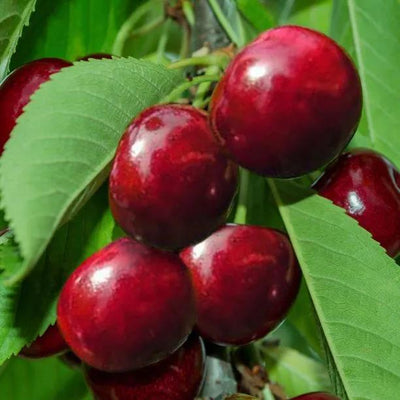
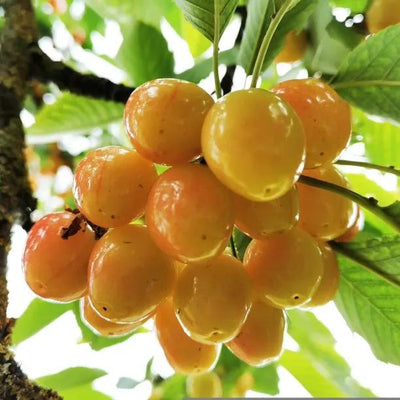
We grow sweet cherries that ripen early or late, and come in a range of colour from black through red to yellow and near-white, as well as the world-famous Morello sour cherry.
Browse the best 4 cherry varieties for UK gardens.
- When your order is ready: your mail order fruit trees are delivered by next working day courier (not the next working day after ordering!)
- Friendly support: if there is anything wrong with your plants when you inspect them, Contact Us within 5 working days
All bareroot plants are covered by our Refund Guarantee, so you can give them a whirl with complete confidence.
Cherry trees produce vivid displays of cloudy white blossom in early spring, followed by a flush of late summer fruit.
Which Cherry Variety Should I Choose?
The most popular varieties for UK growers are Stella, which is the best for drier Eastern parts of the country, and Summer Sun or Sunburst, which are best in more humid Western areas.
The best varieties for the North & Scotland are Lapins Cherokee, and Stella, because they flower late and so (hopefully) avoid the frosts.
For a spread of cherries that covers the whole cropping season, we recommend:
- June: Early Rivers
- Early July: Amber Heart
- Late July: Stella or Summer Sun
- August: Sweetheart
When it comes to sour cooking cherries, there "is only one": Morello (actually there are several, but it really is the best).
Morello is the only cherry that will crop reasonably well in the shade.
Lapins Cherokee is a sweet cherry, not sour, but is also excellent for cooking.
Do all cherry trees have edible fruit?
No, only the sweet and sour cherry varieties listed in this section have fruit that humans would want to eat.
Most cherry blossom trees, grown ornamentally for their flowers, do not make fruit at all.
The wild cherry and bird cherry do make fruit, but they aren't tasty.
Training Cherries
Your available space will determine the shape of tree that you can grow. There are 2 main options for the home grower.
- Fan Trained Cherry Trees: This space-saving shape is grown flat with horizontal wires for support, usually against walls or fences. To make a fan cherry tree, you need to buy a Maiden sized tree (the smallest you can buy) and prune it into the desired shape.
- Free Standing Cherry Trees: These two sizes take up more room and give the biggest crops:
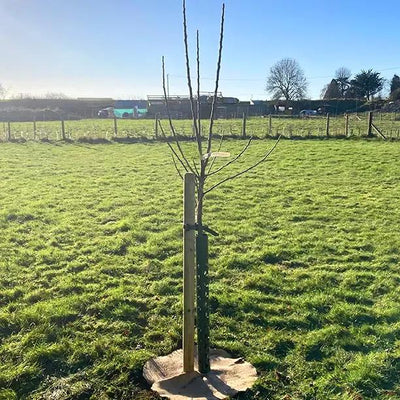
- Bush form: This is a short tree with a main trunk under 1 metre tall and a final height of about 3 metres – great for most people’s gardens, easy to harvest, and reasonably practical to cover with a net against birds.
- Half standard form: A “proper” tree with a trunk 1.2 – 1.5 metres tall and a final height up to 4-5 metres. It’s the heaviest cropping size, but you will need a safe ladder to harvest your trees when they are full-grown.
Which Starting Size of Tree Should You Buy?
Maidens: These are the cheapest option and can be trained into any shape you like. If you want a fan, you must start with a maiden.
Bushes & Half-Standards: These are the largest starting sizes you can order: go for a half-standard if you have plenty of room or a bush if space is tight.
Even if you are on a tight budget, it still makes sense to start with these rather than a maiden, because you will spend less time on them and get your crops sooner.
Sweet or Sour Cherries?
All sweet cherries need plenty of sun, especially in the North and Scotland, where it is best to train them as fans against a sheltered South facing wall.
The best varieties for Scotland are Lapins Cherokee, Stella, and Colney.We only grow one sour cherry, the world-famous English Morello. It’s the best acidic variety, and unlike sweet cherries it’s very hardy and shade-tolerant. It thrives in North facing sites as long as it faces open sky.
Cherry Tree Pollination
- If you only have room for one tree, choose a self fertile variety.
- The sour Morello cherry and some sweet varieties like Lapins Cherokee and Stella are reliably self-fertile.
- More than half of our sweet cherry varieties are not self fertile and must be pollinated by a compatible tree to bear fruit – this includes all the early fruiting trees.
- Use our online tool to see cherry pollination partners
- For more details, see our Cherry Tree Pollination Groups page
Harvesting Cherry Trees
Cherry trees as a group have quite a short season, ranging from late June to August.
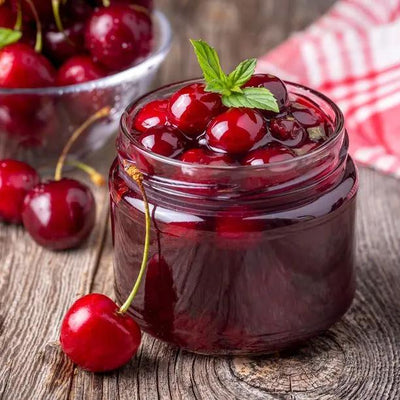
Cherries don’t store well and need to be eaten, cooked, preserved as jam or frozen without delay when they are ripe. Remove the stones before freezing.
For fresh cherries all summer, choose 3 or 4 varieties to cover the whole season:
Harvest Time
Cherry Variety
Early Season
(June)
Early Rivers
Early-Mid Season
(Early July)
Amber Heart, Knight’s Early Black, Merton Glory, Merton Bigarreau, Lapins Cherokee
Late-Mid Season
(Late July)
Van, Bigarreau Napoleon, Stella, Summer Sun, Sunburst, Vega, Morello (Sour)
Late Season
(From Early August)
Sweetheart, Colney, Penny, Kordia, Petit Noir
Where Can I Grow Cherry Trees?
The best place to plant cherry trees is in a sunny spot with well drained, fertile soil that has neutral to mildly acidic pH. They are happy on clay on a hill or slope that does not waterlog in winter.
Shelter from strong winds is also good.
- Sweet cherry trees need plenty of sun to ripen, and grow best in the warmer Southern and Western parts of the UK.
- In the North and Scotland, a sheltered, South facing wall with full sun is best for consistent results, where you can train your cherries as fans, supported by wires.
- Morello sour cherries are unusually shade-tolerant, and will crop well on a North facing wall as long as there is open sky above and in front of them (so an alleyway is probably too shady). You can also grow damsons and bullaces in quite shady sites.
If your soil is poor, dry, or alkaline, you can improve it by digging in well rotted organic matter, and then mulching well every year.
Remember that because mulch is not dug into the soil, it does not need to be rotted.
When and How do I Plant my Cherry Tree?
When is the best time to plant Cherry trees?
The best time to plant cherry trees is in winter, using bareroot stock.
Pot grown trees can be planted at any time during the rest of the year, as long as you are absolutely certain to water them well.
There are pros and cons to every season, but as long as you water well in dry weather until your tree is established, you can plant at any time.
How to Plant a Cherry Tree
You have two main choices with cherries. Either grow them:
- As a normal freestanding tree in the "bush" form (with a short trunk under 1.2 metres) or half-standard form (with a trunk between 1.2 and 1.5 metres tall)
- As a fan, trained flat using support wires (usually against a wall).
Watch our Fruit Tree Planting video, (we highly recommend using Rootgrow).
Cherry trees must be planted at the same depth in the ground as they were in the pot or ground before being transplanted.
Growing fruit trees requires nutritious soil, with good levels of moisture retention, so improve sandy or poor soils with well rotted organic matter before planting.
Clay soil does not need improving.
When and How do I Prune my Cherry Tree?
Cherry trees, like all stone fruit in the Prunus family, should only be pruned when their sap is flowing upwards, from Spring to late Summer.
This reduces the (admittedly quite low) risk of Silver Leaf Disease, because the rising sap physically pushes the spores out of the pruning cut.
However, as always, remove DDD wood at any time: Dead, Diseased, or Damaged wood.
How to Prune Cherry Trees


 Sign In
 Saved items


 5 Star Service Rating




 Secure, One-Tap Checkout
 5 Star Feefo Rating
 Hand Picked, Delivered to Your Door!
 1 Year Bareroot Guarantee
 Platinum Trusted Service Award 2026
 Mail Order Plant Experts - Est. 1949








 RHS Award of Garden merit (4)