


Sold as:

from £10.95

Sold as:
from £19.99
 5 Star Service Rating




 Secure, One-Tap Checkout
 5 Star Feefo Rating
 Hand Picked, Delivered to Your Door!1 Year Bareroot Guarantee
 Platinum Trusted Service Award 2026
 Mail Order Plant Experts - Est. 1949
 1 Year Bulb Guarantee




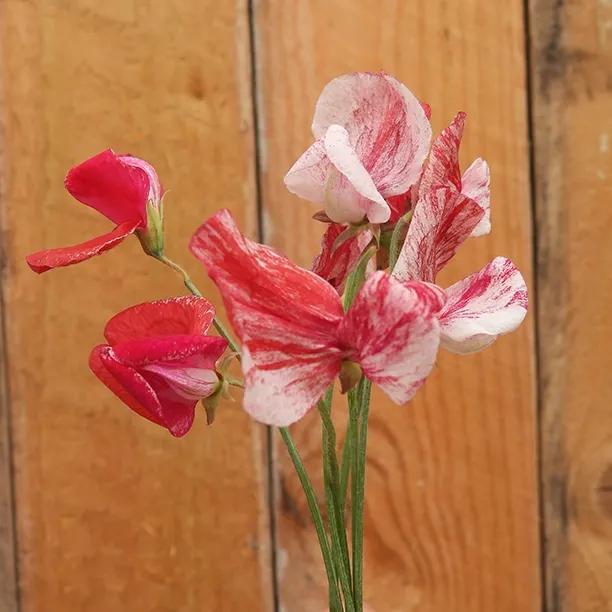
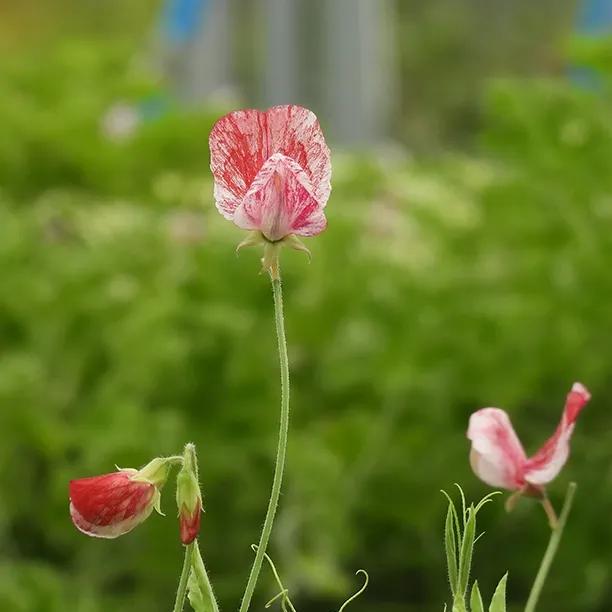
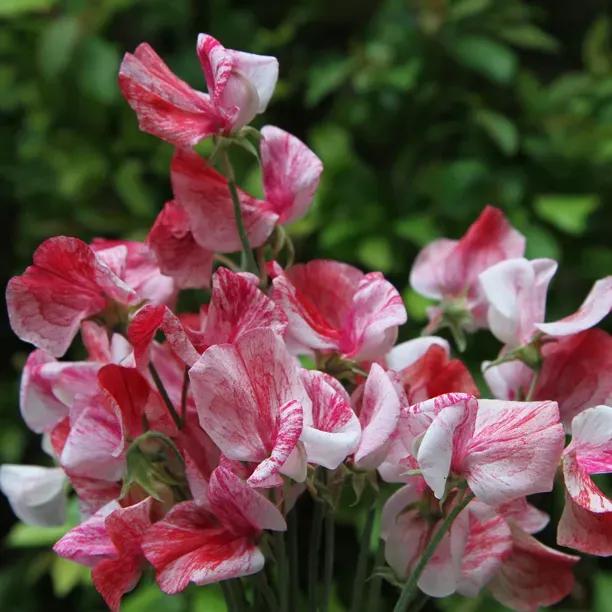





America is one of the oldest sweet pea varieties still in commercial cultivation. Introduced by Morse and Vaughn in 1896, it has survived two world wars, the entire Spencer revolution, and a century of new introductions. Many were supposed to replace it. See the flowers and the reason is obvious. Bold crimson stripes on a white ground, no two blooms identical, each one a miniature flag. The pattern is irregular, which is part of the charm. Some flowers are heavily striped, others barely marked, and every bunch shows the full range.
As a Grandiflora, America has the open-faced flower form, shorter stems, and more generous scent that characterise the pre-Spencer types. The perfume is rated 3–4 on the Parsons scale, warm and honeyed, stronger than many modern Spencers manage. The trade-off is that the flowers are smaller and the stems are posy-length rather than vase-length. For informal cutting – jam jars, jugs, kitchen-table posies – this is not a disadvantage. A handful of America in a stoneware mug on a sunny window ledge is the essence of a cottage garden, distilled.
America is vigorous. Given a tall support it will climb to 2.4m and produce flowers generously from June into August. The plant is unusually vigorous early in the season so it is ideal for training on a wigwam, a hazel arch or pea netting along a fence. It is not a tidy grower in the exhibition sense, but its habit suits its heritage personality. This is a sweet pea that looks right in a cottage garden or allotment, threading through other plants and producing its striped flowers in cheerful profusion.
The striping varies with temperature and light. Cool weather tends to produce more heavily marked flowers; warm spells lighten the pattern. This means no two pickings are quite the same, which is part of the pleasure of growing a variety like this. Heritage Grandifloras reward the gardener who is happy to be surprised rather than demanding uniformity. If you find yourself sorting the blooms into heavily striped and lightly marked before arranging them, you have understood the point.
For full planting and care guidance, see our sweet pea growing guide.
Lord Nelson (hugely scented deep navy Grandiflora) is a natural companion. Two heritage varieties with tremendous combined fragrance and colours that have no business looking as good together as they do. Navy and crimson-stripe is a combination that would be bold in a Spencer, but in Grandifloras the smaller, open-faced flowers keep it from becoming overwhelming. Flora Norton (sky-blue Grandiflora, and also strongly scented) adds a third heritage variety. Grow the three together for a scent-filled Edwardian sweet pea collection that modern introductions struggle to match.
On a shared fence or arch, America is a natural partner for honeysuckle. The crimson-striped sweet pea threads through the honeysuckle's cream-and-gold flowers, two scented climbers flowering together through June and July, each contributing a different fragrance note. When the sweet peas finish, the honeysuckle fills the gap.
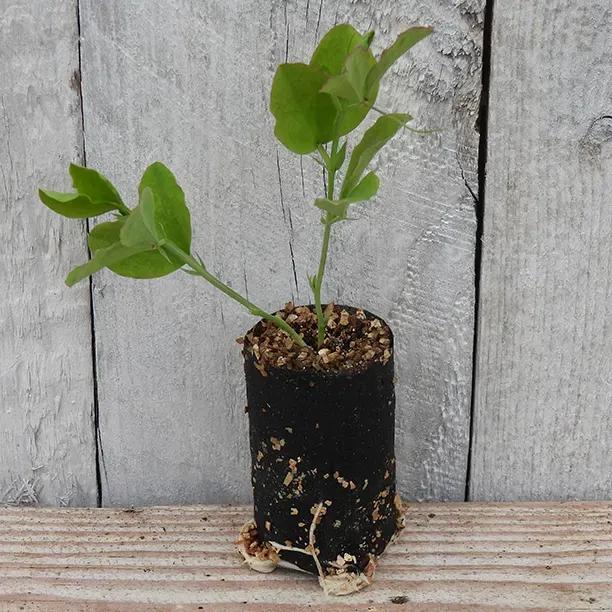
We have been growing sweet peas in Somerset since the early 2000s. The seed, which we collect and store ourselves, is hand-sown at two seeds per plug. After germination, the weaker seedling is removed. Every plant is then pinched out to encourage bushy growth and hardened off before dispatch. What you are buying are sturdy, garden-ready jumbo plug plants that have had the best possible start.
We send your sweet peas out by next-day courier between March and May, packed in purpose-designed recycled cardboard packaging. The moment they arrive, they are ready to go into the ground or a container. If anything is not right, we have real people on the phone in Somerset who will sort it out. We hold a Feefo Platinum Service Award and have been named a Which? Best Buy plant supplier – endorsements that came from our customers, not our marketing team.
Introduced in 1896 by the American seed house Morse and Vaughn, making it one of the oldest sweet pea varieties still in commercial cultivation. It predates the Spencer revolution and has outlasted virtually every variety introduced since. If longevity is any measure of quality, America has made its case.
A Grandiflora – the older type with smaller, open-faced flowers, shorter stems, and stronger scent than modern Spencers. Grandifloras are less showy individually but produce more blooms and carry a more powerful perfume. America is a classic example of the type.
Rated 3–4 on the Parsons scale – noticeably scented, with a warm, honeyed quality. Stronger than most Spencers and typical of the Grandiflora group. A bunch in a room will make itself known without being asked.
America is a heritage Grandiflora and will usually come true from saved seed, which makes it one of the best varieties for home seed-saving. Let a few pods ripen fully on the plant at the end of the season, collect them when dry and papery, and store in a cool, dark place over winter. Sow the following spring. But only collect pods once you have decided the plant is finished for the year; allowing pods to form mid-season tells the plant to stop flowering.
Like all Lathyrus odoratus varieties, America is an annual, so it grows, flowers and dies inside 12 months. The good news is planting and growing sweet peas is easy and fun. So every spring you can choose and buy more from our sweet pea collection.


 Sign In
 Saved items