Sold as:

from £6.99

Sold as:
from £19.99
 5 Star Service Rating




 Secure, One-Tap Checkout
 5 Star Feefo Rating
 Hand Picked, Delivered to Your Door!
 1 Year Bareroot Guarantee
 Platinum Trusted Service Award 2026
 Mail Order Plant Experts - Est. 1949



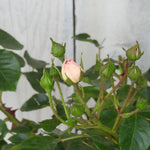

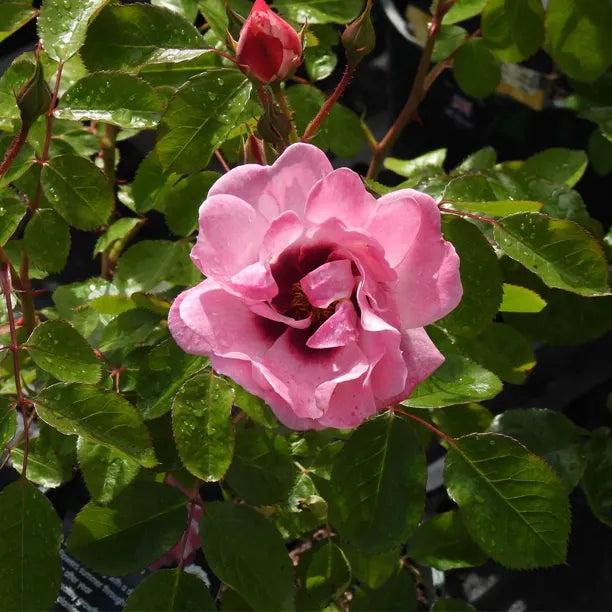
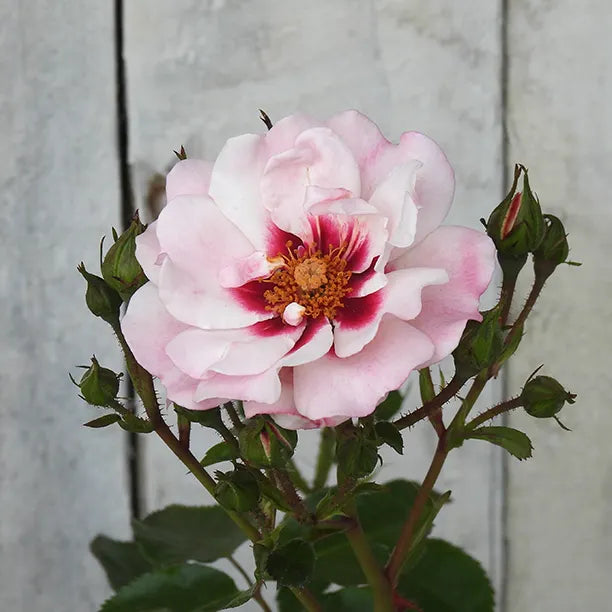
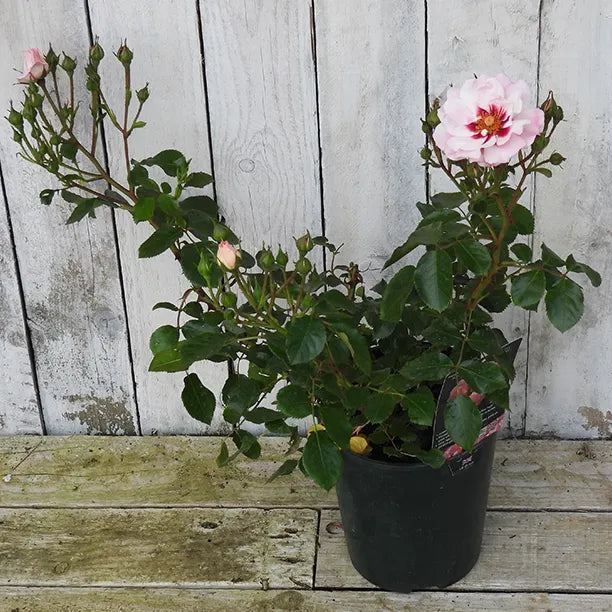
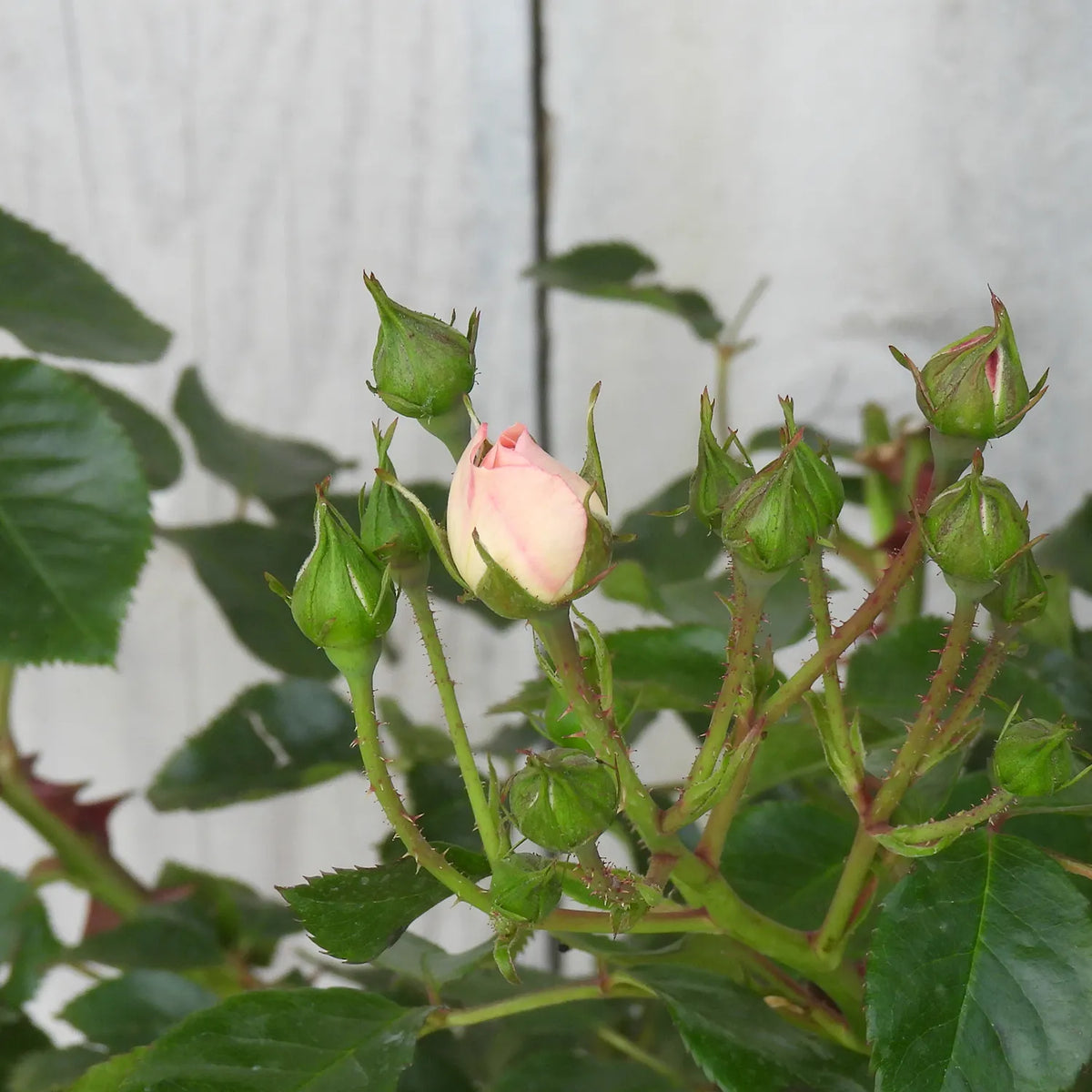





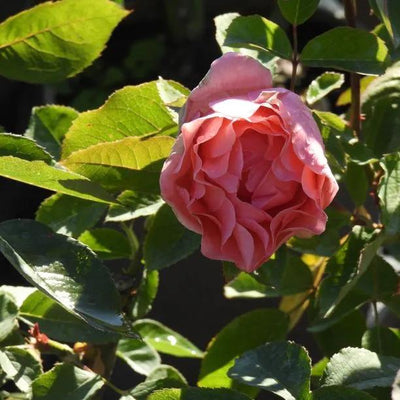
Angel Eyes is a persica hybrid floribunda rose growing to 90cm with a compact 45cm spread. It bears clusters of semi-double lilac-pink flowers from June through to autumn, each carrying a vivid raspberry-magenta eye at the centre that softens to pink as the bloom opens and ages. Fragrance is slight; disease resistance and repeat-flowering performance are both good.
The dark eye at the centre of each Angel Eyes flower is not a breeding trick. It comes from Rosa persica, a wild species native to semi-arid steppe country stretching from Afghanistan across Iran to Central Asia. Rosa persica is the only wild rose with a naturally occurring basal spot, and that trait sat locked in its genetics for millennia before breeders managed to transfer it into garden-worthy hybrids. Deliberate crosses that succeeded for UK gardens only began arriving from the 1990s onwards. Angel Eyes, released by Warner's Roses in 2012, is one of the most refined results of that work.
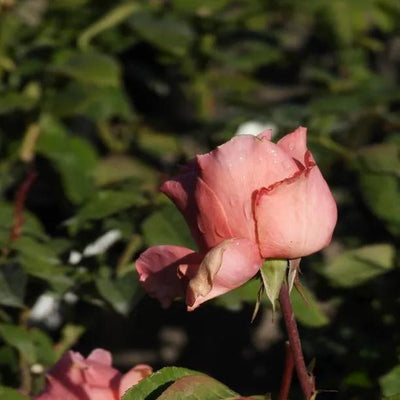
The flowers are semi-double, produced in free clusters on upright, thorny stems. The lilac-pink colouring is strongest at the petal edges and intensifies towards the raspberry-magenta eye at the centre. As each bloom opens and ages, the eye fades towards pink, so a plant in full flower holds several colour stages at once. On a warm June morning, the stamens visible inside the open eye add another layer of detail that rewards a closer look.
Its narrower spread of 45cm makes Angel Eyes more suitable for a tight border than most floribundas of similar vigour. It handles poorer soils without complaint, produces ornamental hips in autumn that birds find useful, and is reliable enough without spraying to suit a low-intervention garden. Our floribunda rose growing guide covers all the care detail from planting depth to the late-February prune.
The raspberry-pink tones of Angel Eyes read most clearly against white and purple. Iceberg provides a clean white backdrop that lets the colour work without competition; Burgundy Ice in deep plum-purple creates a strong contrasting note in the same border. At ground level, Hidcote lavender echoes the purple tones and keeps pollinators coming through the season. Rozanne geranium trails between the rose stems from June to October with violet-blue flowers that complement without competing. Plant Purple Sensation alliums between the roses in autumn for a tall purple display in May and June that sets the palette before Angel Eyes comes into flower.
We have been working with specialist rose growers to produce our range for over thirty years. These are not catalogue roses sourced from a wholesaler -- they are grown specifically for Ashridge, by growers whose knowledge of rose production runs deep. Bareroot plants are dispatched between November and March while dormant. Container grown plants go out in spring and summer. We grow peat-free throughout, use no neonicotinoids, and guarantee every plant we send. Which? Gardening named us Best Plant Supplier, and Feefo gave us their Platinum Trusted Service Award.
Late February to early March, cutting stems back to 30-40cm just above an outward-facing bud. A light tidy in autumn, shortening by about a third, helps prevent wind rock over winter but is not the main prune. Our pruning guide has step-by-step instructions for floribunda roses.
Angel Eyes has excellent disease resistance, particularly to black spot and powdery mildew, the two conditions most likely to trouble roses in UK gardens. It is a reliable choice for low-maintenance growing and performs well without routine spraying, even in wet summers.
Angel Eyes has a slight fragrance, detectable on warm days but not a rose to grow primarily for scent. Its real strengths are the vivid eye-patterning, the compact repeat-flowering habit, and the disease resistance. For a strongly scented floribunda, Sheila's Perfume or Margaret Merril are hard to beat.
Both are persica hybrid floribundas with a dark central eye on each petal. Angel Eyes reaches 90cm with deeper raspberry-pink petals; See You In Rosé is shorter at 70cm with softer pale pink blooms and a reddish rather than magenta eye. Both repeat-flower through summer and are suitable for containers.
Angel Eyes is well suited to a container, thanks to its compact spread of 45cm. Use a pot at least 40cm across, loam-based compost, and water regularly. Feed weekly with a liquid rose fertiliser from May to August. Container roses dry out faster than those in borders, so check moisture levels every day or two in hot weather.
Warner's Roses, run by Christopher Warner, is best known for breeding persica hybrid roses — varieties carrying the distinctive dark basal eye inherited from Rosa persica, a rare Central Asian wild species. Angel Eyes is among the most successful results of a programme that spent decades pursuing a cross others had mostly abandoned.







 Sign In
 Saved items