


Sold as:

from £10.95

Sold as:
from £19.99
 5 Star Service Rating




 Secure, One-Tap Checkout
 5 Star Feefo Rating
 Hand Picked, Delivered to Your Door!1 Year Bareroot Guarantee
 Platinum Trusted Service Award 2026
 Mail Order Plant Experts - Est. 1949
 1 Year Bulb Guarantee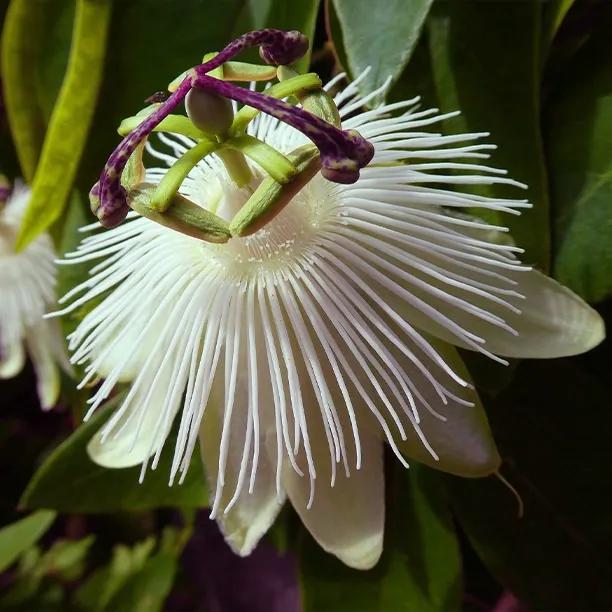




Constance Elliott is a white form of the common blue passion flower, discovered as a seedling in a Devonshire garden in the late nineteenth century and still the finest white passion flower you can grow outdoors in this country. The RHS awarded it the AGM in 2012, confirming what gardeners already knew: it is reliable, vigorous, and produces those extraordinary flowers from June through August on any warm wall with decent drainage.
The blooms are almost entirely white — petals, filaments, the whole radiating structure — except for the intricate purple and green central column that gives every passion flower its otherworldly quality. Each flower is about 8cm across, opening in the morning and lasting a day or two. After flowering, the plant produces decorative orange egg-shaped fruit that persist into autumn. They are ornamental rather than culinary, but they add a second season of colour when the flowers have finished.
It is vigorous. To 8–10m on a warm wall, climbing by tendrils, and capable of covering a large area in a few seasons. Like all Passiflora caerulea forms, it is semi-evergreen to evergreen depending on your winter.
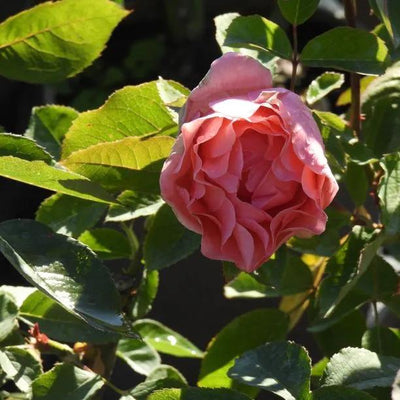
The original Constance Elliott was found growing at Clevedon Court near Bristol. It was one of the first passion flowers to prove itself reliably outdoors in the British climate, and it helped establish the idea that these exotic-looking plants were not exclusively for the greenhouse. Plant it on a sunny wall and pair it with Purple Haze for a white-and-purple passion flower display, or grow it beneath a climbing rose where the passion flower's intricate geometry plays against the rose's full, blousy petals.
Every plant is guaranteed, delivered by next-day courier, and backed by Which? Best Plant Supplier. Our Somerset team is on the phone if you need help. See all our passion flowers or browse the full climbing range.
H4 — hardy to about –10°C. Against a warm south or west-facing wall, it survives most UK winters. Drainage is the critical factor: passion flowers tolerate cold but not cold and waterlogged. A thick mulch over the roots in November adds a layer of protection. In very cold or exposed areas, consider a large pot that can be moved to a frost-free spot in winter.
The orange fruit is ornamental, not the same species as the commercial passion fruit you buy in shops (that is Passiflora edulis, a tropical plant). The fruit of P. caerulea is not toxic but has no real flavour worth pursuing. Its value is decorative — orange eggs hanging from the stems into autumn.
In early spring, after the last hard frosts. Remove dead or frost-damaged stems and cut side shoots back to within a few buds of the main framework. Passion flowers bloom on new growth, so spring pruning encourages the fresh shoots that carry this year's flowers. Do not prune in autumn — the top growth insulates the stems beneath during winter.
A south-facing or west-facing wall is strongly recommended. The warmth stored in brick or stone radiates back at night, protecting the plant through cold spells. East-facing walls can work in sheltered positions. North-facing walls are too cold — the plant may survive but flowering will be poor.


 Sign In
 Saved items