


Sold as:

from £10.95

Sold as:
from £19.99
 5 Star Service Rating




 Secure, One-Tap Checkout
 5 Star Feefo Rating
 Hand Picked, Delivered to Your Door!1 Year Bareroot Guarantee
 Platinum Trusted Service Award 2026
 Mail Order Plant Experts - Est. 1949
 1 Year Bulb Guarantee
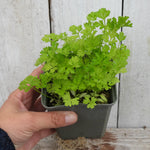
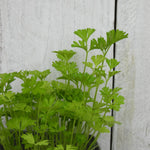


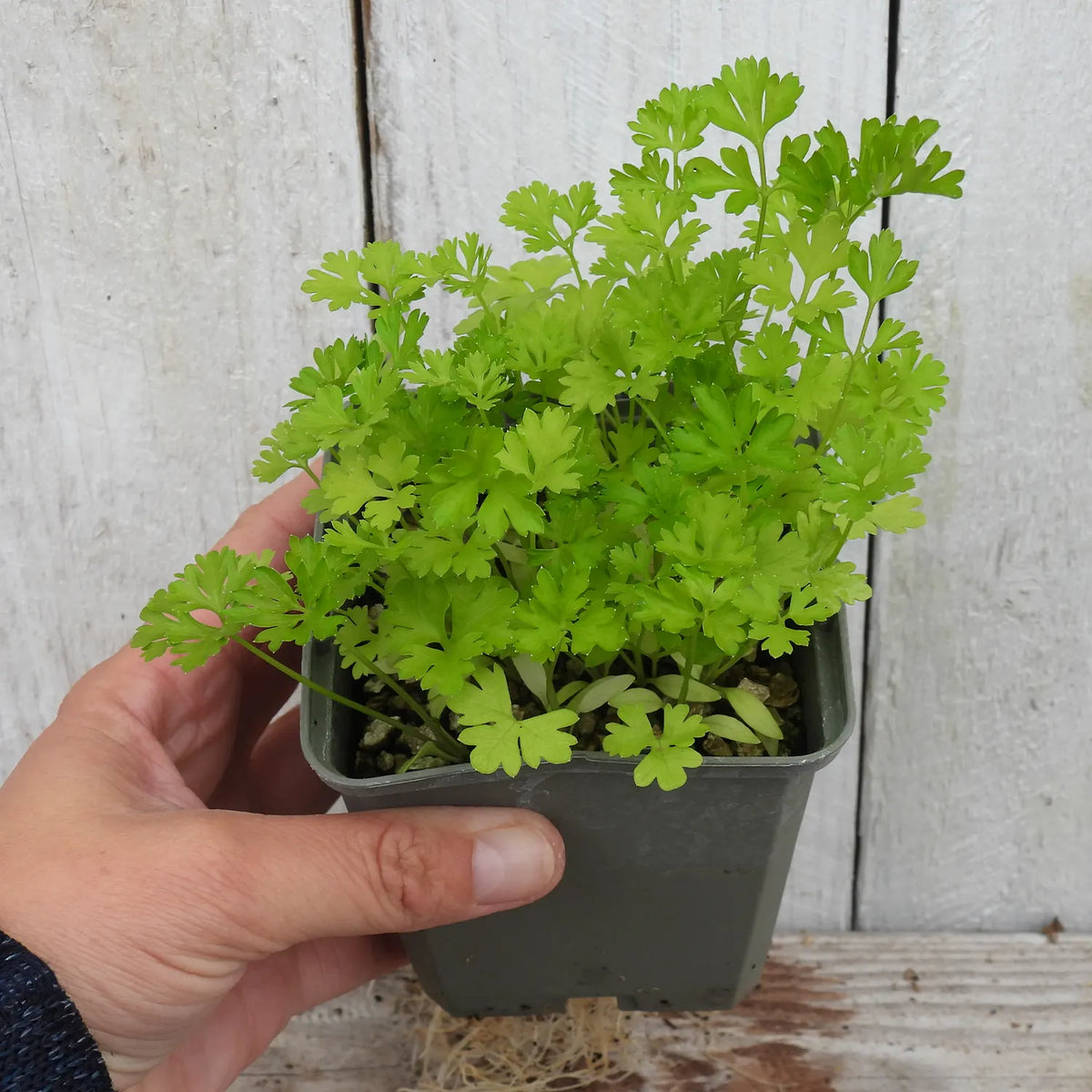
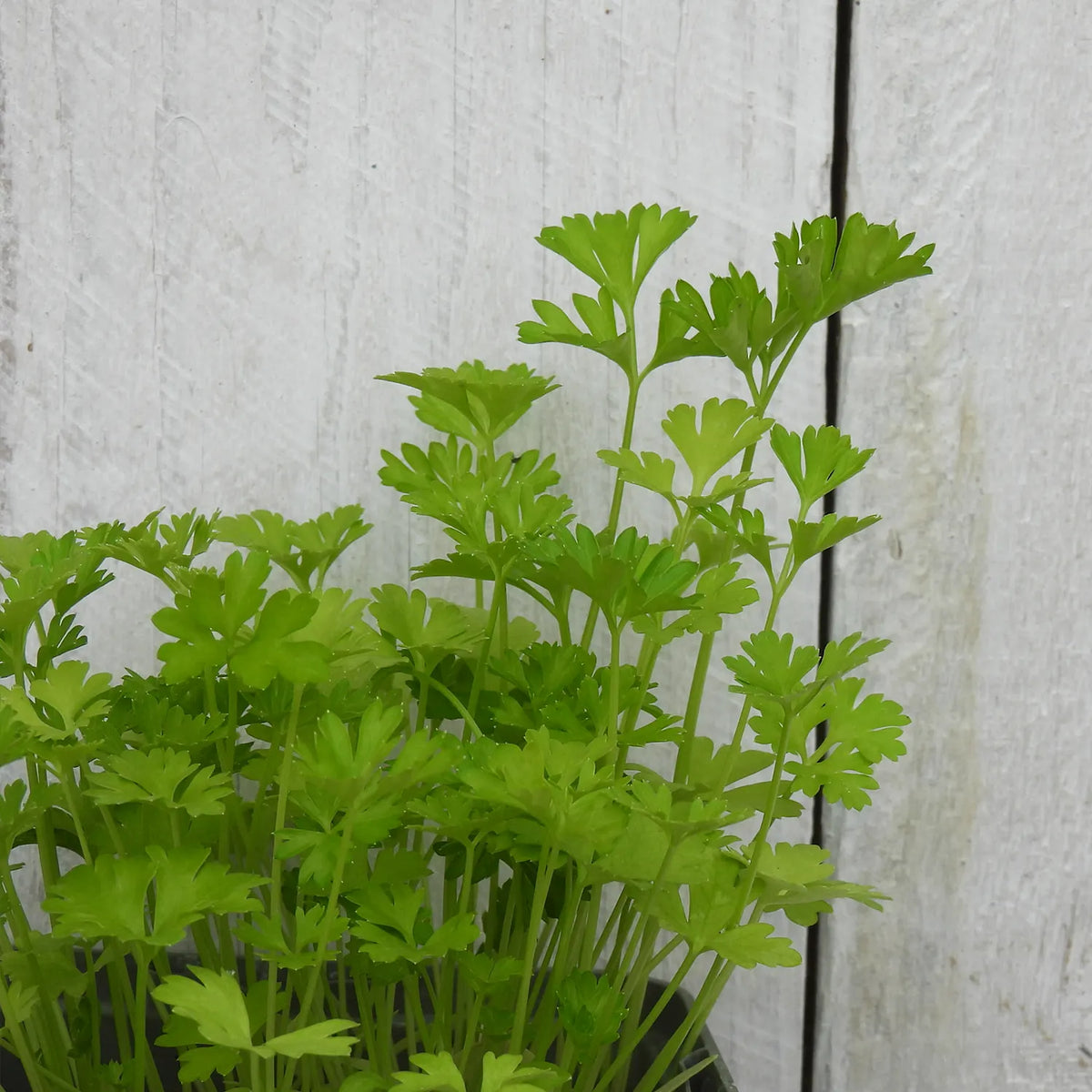
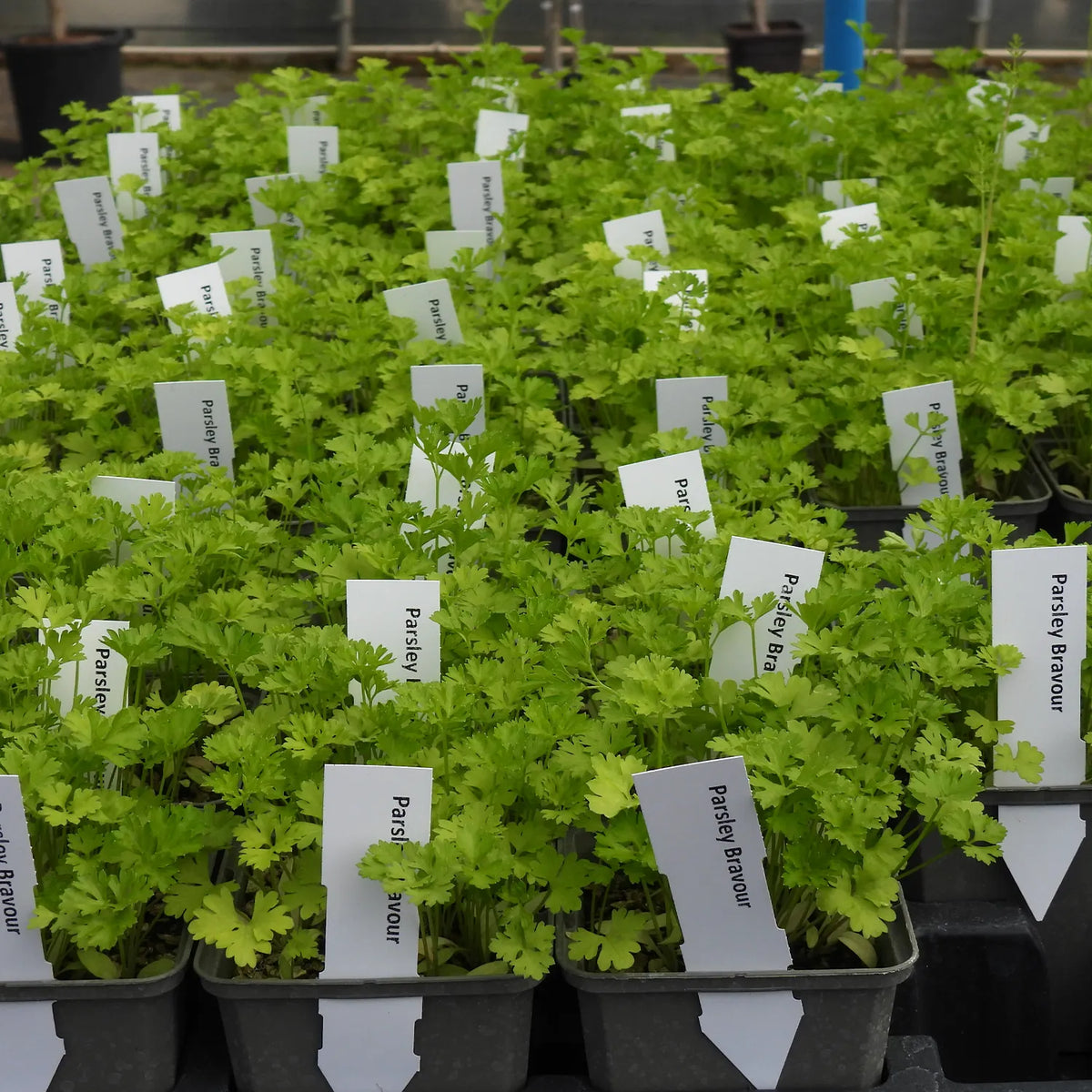



Bravour is the curly parsley that's earned its RHS Award of Garden Merit: denser and darker than the generic types, and better-performing in the garden through the whole season.
Curly parsley has spent decades being dismissed as decoration: the sprig that ends up on the side of the plate. That's unfair. Good curly parsley has a mild, clean flavour that works in compound butters, stocks, and anywhere you want parsley present without it dominating. Bravour, which holds the RHS Award of Garden Merit (1997), is denser and darker than most, with a tighter rosette, less prone to going lank in warm weather, and noticeably better-performing than the generic supermarket herb.
Like all parsley it's biennial, producing leaves through its first season before running to flower in its second. Replace it annually for a continuous harvest. Pick from the outside in, cutting whole stems at the base, and Bravour keeps producing steadily from spring until the autumn frosts. It's a cultivar worth knowing by name.
Curly parsley grows well alongside flat-leaf parsley: the two complement each other in the kitchen and take up almost identical space in the garden. Chives and French tarragon complete the fines herbes quartet. For the full kitchen herb range, see all our herb plants.
Bravour carries no PBR restriction at the plant retail level; we grow it from named seed, by hand, without neonicotinoids. It arrives in a recycled pot. We guarantee every plant.
Bravour holds the RHS AGM (1997) and has a denser, tighter leaf rosette than generic curly types. In the garden it keeps its shape better through the season; in the kitchen the flavour is cleaner. It's a genuinely better plant than the unnamed curly parsley sold in most garden centres.
Flat-leaf has a stronger, more complex flavour and holds up in heat; it's the cook's first choice. Curly is milder and more decorative, better for garnishes and dishes where a subtler parsley note suits. Grow both: they do different jobs.
No. It's biennial: leaves in year one, flowers and seed in year two, then done. Replace it each season for a continuous, productive harvest. It won't behave as a perennial.
Yes. A 20cm+ pot works well; keep it consistently moist. Parsley in containers dries out faster than in the ground and bolts quickly when stressed: watering is the main thing to get right.
April to September. After mid-May it goes straight outside without any cover needed. Water in well and keep moist through the first two weeks while it settles after transplanting.


 Sign In
 Saved items