


Sold as:

from £10.95

Sold as:
from £19.99
 5 Star Service Rating




 Secure, One-Tap Checkout
 5 Star Feefo Rating
 Hand Picked, Delivered to Your Door!
 1 Year Bareroot Guarantee
 Platinum Trusted Service Award 2026
 Mail Order Plant Experts - Est. 1949
 1 Year Bulb Guarantee





Field Rose is the native Rose that scrambles through a hedge instead of standing on its own, with long purple stems, single creamy-white flowers in midsummer and red hips in autumn. It flowers after the other wild Roses, so a mixed hedge keeps flowering after the Dog Rose has finished. It is on the RHS Plants for Pollinators list.
Rosa arvensis, Field Rose, is a good country hedging plant, suitable for any soil. It's best used in combination with other native hedging plants which can include a range of wild roses if you wish. But a simple mix might be part hawthorn, part blackthorn, part hazel and part field rose for example. The field rose is one of the prettiest of the native British wild roses. It's under-used and not appreciated as much as it deserves and because it's so well suited for use in mixed hedges up to about 3 metres tall it should get more attention.
View our selection of rose hedging or see our full range of thorny hedging plants.
If grown as a single species hedge, you should plant Rosa arvensis at 3 plants per metre (i.e. 33cm apart) in a single row. Cut it back hard after planting and again a year later to encourage a thick hedge from ground level up.
However Field Roses are more usually grown as part of a mixed hedge, maybe making up 10% of the mixture. The whole hedge is then planted at 6 plants per metre in a staggered double row, with 33cm between each plant along the row and 40cm between the rows.
This dense growing native shrub is commonly found in country hedgerows. It's covered in single flowers in summer which are then followed in autumn by masses of shiny red hips. Grown on its own a field rose makes a rather mounded specimen, but it also rambles happily and so is an excellent addition to a mixed native hedge.
Rosa arvensis hedge plants are only delivered bareroot, during winter (Nov-April).
All our hedge plants are measured by their height in centimetres above the ground (the roots aren't measured).
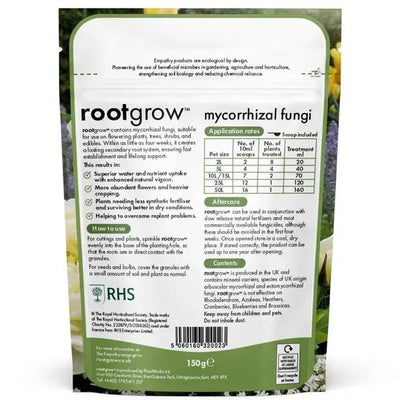
Field Rose climbs through its neighbours, so plant it in a mix: Hawthorn, Blackthorn and Hazel give it something to climb, and Dog Rose flowers before it. Dust the roots with Rootgrow as you plant.
Hedging is not a sideline here: your Field Rose is grown for us as hedging by specialist growers. Bareroot plants are lifted to order while dormant and guaranteed for 12 months. Ashridge has sold plants since 1949 and is a Which? Best Plant Supplier 2025.
Yes. It sends out long, arching stems that scramble through whatever is next to it. On its own it makes a loose mound.
2.5 to 4 metres, within a few years.
In midsummer, once, after the other wild Roses. The flowers are single, creamy-white and lightly scented.
Yes. It grows wild in British hedgerows and woodland edges.
It is H5, hardy through a cold winter, but it is not the Rose for an exposed site in the north.
Cut it back hard after planting and again a year later, so the hedge thickens from the ground up.
Bareroot only, from November to April, while the plants are dormant. You can order at any time of year and your plants are lifted and sent once the season opens.




 Sign In
 Saved items