








 Sign In
 Saved items
 Secure, One-Tap Checkout
 5 Star Feefo Rating
 Hand Picked, Delivered to Your Door!
 1 Year Bareroot Guarantee
 Platinum Trusted Service Award 2026
 Mail Order Plant Experts - Est. 1949



Select form
Select a product

Single Plants
Select Size
About Jilly Sweet Pea Plants
- Variety: Jilly
- Type: Spencer
- Colour: Soft ivory-cream
- Scent: 4–5/5 (Parsons) — strongly perfumed, sweet and clean
- Flowers: Large, broadly waved and elegantly frilled. 6.5cm across (RHS). 4 blooms per stem
- Stems: Long and straight — consistently so, which is why it does well on the show bench
- Height: 2–2.2m (7ft) with support
- Flowering: Late spring to autumn with regular picking
- RHS AGM: Yes (1994) — held continuously for over thirty years
- Show class: Spencer — NSPS Class 2, Cream and Ivory
- Bred by: Harriss, introduced by Unwins, 1988
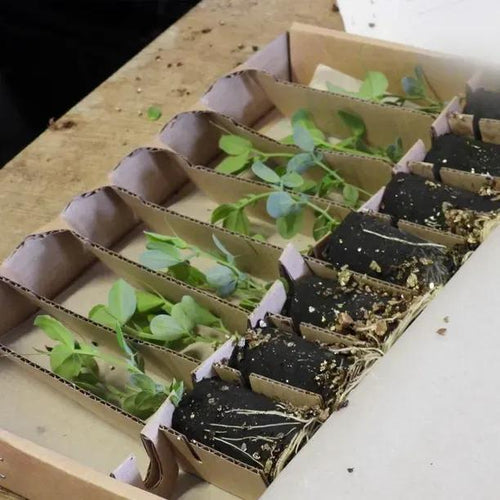
- Sold as: Jumbo plug plants, hand-sown by us
- Plant outdoors: After last frost
- Delivered: March to May by next-day courier
Jilly – The Sweet Pea That Does Everything
If you could grow only one sweet pea variety, a surprising number of experienced growers would pick Jilly. It is not the showiest. It is not the most powerfully scented. It does not have the drama of a deep purple or the warmth of a coral pink. What it has is cream flowers of exceptional quality, a lovely fragrance, long sturdy stems, an RHS Award of Garden Merit, and a knack for making everything around it look better.
The blooms are a soft ivory-cream: the buds open slightly yellow and mature to a pale creamy white. Petals are broadly waved, elegantly frilled, and large enough to hold their own on the show bench. Graham Rice, the transatlantic garden writer, calls it one of the finest varieties available. When we have plants left over after orders, Jilly is always the first one claimed by staff.
A Quiet Achiever
Jilly was bred by Harriss and introduced by Unwins in 1988. It was awarded the RHS Award of Garden Merit in 1994 and has held it ever since, over thirty years of continuous recognition. The NSPS classifies it under Class 2, Cream and Ivory, and it has accumulated a long list of show successes without ever attracting the kind of breathless attention that brighter colours command.
That low-key reputation is actually its strength. Creamy sweet peas are the connective tissue of a mixed display. They calm down clashing neighbours, flatter darker varieties, soften hot pinks, and look beautiful on their own in a simple jug. If you are growing several sweet pea varieties together and want them to look coherent rather than chaotic, Jilly is the variety that makes it work.
Scent, Size, and Season
Scent is rated 4 to 5 out of 5 by specialist growers, which places Jilly among the more strongly perfumed Spencers. The fragrance is sweet and clean, without the clove-like spiciness of some heritage types. A few stems in a bedroom will scent the room overnight.
Plants reach 2–2.2m (7ft or so) with good support. Flower size reaches 6.5cm across, large for a Spencer. Stems are long, straight, and consistent, which is one reason it does well on the show bench. Flowering runs from late spring right through to autumn in a good year, provided you keep cutting and do not allow pods to set.
How to Grow Jilly
Exactly as you would any Spencer sweet pea. Full sun. Rich, moisture-retentive soil improved with organic matter. Support in place before the seedlings go in, plants spaced 10–15cm apart at the base.
In pots, a minimum of 4 litres per plant. Sweet peas in containers dry out fast and need daily watering in warm spells. Feed fortnightly with a high-potash feed once buds appear – comfrey tea or tomato feed work well. For detailed guidance, see our sweet pea growing guide.
Pairing Ideas
Jilly is the base for the kitchen jam jar arrangements chez Mr & Mrs Ashridge. Cream goes with everything, but it goes particularly well with varieties at the extremes. Heathcliff (deep maroon) and Almost Black make a moody, sophisticated combination with Jilly as the mediator.
For something lighter, pair with Flora Norton (sky blue Grandiflora) or Anniversary (soft pink). The three together on a wigwam look like a proper cottage garden. If you grow sweet peas up a pillar or against a wall, try threading them through a climbing rose – something pale like Compassion or New Dawn from our climbing roses would be a beautiful match, and the rose gives the sweet peas something to grab onto.
Why Buy Your Sweet Pea Seedlings from Ashridge?
We have been growing sweet peas in Somerset since the early 2000s. The seed, which we collect, is hand-sown at two seeds per plug, and the weaker seedling is removed. Every plant is then pinched out to encourage bushy growth and hardened off before dispatch. What you are buying are sturdy, garden-ready jumbo plug plants that have had the best possible start.
We send your sweet peas out by next-day courier between March and May, packed in purpose-designed recycled cardboard packaging. The moment they arrive, they are ready to go into the ground or a container. If anything is not right, we have real people on the phone in Somerset who will sort it out. We hold a Feefo Platinum Service Award and have been named a Which? Best Buy plant supplier – endorsements that came from our customers, not our marketing team.
Frequently Asked Questions
Does Jilly hold the RHS Award of Garden Merit?
Jilly was awarded the AGM in 1994 and has held it continuously since, over thirty years of unbroken recognition that speaks to its reliability.
What type of sweet pea is Jilly?
A Spencer, classified by the NSPS under Class 2 (Cream and Ivory). Large, waved petals, long stems, and the vigorous growth habit that defines the Spencer group.
How fragrant is Jilly?
Very. Rated 4 to 5 out of 5 by specialist growers. The scent is sweet and clean – a generous handful will perfume a room.
Can I grow Jilly in a container?
Yes, 4 litres per plant minimum. Use a deep container, keep it well watered, and feed fortnightly with tomato feed once buds appear. Containers dry out faster than borders, so daily watering in warm spells is essential.
Is Jilly a good cut flower?
One of the best. Long, straight stems and consistent form make it reliable for the vase. Cut when the lowest bloom is just opening, strip the leaves below the waterline, and change the water daily. Expect 5–7 days of vase life. More cutting varieties in our sweet pea collection.