


Sold as:

from £6.99

Sold as:
from £19.99
 5 Star Service Rating




 Secure, One-Tap Checkout
 5 Star Feefo Rating
 Hand Picked, Delivered to Your Door!
 1 Year Bareroot Guarantee
 Platinum Trusted Service Award 2026
 Mail Order Plant Experts - Est. 1949
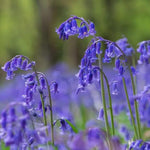
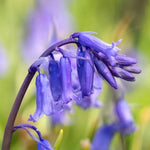




These are the true native Bluebell, Hyacinthoides non-scripta: scented, violet-blue bells on arching stems in April and May, for partial shade under trees and along hedges. The bulbs are grown from cultivated stock in the UK, sent dry in autumn, and spread into a carpet once settled.
Bluebells, Hyacinthoides non-scripta, are the nation’s favourite spring flowering native bulb. They're at home in woodland, at the foot of hedges and in shady parts of the garden. Bluebells naturalise well and are strong, self-sufficient and beautiful to boot. Browse all our spring flowering bulbs.
Most commonly seen around the trunks of trees in deciduous woodland, bluebells are distinctive not only because of the easily recognisable sea of colour they create, but also because of their leaning stems and long drooping leaves.
Bluebells flower and leaf from April onwards and spend the rest of the year underground as bulbs. When planting you simply dig a small hole and place them tip upwards so when covered with soil they're twice their own height below ground level.
Their spring flowering lets them take advantage of a smidge or two of sunlight without getting too hot and bothered. This is also the perfect environment for them to woo a plethora of pollinating insects without the competition of summer flowers. See our full range of bulbs.
Carpets of bluebells bring much needed colour to a garden as well as bringing life to shady, difficult areas that are often neglected. Many gardeners see a shady corner of their garden as a problem area, but this is one of a whole host of amazing varieties that will positively thrive there.
Beware planting these little blue beauties in waterlogged soil though as they might not survive to flower the following year. Avoid overcrowding with other bulb varieties and you can expect to see a month or two of blue carpets in your garden.
Bluebells also give off a sweet scent that attracts pollinating insects. The sap is sticky and in days long gone by it was used for a whole host of functions, including binding books.
With a soft spot for the roots of deciduous trees in particular (where it'll naturalise readily) these are a true British flower that brings a smile to the lips of children and adults alike with their distinctive nodding cobalt-blue bells.
Down the years, bluebells have been classified in a few different ways, and you may see them listed in older books as Scilla nutans or non-scripta, Endymion nutans or non-scriptus, and Agraphis nutans.
Bluebells are protected, so it's illegal to dig them up in the wild. Our bluebells are all cultivated in the UK.
Bluebells belong with the other bulbs of the woodland floor. Wood Anemones flower just before them in the same shade, and Wild Daffodils open the season on the sunnier edge. If you miss the autumn, we send the same Bluebells in the green from February to April. A pinch of Rootgrow bulb starter in the planting hole helps them settle.
Ashridge has sold plants since 1949 and is a Which? Best Plant Supplier 2025. Your Bluebells are grown from cultivated stock and never taken from the wild. They are sent as dry bulbs from October to December, which is the time to plant them.
In autumn, about 8cm deep. We send the dry bulbs from October to December. Plant them soon after they arrive.
About 8cm deep, with the tip upwards, which is roughly twice the height of the bulb.
Yes. They are Hyacinthoides non-scripta, the native species. Wild Bluebells are protected, and ours are grown from cultivated stock in the UK.
They are the same plant. Dry bulbs go in from October to December. Bluebells in the green are lifted in leaf and sent from February to April.
Yes, partial shade is what they want. Give them humus-rich, well-drained soil that does not dry out. Avoid waterlogged ground.
Yes. They spread rapidly, which is what you want under trees and less so in a small border. Deadhead them if you need to stop them seeding.
As dry bulbs, from October to December. You can order at any time of year and your bulbs are sent once the season opens.


 Sign In
 Saved items