Sold as:

from £10.95

Sold as:
from £19.99
 5 Star Service Rating




 Secure, One-Tap Checkout
 5 Star Feefo Rating
 Hand Picked, Delivered to Your Door!
 1 Year Bareroot Guarantee
 Platinum Trusted Service Award 2026
 Mail Order Plant Experts - Est. 1949
 1 Year Bulb Guarantee
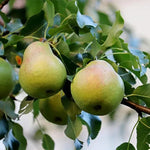





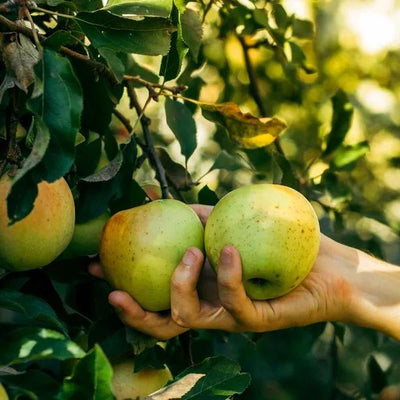
A truly ripe Onward needs a knife and fork, or a willingness to have juice running down your chin. Eat it fresh: this one is for the fruit bowl, not the store.
Onward is a September dessert pear bred from Doyenné du Comice, with the same smooth, soft, juicy flesh and a touch of lip-smacking acidity threaded through the sweetness. It fruits weeks ahead of its famous parent, so you get the Comice experience while the weather is still warm. The skin is thinner than Comice's, which is why it stores for only a few weeks; in most pear-loving households, that is never the problem it sounds.
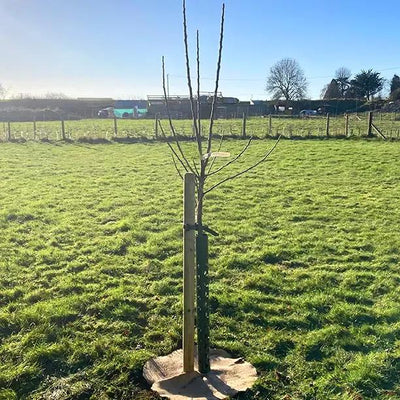
On Quince A roots it makes a garden tree of 3–4m, cropping from its fourth or fifth year, and as a spur-bearer it trains well as a cordon or espalier where space is short.
Onward was bred at the RHS garden at Wisley in 1947, a cross between Doyenné du Comice and Laxton's Superb, the pear rather than the apple of that name. The aim was Comice quality on an earlier, more obliging tree, and that is what it delivers.
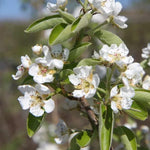
Onward is in pollination group D and needs a second pear in the same or a neighbouring group. The one tree that will not do the job is its own parent Comice: the two flower together but refuse to cross. Good partners from our range include Conference and Williams Bon Chretien, and the full list is in our guide to pollinating pear trees. If you are starting an orchard rather than planting one tree, the apple trees share the same culture and stretch the harvest either side of the pears.
Onward is field grown for us by specialist fruit growers and lifted the week it travels, between November and April. Maidens arrive pre-pruned for the form you have chosen, packed in purpose-designed recycled cardboard. We were voted Which? Best Plant Supplier 2025.
Any pear in pollination group C or D except Doyenné du Comice, which is Onward's parent and will not cross with it. Conference and Williams Bon Chretien are both reliable choices that flower at the right time.
Onward ripens in September, weeks before Comice, with very similar smooth, juicy flesh; Comice is the later, larger fruit and the better keeper. Onward's thinner skin means you eat it fresh rather than storing it.
Only a few weeks in a cold place, because the skin is thin. Pick in September, ripen indoors through October, and plan to eat them as they come ready rather than laying them down for winter.
Yes. Onward is a spur-bearer, so it takes well to cordon and espalier training and starts most easily from a maiden, which arrives ready to shape against a wall or wires.
Quince A, the semi-vigorous standard for garden pears. It keeps the tree to about 3–4m as a bush and brings the first proper crop within four to five years of planting.






 Sign In
 Saved items