


Sold as:

from £6.99

Sold as:
from £19.99
 5 Star Service Rating




 Secure, One-Tap Checkout
 5 Star Feefo Rating
 Hand Picked, Delivered to Your Door!
 1 Year Bareroot Guarantee
 Platinum Trusted Service Award 2026
 Mail Order Plant Experts - Est. 1949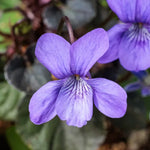
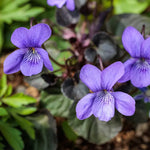

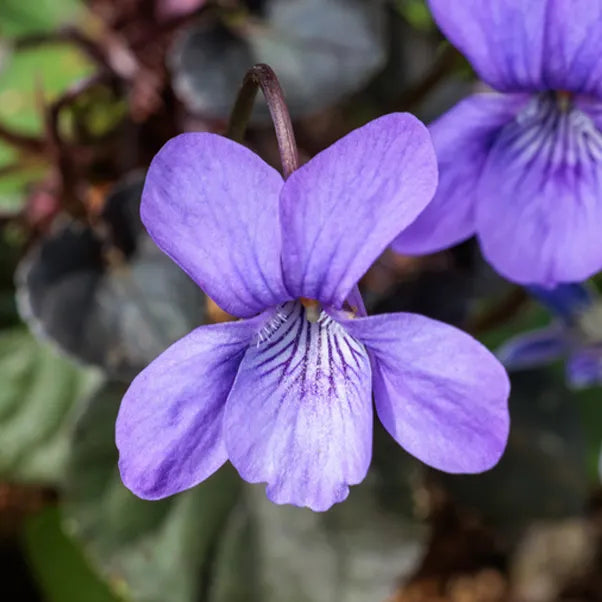
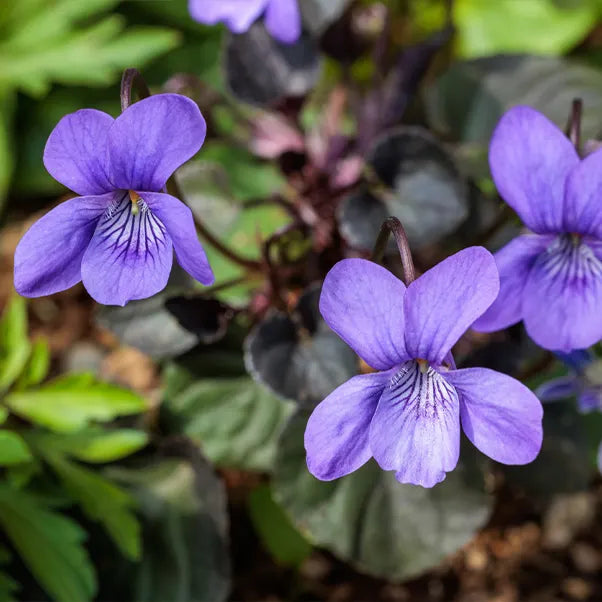
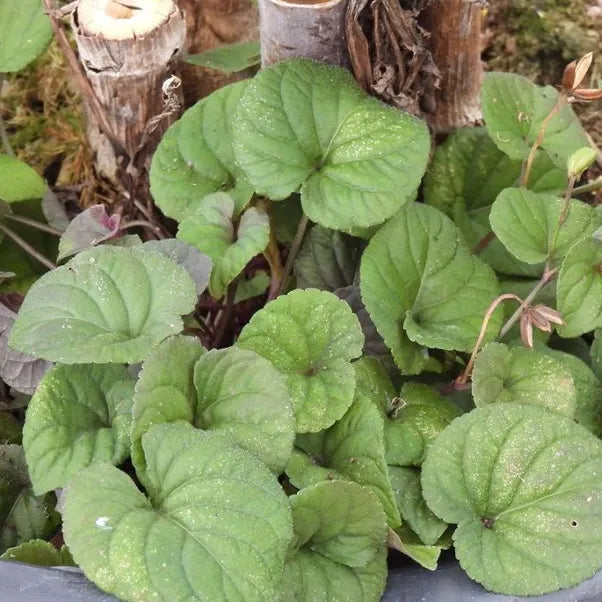




Viola labradorica is a compact semi-evergreen violet with purple-tinged foliage and small purple-violet flowers in April and May. It is one of the best small groundcover plants for shaded positions, self-seeding gently through borders and under shrubs in a way that is helpful rather than troublesome.
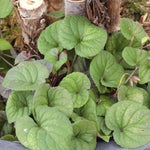
Viola labradorica does something that very few plants will do: it colonises the dry, shaded ground under established shrubs and trees — the darkest, driest corners where almost nothing else grows — and makes something attractive out of it. The foliage is the real asset. Small, rounded leaves in a distinctive purple-bronze green, semi-evergreen so present year-round, and low enough (10cm) to slot beneath almost anything. The flowers are neat and purple-violet, produced in April and May, and while they are modest individually, a spreading colony in flower under a dark-leaved shrub has real charm. It self-seeds with some enthusiasm, which means one plant becomes three becomes a spreading carpet over two or three years. This is the point of it.
The formal classification of Viola labradorica has shifted about a bit — it is sometimes listed as Viola riviniana Purpurea Group, and the two are closely related. Whatever it is called, the plant in the garden behaves the same: low, spreading, quietly purple-tinged, useful in difficult positions, and happy to be left alone. Pull up any self-seeded plants you don't want; the rest will knit together into a weed-suppressing mat that looks as if it was planned.
The best companions for Viola labradorica are larger plants under which it can self-seed and spread. Planted beneath the darker heucheras, the purple foliage of the viola echoes the leaf colour above. Ajuga Catlin's Giant makes a contrasting companion — much larger leaves, similar bronze tones, blue rather than violet flowers — and the two together give a shaded border more depth than either would alone. For a moist shaded spot, Astilbe Pumila rises above the viola carpet in July and August with lilac plumes. Viola labradorica also works as a self-seeding filler between shrubs in the clematis border, threading into spaces where weeds would otherwise get a hold.
We use peat-free compost and biological pest controls. Viola labradorica is one of those plants that rewards benign neglect more than most: plant it, let it spread, remove what you don't want. The people who grow your plants are the same people who pack your order and answer your questions. Every plant is guaranteed. See the full perennial collection.
It self-seeds and spreads by runners, so it does spread — but not aggressively. Young seedlings are small and shallow-rooted and pull up easily. In most gardens it fills gaps usefully rather than becoming a problem, and its low height means it does not swamp anything. In a very small or highly managed garden, remove seedheads before they ripen if you want to limit spread.
Yes — this is one of its main virtues. It tolerates deeper shade than most small perennials, including the dry shade under trees and dense shrubs where very little else will grow. It flowers most freely in dappled or part shade, but it persists and spreads in conditions that defeat many competitors.
As a self-seeding groundcover under shrubs or between larger perennials in a shaded border. Plant one or two and allow them to spread by seed and runner over two or three seasons. Remove self-seeded plants growing in the wrong places and leave the rest to form a weed-suppressing mat. It works particularly well under dark-leaved shrubs where the purple foliage tones echo the planting above.
They are closely related and often confused — some authorities treat them as the same plant or as variants of one another. In garden terms the difference is negligible: both have purple-tinged foliage, purple-violet flowers, and a spreading self-seeding habit. If you see one listed under either name, expect the same plant.
The main flush is April and May, with occasional flowers continuing through June. It is not a repeat-flowering plant, so the foliage does most of the work through summer and autumn. The purple-tinged leaves remain ornamental long after the flowers are over, which justifies its place in a year-round planting scheme.


 Sign In
 Saved items