
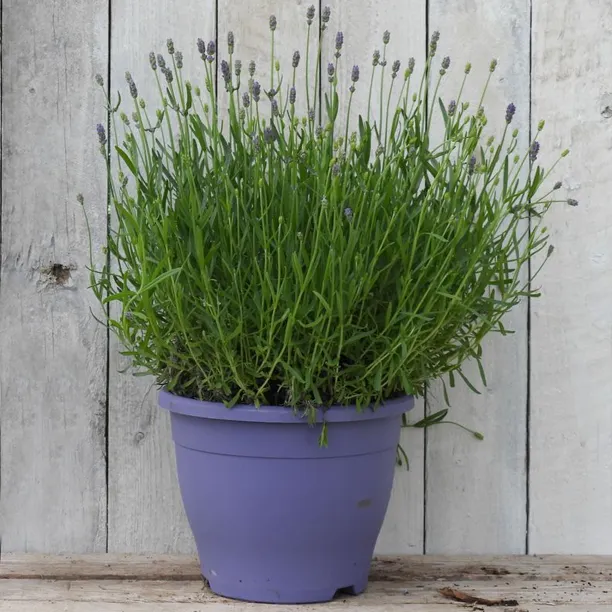
Can you grow lavender in pots and containers?
Yes — lavender grows very well in pots and containers, provided you use the right compost mix, choose a compact variety, and resist the urge to overwater. Container growing actually suits lavender’s Mediterranean origins, because you can fine-tune drainage and move the pot into shelter over winter if needed.
Related guides
- Harvesting Lavender Flowers
- How to Cut Back Lavender Plants in Late Summer
- How to grow lavender — planting, feeding, soil and year-round care
- How to Water Lavender — When, How Often, and How Much
- Is Lavender Native to the UK?
Which lavender varieties are best suited to growing in pots?
Compact, naturally tidy English lavenders (Lavandula angustifolia) are the safest choice for containers; they tolerate UK winters reliably and stay in proportion without swamping a pot. Larger Dutch lavandin hybrids generally perform less well in confined roots and are better saved for open ground.
The table below uses a three-tier rating based on suitability for year-round container growing in the UK:
| Variety | Type | Approx. height in a pot | Container suitability |
|---|---|---|---|
| Munstead | English | 30–40 cm | ✅ Firm YES |
| Lusi Purple | French stoechas | 30–45 cm | ✅ Firm YES |
| Arctic Snow | English | 30–40 cm | ✅ Firm YES |
| Hidcote | English | 30–45 cm | 🟡 Qualified YES |
| Rosea (Loddon Pink) | English | 40–50 cm | 🟡 Qualified YES |
| Papillon | French stoechas | 35–50 cm | 🟡 Qualified YES |
| Grosso | Dutch lavandin | 60–80 cm | ❌ Not ideal |
Firm YES varieties are compact, tidy and genuinely contented in a pot for several years. Munstead is arguably the definitive container lavender: short-jointed stems, good cold hardiness, and a bushy mound that never looks out of place on a terrace or doorstep. Arctic Snow brings the same tidy habit with white flowers — useful for pots where you want a fresh, neutral palette. Lusi Purple, a French stoechas type, starts flowering earlier in the season (often April) and puts on a spectacular show; it is less hardy than the English varieties so should be moved under glass or into a porch in hard frosts.
Qualified YES varieties work in pots with a little extra attention. Hidcote is very popular and perfectly manageable in a large container, but it tends to get leggier than Munstead as it ages. Papillon — one of the butterfly lavenders — is showy and compact enough for a decent-sized pot, but again needs frost protection in colder parts of the UK. Loddon Pink (often listed as Rosea) is a soft-pink English lavender that grows slightly taller; use it in a generous container and prune it firmly each year.
Not ideal: Grosso and Vera. Grosso is a lavandin (a cross between English and spike lavender) bred for field production of essential oil. It forms a large mound — 60–80 cm tall and as wide — and has an extensive root system that quickly becomes pot-bound. Growing it in a container stunts it and makes it more vulnerable to winter wet. It will survive, but it will never thrive the way it does in open ground. Vera (Old English lavender) has similar vigour and is best planted in a border.
What size pot does lavender need?
A minimum internal diameter of 30 cm and a depth of at least 25 cm is the practical starting point for a single plant; 35–40 cm across is better for anything you want to look generous. The key constraint is not so much the surface area as the depth — lavender roots run downward, and a shallow pot warms, dries and waterlog unevenly.
Terracotta is the classic choice for good reason: it breathes, wicking away excess moisture through its walls. Glazed ceramic retains moisture longer, which is fine in summer but can lead to soggy compost in a wet autumn or winter — compensate with extra grit in the mix. Plastic and fibreglass pots are lighter for roof terraces and balconies but offer no evaporative breathing; drainage becomes even more critical.
Whatever material you choose, the pot must have drainage holes. If you are placing a pot on a saucer, remove the saucer in autumn so the pot never sits in standing water. Raising the pot a couple of centimetres on pot feet significantly reduces root rot risk in rainy weather.
What is the best compost mix for lavender in pots?
Lavender in pots needs a free-draining, low-fertility compost — a gritty, lean mix that mimics the poor, alkaline soils of the Mediterranean hillsides where lavender evolved. The most widely cited specialist formula comes from the Downderry Nursery (the UK’s National Collection holders for lavender), and it is specific enough to be genuinely useful:
Mix 3 parts loam-based compost (such as John Innes No. 2) with 1 part horticultural grit or perlite. Avoid peat-free multipurpose composts as the sole growing medium — they retain too much moisture and often become hydrophobic when dry.
The reasoning behind this recipe is straightforward:
| Ingredient | Role | Why it matters for lavender |
|---|---|---|
| John Innes No. 2 (loam-based) | Body and modest nutrition | Heavier than multipurpose; resists shrinking; naturally alkaline pH suits lavender |
| Horticultural grit | Drainage and aeration | Keeps air pockets open around roots; prevents compaction; allows fast drainage after rain |
| Perlite (optional substitute) | Lightweight drainage | Good choice for roof terraces where weight is a concern; less effective visually if it migrates to the surface |
A 2–3 cm layer of coarse grit or small pebbles on top of the compost also helps: it keeps the neck of the plant dry (the junction between stems and roots is the single most vulnerable point for rot) and reflects heat back up into the canopy — just as white limestone chippings do in a Mediterranean garden.
Avoid adding fertiliser to the compost when potting up. Lavender in rich compost produces lush, soft growth that is prone to disease and flopping. The modest nutrients in John Innes No. 2 are more than sufficient for the first season.
How do you plant lavender in a pot?
The process is simple, but several small details have an outsized effect on how well the plant establishes. Follow this sequence for best results:
- Choose the right time. Late spring (May) or early autumn (September) are ideal; avoid planting in the height of summer heat or during a frost.
- Cover the drainage holes with a crock (a piece of broken terracotta) or a small square of weed-suppressing membrane — not a solid layer of stones, which research shows impedes drainage rather than aiding it.
- Part-fill with your compost mix to leave space for the root ball.
- Water the plant in its nursery pot thoroughly and let it drain for an hour before planting. This prevents the root ball pulling moisture out of the surrounding compost.
- Position the plant so the top of the root ball sits about 2 cm below the final soil surface. The crown (where stems meet roots) should be at or slightly above the compost surface — never buried.
- Firm gently around the root ball, then water in and allow to drain completely.
- Apply a grit mulch around the neck of the plant.
How often should you water lavender in a pot?
Less often than you think, and always less in autumn and winter. The single most common cause of lavender failure in containers is overwatering — soggy compost rots the roots and the crown, and the plant declines rapidly, often looking drought-stressed before it dies (because the rotted roots can no longer take up water).
A useful guideline is to water when the top 3–4 cm of compost feels dry to the touch. In practice:
| Season | Typical watering frequency | Notes |
|---|---|---|
| Spring (establishment) | Every 7–10 days | Water more often if dry and windy; newly planted roots need time to explore the pot |
| Summer (active growth) | Every 5–7 days in heat; fortnightly in cool periods | Terracotta pots dry faster; check with finger regularly |
| Autumn | Every 2–3 weeks or relying on rainfall | Reduce sharply as temperature drops; move pot under a roof overhang if prolonged rain forecast |
| Winter | Monthly at most, or none if rainfall adequate | Dormant roots need very little moisture; wet + cold = the worst combination for lavender |
When you do water, water thoroughly — flood the pot until water flows freely from the drainage holes, then leave it alone until the compost has largely dried out again. Little-and-often watering is counterproductive, encouraging shallow roots and keeping the crown constantly damp.
Does lavender in containers need feeding?
Lavender needs very little feeding, and overfeeding is actively harmful — it produces soft, floppy growth, reduces flower quality and makes the plant more susceptible to disease. In open ground, established lavender needs no feeding at all; in a pot, there is a modest case for a single annual feed because the nutrients in even a loam-based compost are eventually exhausted.
If you choose to feed, apply a low-nitrogen fertiliser — a tomato feed (high in potassium) or a general balanced fertiliser, used at half the recommended rate — once in late April or early May. Do not feed after July, as this promotes soft late-season growth that is vulnerable to frost damage. Do not use high-nitrogen lawn feeds or general-purpose granular fertilisers rich in nitrogen; these are precisely what you want to avoid.
How and when should you prune pot-grown lavender?
Pruning is the single most important maintenance task for lavender in any situation, but it is particularly critical in containers, where an unpruned plant quickly becomes a woody, bare-centred mound that cannot be rescued. Prune twice a year: lightly in late August or September after flowering, and more firmly in March or early April as growth resumes.
The golden rule — never cut back into old brown wood. Lavender cannot regenerate from leafless old wood the way, say, a buddleia or hard-pruned box can. Always leave some green growth on every stem you cut. In practice, aim to remove about one-third to one-half of the current season’s soft growth in the late-summer prune, shaping the plant into a tight dome. In the spring prune, tidy the shape and remove any winter-damaged shoots.
For pot-grown lavender specifically, the late-summer prune also matters for a structural reason: a tighter, more compact mound is much less likely to be rocked loose by autumn wind or split apart by the weight of frost-laden stems. Aim for a shape that is roughly hemispherical — wider at the base, rounded at the top.
How do you overwinter lavender in a pot?
English lavender varieties — Munstead, Arctic Snow, Hidcote, Loddon Pink — are sufficiently cold-hardy that they can stay outside in most parts of the UK through winter, provided the pot drains well and is not left sitting in water. French stoechas types (Lusi Purple, Papillon) are less hardy and benefit from shelter — a cold greenhouse, unheated conservatory or simply a spot against a south-facing wall under a roof overhang.
The main winter threats in order of severity are:
- Waterlogged compost — by far the most common killer; address this with grit in the mix and good pot drainage.
- Persistent frost penetrating the pot walls — terracotta can crack, and the root ball can freeze solid for days; wrapping the pot (not the plant) in horticultural fleece or bubble wrap insulates the roots without trapping humid air around the foliage.
- Cold, wet wind — desiccates evergreen foliage; position the pot in a sheltered corner in exposed gardens.
Do not be tempted to bring pots of English lavender into a heated greenhouse or living room for the winter. They need a cold, dry dormancy period to flower well the following year. A cold-but-frost-free greenhouse or cold frame is ideal for tender varieties; open air with good drainage is fine for English types.
When and how should you repot lavender?
Lavender in a container typically needs repotting every two to three years — not necessarily into a bigger pot, but into fresh compost, because spent compost compacts, loses structure and develops pockets that stay wet. Signs that repotting is overdue include roots emerging from the drainage holes, noticeably reduced flowering despite good care, or compost that dries almost immediately after watering (a sign it has become hydrophobic).
The best time to repot is in spring, just as growth resumes. Remove the plant, shake off old compost, trim any circling or dead roots, and replant in fresh John Innes No. 2 / grit mix. If the plant has become genuinely pot-bound, you can move it up one size (roughly 5 cm larger in diameter), but resist the urge to over-pot — a very large pot around a small root ball holds too much cold, wet compost in relation to what the roots can absorb.
What can go wrong with lavender in pots, and how do you fix it?
Most problems trace back to the same root causes: too much water, too little sun, or insufficient pruning. Here is a quick diagnostic guide:
| Symptom | Most likely cause | Fix |
|---|---|---|
| Grey, fluffy growth on stems; stems collapsing at base | Botrytis (grey mould) — usually from wet conditions | Remove affected stems, improve drainage, move to a more open sunny position |
| Leggy, woody plant with little foliage; sparse flowers | Insufficient pruning over several years | If any green remains on lower stems, prune hard in spring; if no green remains on old wood, the plant cannot recover — replace it |
| Plant looks wilted despite moist compost | Root rot from overwatering | Allow to dry out; check roots (brown, mushy = rot); repot into fresh gritty compost if some healthy roots remain |
| Pale, thin, elongated growth; few flowers | Insufficient sunlight | Move pot to a sunnier position — lavender needs at least 6 hours of direct sun per day |
| Foliage yellowing; poor growth | Compost too acidic, or nitrogen excess | Repot into fresh John Innes No. 2 mix; stop feeding with high-nitrogen feeds |
Aphids occasionally colonise the soft new growth tips in spring. On a container plant the simplest treatment is a firm jet of water to dislodge them, repeated on three or four consecutive days. Lavender’s aromatic oils generally deter most pests, and populations rarely become serious.
Frequently Asked Questions
Can lavender grow in a small pot?
Yes, but the pot should be at least 25–30 cm across and deep. A Little Lady or Munstead will suit a smaller container better than a large vigorous variety.
What compost should I use for lavender in a pot?
Mix three parts John Innes No. 2 loam-based compost with one part horticultural grit. This replicates the Downderry Nursery formula and provides the drainage lavender needs in a container.
How often should I water lavender in a container?
Water when the top 3–4 cm of compost feels dry — roughly every 5–10 days in summer, fortnightly in spring and autumn, and barely at all in winter. Overwatering is the most common cause of failure.
Should I use a saucer under my lavender pot?
Remove any saucer in autumn and winter so the pot never sits in standing water. In summer a saucer is acceptable but empty it within an hour of watering so roots are never waterlogged.
Which is better for pots — Munstead or Hidcote?
Munstead is generally the better container choice — it stays more compact and tidy over time. Hidcote works well too but benefits from a larger pot and firm annual pruning.
Can I grow French butterfly lavender in a pot?
Yes — Lusi Purple and Papillon do well in pots and flower earlier than English types. Move them under frost-free shelter in hard winters as they are less cold-hardy than English lavenders.
Does lavender in a pot need feeding?
Very little. At most, a single application of low-nitrogen fertiliser at half strength in late April. Never feed after July. Rich feeding produces soft, disease-prone growth and reduces flowering quality.
Can lavender survive winter in a pot outside in the UK?
English varieties like Munstead and Arctic Snow are generally hardy enough to stay outside, provided drainage is excellent. French stoechas types need frost-free shelter in colder areas.
How do I stop lavender in a pot getting woody?
Prune twice yearly — lightly after summer flowering (August–September) and more firmly in early spring. Always leave green growth on every stem; cutting into bare old wood will kill the branch.
Why is my pot lavender not flowering?
The most common reasons are insufficient sun (lavender needs 6+ hours daily), over-rich compost or excess nitrogen feeding, or failure to prune, which results in exhausted old wood producing few new flowering shoots.
How big a pot does a lavender plant need?
A minimum of 30 cm diameter and 25 cm deep for a single plant. Go larger for Hidcote or pink varieties; compact types like Little Lady or Munstead manage well in 25–30 cm pots.
Can I grow lavender indoors?
Only on a very sunny windowsill, and not long-term. Lavender needs full outdoor light levels and good air circulation; indoor conditions rarely provide enough light, and stagnant air encourages fungal disease. A cold greenhouse is far better than a warm room.
Related Products
- Munstead English Lavender
- Arctic Snow English Lavender
- Lusi Purple French Lavender
- Little Lady Lavender
- Hidcote English Lavender
- Papillon Butterfly Lavender
- Loddon Pink English Lavender
- BeeZee Dark Blue English Lavender
- Miss Katherine Lavender
- Melissa Lilac English Lavender
- Shop All English Lavender
- Shop All French Butterfly Lavender
- Shop All Lavender
Related Articles
- How to grow lavender — planting, feeding, soil and year-round care
- Types of lavender — the differences between English, French and Dutch lavender
- How and when to prune lavender — including woody plants and different types
- How to Cut Back Lavender Plants in Late Summer
- How to Water Lavender — When, How Often, and How Much
- Lavender Diseases — Causes and Treatment
- Lavender — First Trim in February or March
- Harvesting Lavender Flowers
Leave a Reply