
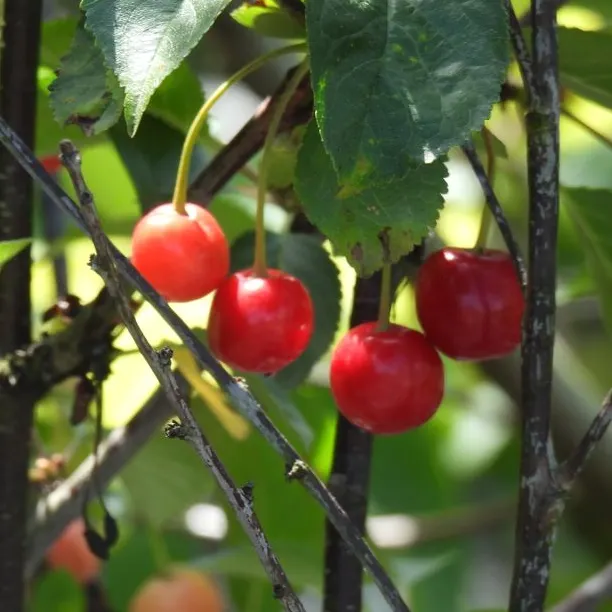
What are the best fruiting cherry trees for UK gardens?
The best fruiting cherry tree varieties for UK gardens include ‘Stella’ for self-fertility and reliability, ‘Sunburst’ for early crops, and ‘Morello’ for cooking cherries that thrive in partial shade. Sweet cherries like ‘Lapins’ and ‘Cherokee’ offer exceptional flavour, while sour cherries such as ‘Nabella’ provide excellent disease resistance for organic growing.
Related articles
- Complete Guide to Planting Fruit Trees
- Cherry Tree Care: Pruning, Feeding and Maintenance
- Understanding Fruit Tree Pollination Groups
- Best Fruit Trees for Small Gardens
Should I choose sweet or sour cherries for my garden?
Sweet cherries are ideal for eating fresh and require full sun with well-drained soil, while sour cherries excel for cooking and preserving whilst tolerating partial shade and heavier soils. Sweet varieties typically need cross-pollination partners, whereas most sour cherries are self-fertile, making them perfect for smaller gardens with space for just one tree.
Sweet cherries (Prunus avium) produce the large, juicy fruits perfect for summer snacking. However, they’re more demanding regarding growing conditions and often require two compatible varieties for successful fruiting. Popular sweet cherry varieties include early-season ‘Early Rivers’, mid-season ‘Stella’, and late-season ‘Regina’.
Sour cherries (Prunus cerasus) offer greater reliability and versatility. Their tart fruits transform beautifully when cooked into pies, jams, and preserves. The classic ‘Morello’ cherry thrives against north-facing walls where sweet cherries would struggle, making efficient use of challenging garden spots.
| Cherry Type | Best For | Sun Requirements | Pollination |
|---|---|---|---|
| Sweet Cherry | Fresh eating | Full sun | Usually needs partner |
| Sour Cherry | Cooking, preserving | Partial shade OK | Self-fertile |
Which cherry tree varieties are self-fertile?
Self-fertile cherry varieties include ‘Stella’, ‘Sunburst’, ‘Lapins’, ‘Sweetheart’, and all sour cherry varieties like ‘Morello’ and ‘Nabella’. These varieties can fruit successfully without a pollination partner, making them ideal for smaller gardens or when you only have space for one fruiting cherry tree.
Self-fertility is a crucial consideration for many gardeners, particularly those with limited space. The breakthrough variety ‘Stella’, developed in Canada, was the first truly reliable self-fertile sweet cherry and remains one of the most popular choices for UK gardens.
Modern breeding has produced several excellent self-fertile sweet cherries. ‘Sunburst’ offers early fruiting with large, dark red cherries, while ‘Lapins’ provides late-season harvests with exceptional flavour. ‘Sweetheart’ extends the cherry season into late August.
| Variety | Harvest Time | Fruit Size | Flavour Profile |
|---|---|---|---|
| Stella | Mid-July | Large | Sweet, well-balanced |
| Sunburst | Early July | Very large | Sweet, slight tartness |
| Lapins | Late July | Large | Very sweet, rich |
| Sweetheart | Late August | Large | Sweet, firm flesh |
What rootstock should I choose for my fruiting cherry tree?
Choose Gisela 5 rootstock for dwarf trees (2-3m) ideal for containers and small gardens, Colt rootstock for semi-vigorous trees (4-5m) suitable for most gardens, or wild cherry rootstock for vigorous trees (6-8m) in larger spaces. Gisela 5 offers the earliest fruiting, typically within 2-3 years of planting.
Rootstock selection dramatically affects your tree’s size, vigour, and fruiting characteristics. The dwarfing Gisela series, developed in Germany, has revolutionised cherry growing by making productive trees possible in containers and small gardens.
Gisela 5 is the most popular dwarfing rootstock, producing compact trees that fruit heavily from a young age. These trees require permanent staking and regular watering but reward you with easy harvesting and maintenance. Cherry trees on Gisela 5 are perfect for modern gardens.
Colt rootstock provides the ideal compromise for most gardens, producing moderately vigorous trees that establish well and fruit reliably. These trees typically reach 4-5 metres when mature and suit standard garden plots perfectly.
| Rootstock | Mature Size | First Fruits | Best For |
|---|---|---|---|
| Gisela 5 | 2-3m | 2-3 years | Containers, small gardens |
| Colt | 4-5m | 3-4 years | Standard gardens |
| Wild Cherry | 6-8m | 4-5 years | Large gardens, orchards |
Which cherry varieties fruit earliest in the season?
The earliest fruiting cherry varieties include ‘Early Rivers’ (late June), ‘Merchant’ (early July), and ‘Sunburst’ (early July), offering the first sweet cherry harvest of the season. These early varieties are particularly valuable for extending the fresh fruit season and avoiding later pest pressure from cherry fruit fly.
Early-season cherries face unique challenges, including spring frost damage to blossoms and competition with imported fruit. However, they offer the joy of the season’s first home-grown cherries and often command premium prices at farmers’ markets.
‘Early Rivers’ remains the classic early cherry, producing medium-sized, dark red fruits with excellent flavour. Despite being an older variety, it consistently delivers reliable crops when conditions suit.
‘Merchant’ offers slightly later harvest than Early Rivers but with larger fruits and better disease resistance. This variety performs particularly well in northern regions where the growing season is shorter.
Early varieties require careful site selection, as their blossoms emerge when frost risk remains significant. Choose sheltered positions and consider frost protection fleece during flowering periods.
What are the best late-season cherry varieties?
Excellent late-season cherry varieties include ‘Lapins’ (late July), ‘Regina’ (August), and ‘Sweetheart’ (late August), extending the cherry harvest well into late summer. These varieties often show superior flavour development and better storage qualities compared to earlier varieties.
Late-season varieties benefit from the full summer’s warmth, developing complex flavours and higher sugar content. They also face less competition from early pests and diseases, often producing cleaner fruit with minimal intervention.
‘Regina’ stands out for its exceptional keeping quality and crack resistance, crucial factors for late-season varieties that may encounter summer storms. This German-bred variety consistently produces large, firm fruits perfect for fresh eating.
‘Sweetheart’ extends the season furthest, sometimes fruiting into September in favourable years. Its late flowering also helps it avoid frost damage, making it reliable even in challenging climates.
Late varieties often show better drought tolerance once established, having developed extensive root systems by the time water stress typically peaks in July and August.
Which cherry varieties offer the best disease resistance?
Disease-resistant cherry varieties include ‘Regina’ for brown rot resistance, ‘Nabella’ for bacterial canker tolerance, and ‘Cherokee’ for overall disease resilience. These varieties reduce the need for chemical treatments and perform better under organic growing conditions.
Disease resistance has become increasingly important as gardeners seek sustainable growing methods and climate change creates more challenging growing conditions. Modern breeding programmes prioritise resistance alongside flavour and productivity.
Brown rot causes significant losses in wet summers, making resistant varieties like ‘Regina’ and ‘Kordia’ particularly valuable. These varieties maintain fruit quality even during prolonged damp periods that devastate susceptible varieties.
Bacterial canker affects many cherry varieties, particularly following harsh winters or pruning wounds. ‘Nabella’, a sour cherry variety, shows exceptional tolerance to this disease while producing excellent cooking cherries.
Silver leaf disease poses a serious threat to stone fruits, but newer varieties like ‘Cherokee’ show natural resistance. This resistance often comes from genetic diversity introduced through modern breeding techniques.
| Variety | Brown Rot | Bacterial Canker | Overall Rating |
|---|---|---|---|
| Regina | Excellent | Good | Very good |
| Cherokee | Good | Excellent | Very good |
| Nabella | Good | Excellent | Good |
| Stella | Fair | Fair | Fair |
What are the best fruiting cherry trees for small gardens?
The best fruiting cherry trees for small gardens are those on Gisela 5 rootstock, particularly self-fertile varieties like ‘Stella’, ‘Sunburst’, or ‘Compact Stella’. These dwarf trees reach only 2-3 metres when mature and can fruit successfully in large containers, making them perfect for patios, courtyards, and small urban gardens.
Small garden cherry growing has been transformed by dwarfing rootstocks and compact varieties. Modern dwarf cherry trees deliver full-sized fruit from manageable plants that fit comfortably into contemporary garden designs.
‘Compact Stella’ represents the ultimate small-garden cherry, naturally forming a neat, upright tree that rarely exceeds 2.5 metres. This variety fruits heavily on short spurs, maximising production from minimal space.
Container growing opens up cherry cultivation for balconies and courtyards. Use large pots (minimum 50cm diameter) with quality multipurpose compost, ensuring excellent drainage. Container trees require daily watering during summer and regular feeding throughout the growing season.
Wall training maximises small-garden potential, allowing cherry trees to be grown as fans or espaliers against sunny walls. This technique suits both dwarf and semi-vigorous rootstocks whilst creating attractive garden features.
Which cherry varieties are best for cooking and preserving?
The best cooking cherry varieties include ‘Morello’ for classic tart flavour, ‘Nabella’ for disease resistance and productivity, and ‘Kentish Red’ for traditional British preserves. These sour cherries retain their shape when cooked and provide the perfect balance of tartness and sweetness for pies, jams, and cherry brandy.
Cooking cherries, traditionally called sour cherries, offer unique advantages for the home preserving enthusiast. Their natural acidity aids preservation whilst their firm flesh holds together beautifully in baked goods.
‘Morello’ remains the gold standard for cooking cherries, producing dark red fruits with intense flavour perfect for traditional recipes. This variety thrives in partially shaded positions where sweet cherries would struggle.
‘Nabella’, a modern sour cherry variety, offers improved disease resistance whilst maintaining excellent cooking qualities. Its larger fruits make processing easier, particularly valuable when preparing large quantities of preserves.
‘Kentish Red’ carries historical significance as a traditional British cooking cherry. Though less common today, it produces distinctive light red fruits with exceptional flavour for preserves and liqueurs.
Sour cherries typically require less sugar in preserves due to their natural acidity, creating more intensely flavoured jams and chutneys that complement both sweet and savoury dishes.
Frequently Asked Questions
How long does a fruiting cherry tree take to produce fruit?
Cherry trees on dwarfing rootstocks typically fruit within 2-3 years, while semi-vigorous rootstocks fruit in 3-4 years, and vigorous rootstocks may take 4-5 years to establish and produce meaningful harvests.
Do I need two cherry trees for fruit production?
Self-fertile varieties like Stella and Sunburst fruit alone, while most traditional sweet cherries require a compatible pollination partner flowering at the same time for successful fruiting.
When is the best time to plant cherry trees?
Plant bare-root cherry trees between November and March when dormant, or container-grown trees year-round, avoiding periods of hard frost, drought, or waterlogged soil conditions for best establishment.
How much space does a cherry tree need?
Dwarf cherries need 2-3m spacing, semi-vigorous varieties require 4-5m spacing, while vigorous rootstocks need 6-8m spacing. Wall-trained trees can be planted closer, around 2-3m apart depending on training method.
What soil conditions do cherry trees prefer?
Cherry trees thrive in well-drained, fertile soil with pH 6.0-7.5. They dislike waterlogged conditions but need consistent moisture during fruit development. Heavy clay soils should be improved with organic matter and drainage.
How do I protect cherry fruit from birds?
Use fruit cage netting, individual tree nets, or reflective tape to deter birds. Harvest early morning when possible, and consider sour cherry varieties which birds find less attractive than sweet cherries.
When should I prune my cherry tree?
Prune cherry trees during dry weather between late spring and early autumn to avoid silver leaf disease. Remove dead, diseased, and crossing branches, maintaining an open centre for good air circulation.
Can cherry trees grow in containers?
Yes, dwarf cherry trees on Gisela 5 rootstock grow successfully in large containers (minimum 50cm diameter). Use quality multipurpose compost, ensure good drainage, and provide daily watering during summer months.
Why are my cherry fruits splitting?
Cherry splitting occurs when heavy rain follows dry periods during fruit ripening. Choose crack-resistant varieties like Regina and maintain consistent soil moisture throughout the growing season.
How much fruit can I expect from a cherry tree?
Mature dwarf trees yield 10-20kg annually, semi-vigorous trees produce 20-40kg, while vigorous trees can yield 40-60kg. Young trees produce less until fully established, typically reaching full production after 5-7 years.
What are the most cold-hardy cherry varieties?
Hardy varieties include ‘Morello’, ‘Stella’, and ‘Lapins’ which tolerate temperatures down to -25°C. Choose late-flowering varieties in frost-prone areas to avoid blossom damage from late frosts.
Do cherry trees need feeding?
Apply balanced fertiliser in early spring, followed by potash in summer to enhance fruit quality. Mulch annually with well-rotted compost to maintain soil fertility and moisture retention around the root zone.
Related Products
Related Articles
- Complete Cherry Tree Pruning Guide
- Natural Pest Control for Fruit Trees
- Growing Fruit Trees in Containers
- Best Fruit Tree Varieties for UK Climate
Leave a Reply