
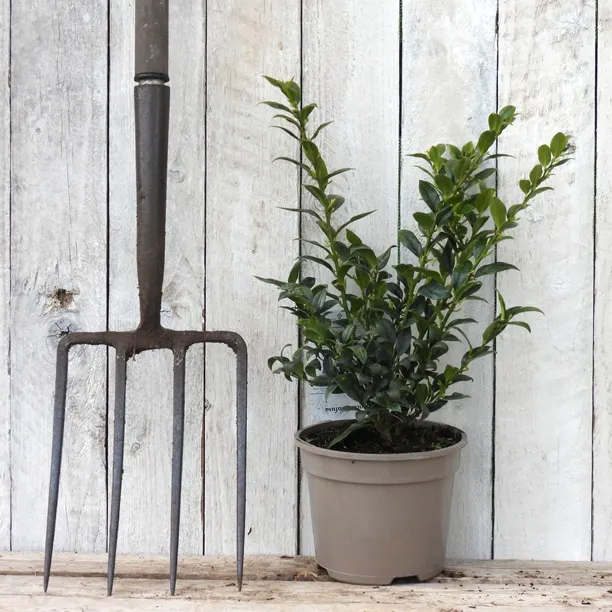
What are the best evergreen shrubs for UK gardens?
Evergreen shrubs are the backbone of a well-structured UK garden, providing year-round foliage, seasonal flowers, and reliable structure even through the bleakest winter months. The best choices combine hardiness for the British climate with genuine ornamental value — good leaf colour, manageable size, and low maintenance. This guide covers the top genera to consider, matched to soil type, aspect, and garden purpose.
Related guides
Why should you choose evergreen shrubs over deciduous ones?
Evergreen shrubs retain their leaves throughout the year, giving your garden permanent structure, privacy screening, and colour even in January and February when deciduous plants are bare skeletons.
That said, the choice is not always obvious. Deciduous shrubs can offer spectacular autumn colour and bolder spring flowers. The real answer for most gardens is a considered mix — but if you have a border that looks bleak in winter, or a boundary that needs screening all year, evergreens are indispensable.
Key advantages of evergreen shrubs in UK gardens:
- Year-round privacy — essential for boundaries and screening eyesores.
- Permanent foliage interest — variegated and coloured-leaf forms look striking in low winter light.
- Wildlife shelter — dense foliage provides nesting sites and winter roost cover for birds.
- Reduced border maintenance — fewer gaps for weeds to colonise in summer.
- Structural backbone — anchor plants that tie a planting scheme together across all four seasons.
Which evergreen shrubs are the hardiest for UK conditions?
The UK climate ranges from the mild, wet south-west to the cold, exposed north and east, so hardiness matters greatly. Most of the shrubs below are reliably hardy across the majority of the UK, though a few need a sheltered position in colder regions.
| Shrub | Hardiness (RHS) | Suitable for exposed sites? | Notes |
|---|---|---|---|
| Euonymus fortunei | H5 (−15 °C) | Yes | One of the toughest variegated evergreens available |
| Euonymus japonicus | H4 (−10 °C) | Coastal yes; cold north — shelter advised | Excellent salt tolerance; good for coastal gardens |
| Hebe | H3–H5 (varies by cultivar) | Small-leaved types yes | Small-leaved cultivars hardier than large-leaved |
| Choisya (Mexican orange blossom) | H4 (−10 °C) | Sheltered preferred | Foliage can scorch in hard frost; usually recovers |
| Ceanothus (evergreen types) | H3–H4 | Wall-trained preferred in north | Thrives against a warm wall; dislikes waterlogged soil |
Which Euonymus varieties are best for year-round colour?
Euonymus is arguably the most reliable and versatile genus in the UK evergreen shrub palette — tough, tolerant of most soils, and available in a wide range of leaf colours from gold to silver-white.
There are two main species to know:
- Euonymus fortunei — lower growing, very hardy (H5), spreads horizontally and can even be trained to climb. Ideal for ground cover, low borders, and under trees.
- Euonymus japonicus — upright, more substantial shrub reaching 1.5–2.5 m. Excellent for structure, hedging, coastal planting, and large containers.
| Variety | Species | Foliage | Mature height | Best use |
|---|---|---|---|---|
| Emerald Gaiety | fortunei | Green with white margins, pink-tinged in winter | 60–90 cm | Ground cover, border edging, wall cover |
| Emerald ‘n’ Gold | fortunei | Bright gold margins, orange tints in winter | 60 cm | Low borders, containers, winter colour |
| Bravo | japonicus | Dark green, glossy, bold leaf | 1.5–2 m | Hedging, coastal screening, formal borders |
| Ovatus Aureus | japonicus | Central gold splash on dark green | 1.5 m | Specimen plant, mixed borders |
| Jean Hugues | japonicus | Cream and green variegation | 1–1.5 m | Lighter, airy effect in borders |
| Paloma Blanca | japonicus | Creamy-white and green | 1–1.5 m | White-themed borders, coastal gardens |
Browse the full Euonymus collection to see all available varieties.
Is Choisya a good evergreen shrub for UK gardens?
Mexican orange blossom (Choisya) is one of the finest medium-sized evergreen shrubs you can grow in the UK — reliably producing fragrant white flowers in spring, often with a second flush in autumn, and maintaining glossy aromatic foliage all year.
Choisya grows best in a sheltered spot with well-drained soil and tolerates both sun and partial shade remarkably well. In a hard frost the foliage may bronze or partially scorch, but established plants almost always recover vigorously from the base.
Key Choisya varieties to consider:
- Choisya ternata — the classic species. Large, robust, dark green, powerfully fragrant. Reaches 2–2.5 m. The most shade-tolerant option.
- Sundance — golden-yellow foliage, brightest in full sun. Slightly smaller than the species at 1.5 m. Superb for adding winter gold.
- White Dazzler — a compact cultivar with finer-textured leaves and prolific white flowers over a long season. Excellent for smaller gardens.
Explore the full range at the Mexican Orange Blossom collection.
Which Ceanothus varieties are evergreen and worth growing in the UK?
Not all Ceanothus are evergreen — the spring-flowering types generally are, while the summer-flowering ones tend to be deciduous. Evergreen Ceanothus bring vivid blue or violet flower clusters and glossy dark foliage, and they are at their happiest in a sunny, sheltered position with sharply drained soil.
They are especially effective trained against a warm south- or west-facing wall, which protects them from hard winter freezes. In the milder south and west of the UK, many evergreen Ceanothus will thrive in open borders without wall support.
| Variety | Flower colour | Habit | Flowering time |
|---|---|---|---|
| Autumnal Blue | Sky blue | Upright, to 3 m | Late summer–autumn |
| Skylark | Bright blue | Compact, to 1.5 m | Late spring–early summer |
| Yankee Point | Deep blue | Low spreading ground cover | Late spring |
| Creeping Blue Blossom | Powder blue | Prostrate ground cover | Spring |
| Lemon and Lime | Blue | Upright, variegated foliage | Late spring |
| Silver Surprise | Pale blue | Upright, silver-variegated leaf | Late spring |
See the full Ceanothus collection for planting and care information.
Are Hebes good evergreen shrubs for UK gardens?
Hebes are excellent, especially for coastal gardens and mild areas — they offer glossy evergreen foliage, attractive spikes of white, pink, or purple flowers in summer, and a neat compact habit that rarely needs pruning.
The golden rule with Hebes is this: the smaller and narrower the leaf, the hardier the plant. Small-leaved (whipcord) types can be surprisingly tough and will cope with exposed positions. Large-leaved ornamental types are better suited to sheltered spots or the milder south and west.
Browse the Hebe collection to find the right size and colour for your garden.
Which evergreen shrubs suit different garden situations?
Choosing the right plant for the right place is far more important than simply picking the most attractive variety. The table below matches common UK garden situations to the most suitable evergreen shrubs.
| Situation | Best choices | Notes |
|---|---|---|
| Shade or north-facing border | Euonymus fortunei, Choisya ternata | Both cope well with partial to full shade |
| Coastal / exposed garden | Euonymus japonicus, Hebe (small-leaved), Ceanothus | All tolerate salt-laden winds; Ceanothus needs shelter from cold |
| Dry or chalky soil | Ceanothus, Hebe, Choisya | All prefer free-draining conditions; Ceanothus thrives on chalk |
| Small or urban garden | Hebe, Choisya White Dazzler, Ceanothus Skylark, Euonymus Emerald ‘n’ Gold | Compact varieties stay manageable without heavy pruning |
| Ground cover / slopes | Euonymus fortunei, Ceanothus Yankee Point, Ceanothus Creeping Blue Blossom | Spreading habit suppresses weeds and stabilises banks |
| Formal hedging or screening | Euonymus japonicus (Bravo) | Responds well to clipping; maintains dense form |
| Wildlife garden | Ceanothus, Choisya, Hebe | All are excellent nectar sources for bees and pollinators |
When is the best time to plant evergreen shrubs in the UK?
The ideal planting windows for evergreen shrubs in the UK are mid-autumn (September to November) and mid-spring (March to May), avoiding the extremes of frozen ground in winter and summer drought stress.
Autumn planting is generally preferred because the soil is still warm enough to encourage root establishment before winter, and rainfall usually reduces the need for supplementary watering. Spring planting works well too, but you must be prepared to water regularly during dry spells in the plant’s first season.
Summer planting is possible with container-grown plants if you water diligently, but it is the most demanding option and the most likely to result in losses. Avoid planting into frozen or waterlogged ground at any time of year.
When planting, always:
- Dig a hole at least twice the width of the root ball and no deeper than the root ball itself.
- Mix in a little well-rotted organic matter on heavier soils, but avoid over-enriching on free-draining soils where Ceanothus and Choisya naturally thrive.
- Water thoroughly after planting and apply a mulch 5–7 cm deep to retain moisture, keeping the mulch away from the stem.
- Stake taller shrubs on exposed sites to prevent wind rock while roots establish.
How and when should you prune evergreen shrubs?
Most evergreen shrubs need only light, formative pruning rather than heavy annual cutting back. The timing varies by genus, and pruning at the wrong time can mean losing an entire season of flowers.
Choisya: Prune immediately after the main spring flowering flush — typically late May or June. You can lightly reshape again after the autumn flush. Avoid pruning in autumn or winter as cold damage can follow on new growth.
Ceanothus (spring-flowering evergreen types): Prune lightly directly after flowering to maintain shape. Never cut back hard into old wood — Ceanothus does not reliably regenerate from old stems. Annual light tidying is far better than occasional hard renovation.
Euonymus: Prune or clip at any point between spring and early autumn. Euonymus tolerates hard pruning well and can be reduced significantly if it has outgrown its space. For hedging, clip twice a year — once in late spring and once in late summer.
Hebe: Remove spent flower spikes promptly to encourage a second flush. Lightly trim in spring to keep a compact shape. Hard pruning is generally not recommended for large-leaved Hebes as they may not reshoot from old wood reliably.
Can evergreen shrubs be grown successfully in containers?
Yes — many evergreen shrubs perform excellently in large containers, provided you choose an appropriate variety and commit to regular watering and feeding. This is particularly useful for small gardens, patios, and balconies.
Best bets for containers:
- Euonymus Emerald ‘n’ Gold or Emerald Gaiety — compact, slow-growing, and genuinely happy in pots with minimal fuss.
- Hebe — tidy, free-flowering, and available in sizes from 30 cm to 1.2 m.
- Choisya White Dazzler — compact enough for a large pot and wonderfully fragrant near a doorway.
- Ceanothus Skylark — manageable size and stunning blue flowers; use a free-draining compost mix.
For container growing, use a loam-based compost (John Innes No. 3 is ideal), ensure the container has adequate drainage holes, and feed with a slow-release fertiliser in spring. Repot into a slightly larger container every two to three years as the root system develops.
Browse ornamental evergreen bushes and all garden shrubs to find the right plant for your container scheme.
Which evergreen shrubs are best for bees and pollinators?
Several of the best ornamental evergreen shrubs are also outstanding wildlife plants, providing nectar at times of the year when other sources are scarce.
Ceanothus is outstanding for bees. The dense clusters of tiny flowers are irresistible to bumblebees and honeybees alike, and late-flowering varieties like Autumnal Blue provide vital late-season nectar when many other plants have finished.
Choisya flowers in spring when pollinator populations are building, and its second autumn flush catches pollinators heading into their pre-winter feeding period. The fragrant white flowers are particularly attractive to bees and hoverflies.
Hebe flowers from early to late summer depending on variety, providing a long season of nectar. The flower spikes are a favourite of bumblebees, butterflies, and small tortoiseshells.
For a pollinator-friendly planting, aim to combine varieties that flower at different times to provide a continuous nectar resource from spring through to autumn.
Frequently Asked Questions
What is the most low-maintenance evergreen shrub for a UK garden?
Euonymus fortunei varieties such as Emerald Gaiety or Emerald ‘n’ Gold are exceptionally low-maintenance — hardy, slow-growing, and rarely needing pruning. They tolerate most soils and aspects.
Which evergreen shrubs grow well in shade?
Euonymus fortunei and Choisya ternata both perform well in shade. Choisya will flower less prolifically without sun, but its foliage remains lush and glossy in a north-facing or shaded border.
What evergreen shrubs are good for coastal gardens?
Euonymus japonicus varieties, including Bravo, have excellent salt tolerance. Small-leaved Hebes and Ceanothus also thrive in coastal conditions with good drainage.
How fast do evergreen shrubs grow?
Growth rates vary. Choisya and Ceanothus are relatively fast at 20–40 cm per year. Euonymus is slower at 10–15 cm annually. Most reach their mature size within five to eight years under good conditions.
Can I plant evergreen shrubs in clay soil?
Euonymus and Choisya tolerate clay better than Ceanothus or Hebe. On heavy clay, improve drainage by incorporating grit and organic matter, plant on a slight mound, and avoid planting in winter when clay is waterlogged.
Which evergreen shrubs have the best winter interest?
Variegated Euonymus varieties, particularly Emerald ‘n’ Gold, develop brilliant orange and gold tints in cold weather. Choisya Sundance holds its golden foliage throughout winter in sheltered spots.
Are evergreen shrubs suitable for small gardens?
Many compact varieties are ideal for smaller spaces. White Dazzler Choisya, Skylark Ceanothus, and Hebe all stay manageable without constant pruning.
Do evergreen shrubs need feeding?
A general balanced fertiliser in spring is beneficial, particularly for container-grown plants. Avoid high-nitrogen feeds on Ceanothus, which can promote soft growth prone to frost damage. Mulching annually helps retain moisture and slowly feeds the soil.
Why are my Ceanothus leaves turning yellow?
Yellow leaves on Ceanothus most often indicate waterlogged soil or overly alkaline conditions. Ceanothus prefers free-draining, moderately acidic to neutral soil. Improve drainage and check soil pH — above 7.5 can cause nutrient lockout.
Can I use evergreen shrubs as ground cover?
Euonymus fortunei, Yankee Point Ceanothus, and Creeping Blue Blossom are excellent spreading ground cover plants that suppress weeds effectively while providing year-round colour. See our ground cover plants collection.
What is the difference between Euonymus fortunei and Euonymus japonicus?
Euonymus fortunei is lower-growing and very hardy (H5), spreading horizontally and suitable for ground cover. Euonymus japonicus is upright and shrubby, reaching 1.5–2.5 m, better for hedging and structure.
Do Choisya shrubs need pruning every year?
Choisya does not need annual pruning if grown in sufficient space. A light tidy after the spring flowering is all that is usually required. Only prune harder if the plant has become congested or outgrown its position.
Related Products
- Ornamental Evergreen Bushes
- Euonymus (Spindle) Plants
- Mexican Orange Blossom (Choisya)
- Ceanothus (California Lilac)
- Hebe Plants
- Ground Cover Plants
- Shop All Garden Shrubs
- Emerald Gaiety Euonymus
- Emerald ‘n’ Gold Euonymus
- Choisya ternata
- Sundance Choisya
- White Dazzler Choisya
- Autumnal Blue Ceanothus
- Skylark Ceanothus
- Bravo Euonymus japonicus
Leave a Reply