
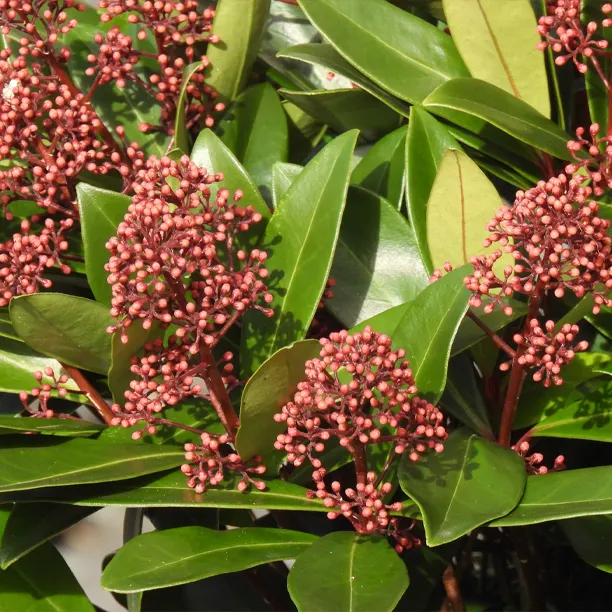
How Do You Grow Shrubs Successfully in a UK Garden?
Growing shrubs successfully comes down to three fundamentals: choosing the right plant for your soil and aspect, planting at the correct time and depth, and giving it the aftercare it needs in its first two seasons. Shrubs are among the most rewarding garden plants — long-lived, largely self-sufficient once established, and capable of providing structure, flower, and wildlife value across every month of the year. This guide covers everything from soil preparation and planting technique to pruning, feeding, and variety selection for UK conditions.
Related guides
What Exactly Is a Shrub, and How Is It Different from a Tree or Perennial?
A shrub is a woody-stemmed plant that branches from or near the base, typically reaching between 0.3 m and 5 m in height. Unlike trees, shrubs lack a single dominant trunk; unlike herbaceous perennials, their stems persist above ground through winter rather than dying back to the root.
This woody persistence is what gives shrubs their value as structural plants. A well-chosen shrub provides year-round presence — evergreen foliage in winter, blossom in spring or summer, berries or autumn colour as the seasons turn. They also tend to be considerably more drought-tolerant than perennials once established, because their root systems develop over several years rather than renewing annually.
For a more detailed exploration of how ornamental shrubs differ from wild and hedging shrubs, see our guide: Shrubs — Ornamental vs Wild vs Hedging: What’s the Difference.
When Is the Best Time to Plant Shrubs in the UK?
The ideal planting window for most shrubs is mid-autumn to early spring — roughly October to March — when the soil is still warm enough for root growth but the plant is not under the stress of summer heat and active shoot production. Container-grown shrubs can technically be planted year-round, but autumn and early spring plantings establish far more reliably.
| Planting Season | Advantages | Considerations |
|---|---|---|
| Autumn (Oct–Nov) | Soil warm, rain reliable, roots establish over winter | Tender shrubs may need fleece protection in cold spells |
| Winter (Dec–Feb) | Bare-root stock available; plants dormant and less stressed | Avoid frozen or waterlogged ground; delay planting until conditions improve |
| Spring (Mar–Apr) | Soil warming, good growth burst; Mediterranean shrubs benefit from settling before summer | Water regularly if dry spells arrive; stake in exposed sites |
| Summer (May–Aug) | Container plants fully leafed; immediate visual impact | Intensive watering required; avoid planting in heatwaves |
One practical exception: late-flowering shrubs such as Ceanothus and Mexican orange blossom are slightly tender and benefit from spring planting, which gives them a full growing season to establish before their first winter.
How Should You Prepare the Soil Before Planting Shrubs?
Good soil preparation is the single most effective thing you can do to guarantee long-term shrub health. Dig the planting area to at least one spade’s depth — ideally two — and remove all perennial weed roots thoroughly.
Work in generous amounts of well-rotted garden compost or composted bark. This serves two purposes: on heavy clay soils it improves drainage and aeration; on light sandy soils it boosts moisture retention and adds organic matter. As a rule of thumb, incorporate one bucketful of organic matter per square metre of planting area.
Check your soil pH before planting acid-loving shrubs such as Pieris or Rhododendron. Most ornamental shrubs prefer a pH of 6.0–7.0 and perform well in average garden loam. If your soil is strongly alkaline (above pH 7.5), focus on chalk-tolerant genera such as Euonymus, Ceanothus, or Choisya rather than trying to acidify the ground.
| Soil Type | Main Challenge | Recommended Amendment | Well-suited Shrubs |
|---|---|---|---|
| Heavy clay | Poor drainage; compaction | Grit + well-rotted compost | Viburnum, Cornus, Hydrangea |
| Sandy / free-draining | Dries out rapidly; low nutrients | Compost + mulch generously | Ceanothus, Hebe, Choisya |
| Chalk / alkaline | Nutrient lock-up; thin topsoil | Thick organic mulch; raised beds | Euonymus, Buddleja, Lavender |
| Acidic / peaty | Waterlogging; nutrient variation | Improve drainage; no lime needed | Pieris, Rhododendron, Camellia |
How Do You Plant a Shrub Step by Step?
Planting technique has a direct impact on how quickly a shrub establishes and how well it performs in subsequent years. Follow these steps for any container-grown shrub.
- Water the pot thoroughly an hour before planting, so the rootball is evenly moist — never plant into a dry rootball.
- Dig a hole at least twice the width of the pot and approximately the same depth. Wide is more important than deep: it loosens the surrounding soil so new roots can spread outwards easily.
- Loosen the base of the hole with a fork to prevent a hard pan forming beneath the roots.
- Position the plant so the top of the rootball sits level with, or very slightly above, the surrounding soil surface. Planting too deep — even by a few centimetres — causes stem rot in many shrubs.
- Backfill with the excavated soil mixed with compost (roughly 50/50), firming gently in layers to eliminate air pockets.
- Water in thoroughly — this settles the soil around the roots and removes remaining air pockets. Use a full watering can, even if the ground looks moist.
- Apply a mulch of bark chippings or well-rotted compost in a 7–10 cm layer over the planting area, keeping it clear of the stem. This retains moisture, suppresses weeds, and moderates soil temperature.
For shrubs planted in exposed or windy positions, a temporary stake for the first season can prevent wind-rock from disrupting the developing root system.
How Do You Water and Feed Shrubs to Keep Them Healthy?
Newly planted shrubs need regular watering for their first two growing seasons; established shrubs need very little supplementary watering except during prolonged drought. The key is deep, infrequent watering rather than frequent light wetting, which encourages roots to stay shallow.
During the first summer, water every five to seven days in dry weather, applying enough to penetrate at least 30 cm into the soil. A slow trickle from a hose for several minutes is far more effective than a brief splash. Check that your mulch layer is maintained, as it dramatically reduces moisture loss from the soil surface.
Feeding: Apply a balanced, slow-release granular fertiliser in early spring as growth begins. A top-dressing of well-rotted compost in autumn serves as both a mulch and a gentle organic feed. Avoid high-nitrogen feeds in late summer, which promote soft new growth that is vulnerable to frost damage. For flowering shrubs — particularly Hydrangeas — a potash-rich feed in late spring encourages better flower production.
How and When Should You Prune Shrubs?
Pruning timing depends almost entirely on when the shrub flowers, because the basic rule is to prune immediately after flowering to avoid cutting off next season’s buds. Getting the timing wrong is the most common shrub pruning mistake in UK gardens.
| Flowering Time | When to Prune | Examples |
|---|---|---|
| Spring (on previous year’s wood) | Immediately after flowering (May–June) | Forsythia, Kerria, Weigela, Choisya |
| Summer (on current year’s wood) | Late winter/early spring before growth begins | Buddleja, Caryopteris, Lavatera |
| Repeat/long season | Light tidy after first flush; harder prune late winter | Hebe, Hydrangea, Ceanothus |
| Grown mainly for foliage | Early spring or after risk of hard frost has passed | Euonymus, Sambucus, Choisya (plain foliage) |
As a general principle, remove dead, damaged, or crossing stems first. Then address shape and size. Always cut to a bud or side shoot, using clean, sharp secateurs to avoid crushing stems. Remove no more than one-third of the plant’s total volume in a single year. For more detail on a specific genus, see our guide on cutting back Buddleja.
Which Shrubs Are Best Suited to UK Conditions?
The UK’s variable climate — mild and wet in the west, colder and drier in the east, subject to late frosts almost everywhere — favours adaptable, broadly hardy shrubs. The best performers combine ornamental value with genuine resilience.
Ceanothus (California Lilac)
Ceanothus are spectacular flowering shrubs that thrive in a sunny, sheltered position with well-drained soil. Most produce dense clusters of blue, violet, or white flowers and are reasonably drought-tolerant once established. Wall-training against a south- or west-facing fence dramatically improves hardiness in colder regions.
- Autumnal Blue — one of the hardiest, with rich sky-blue flowers in late summer and autumn; excellent for northern gardens.
- Skylark — compact and bushy with deep blue flowers in May and June; ideal for smaller spaces.
- Yankee Point — a ground-hugging form; invaluable as a low-maintenance, flowering ground cover on banks and slopes.
- Lemon and Lime — striking variegated foliage with yellow-edged leaves; flowers freely and adds year-round colour.
Choisya (Mexican Orange Blossom)
Choisya is one of the most reliably handsome evergreen shrubs for UK gardens, offering glossy aromatic foliage and heavily scented white flowers, typically in May and often again in autumn. It tolerates partial shade as well as full sun, and grows well on most soils including chalk.
- Choisya ternata — the classic, vigorous species; bold glossy foliage and pure white flowers. Ideal as a standalone specimen or informal screen.
- Sundance — golden-yellow foliage that brightens shady corners; best in partial shade to prevent scorch.
- White Dazzler — finely cut foliage and prolific white flowers; more compact than the species, excellent in pots or small borders.
Euonymus (Spindle)
Euonymus are among the toughest and most versatile evergreen shrubs available, tolerating deep shade, coastal exposure, air pollution, chalk, and dry soil. Their value lies primarily in their foliage — often variegated in shades of gold, cream, and green — which provides reliable winter interest.
- Emerald Gaiety — low spreading habit with bright white-edged leaves that flush pink in winter. Excellent ground cover or low edging.
- Emerald ‘n’ Gold — gold-edged green leaves, compact and spreading; one of the most popular garden shrubs in the UK.
- Ovatus Aureus — upright habit with broadly gold-margined leaves; a good choice for adding height and year-round colour.
Which Shrubs Work Best in Difficult Spots?
Some of the most useful shrubs are those that succeed where other plants struggle. Matching plant to conditions — rather than fighting the soil or aspect — is always more reliable than trying to change the environment.
| Condition | Recommended Shrubs | Key Traits |
|---|---|---|
| Deep shade | Euonymus, Sarcococca, Aucuba | Tolerates low light; evergreen; low maintenance |
| Coastal/exposed | Hebe, Escallonia, Griselinia, Euonymus japonicus | Salt-tolerant; wind-firm; robust foliage |
| Very dry / sunny bank | Ceanothus repens, Cistus, Lavender | Drought-tolerant; good drainage; Mediterranean origins |
| Heavy clay | Viburnum, Cornus, Weigela, Hydrangea | Tolerates winter wet; robust root systems |
| North-facing aspect | Euonymus, Mahonia, Choisya ternata, Fatsia | Shade-tolerant; evergreen; reliable performers |
| Chalk / thin soil | Buddleja, Ceanothus, Lavender, Euonymus | Tolerates alkalinity; well-drained; drought-hardy |
For more on shrubs that perform well without direct sunlight, see our dedicated guide: Best Shrubs for Shade.
Hebe deserve a special mention for coastal and windy gardens. These compact evergreen shrubs are among the most reliable in maritime conditions, producing spikes of purple, pink, or white flowers from early summer through to autumn with minimal maintenance.
For ground-level coverage on difficult banks or under trees, the low-growing forms of Ceanothus repens and spreading ground cover plants from our collection offer excellent weed-suppressing coverage without constant management.
Should You Choose Evergreen or Deciduous Shrubs?
Both have genuine merits, and a garden designed with a mixture of the two performs best across all seasons. The choice depends on what you need the shrub to do: provide year-round structure and screening, or deliver a seasonal display of flower or autumn colour.
Evergreen shrubs retain their foliage through winter, giving the garden structure, colour, and privacy even in the bleakest months. They are invaluable for screening, low-maintenance borders, and providing a backdrop that makes deciduous plants stand out more effectively. Ornamental evergreen shrubs include some of the most trouble-free plants available. See our Best Evergreen Shrubs for UK Gardens guide for detailed recommendations.
Deciduous shrubs typically offer more spectacular flower or autumn colour displays. Hydrangeas produce blooms for months through summer and retain their dried flowerheads well into winter; Buddleja is matchless for wildlife appeal; Weigela, Philadelphus, and Forsythia deliver brilliant spring colour. Their bare winter branches can also be attractive, especially when frosted.
For most UK gardens, the ideal ratio is roughly 60–70% evergreen to 30–40% deciduous — enough foliage to maintain winter interest whilst allowing seasonal highlights throughout the year.
What Are the Most Common Problems When Growing Shrubs, and How Do You Fix Them?
Most shrub failures can be traced to just a handful of causes. Understanding them makes diagnosis — and recovery — straightforward.
Failure to establish (wilting, browning leaves in first season): Almost always caused by insufficient watering after planting. Check that the rootball itself is moist — surrounding soil can look damp whilst the rootball remains dry. Water directly onto the rootball, deeply and slowly. Check also that the planting depth is correct and that the stem base is not buried.
No flowers: Usually the result of pruning at the wrong time (removing flower buds on previous year’s growth) or excessive nitrogen fertiliser encouraging leafy growth at the expense of blooms. Switch to a potash-rich feed in spring and review your pruning timing against the table above.
Yellow leaves: On acid-loving shrubs planted in alkaline soil, this indicates iron or manganese deficiency (chlorosis). On other shrubs, yellowing is often caused by waterlogging or nitrogen deficiency. Check drainage first; if the problem persists, apply a balanced liquid feed.
Leggy or misshapen growth: Typically caused by insufficient light, or by a shrub that has never been pruned and has developed a congested centre. Hard renovation pruning in late winter — removing up to one-third of the oldest stems at the base — usually rejuvenates overgrown deciduous shrubs within a season or two.
Wind rock: Newly planted shrubs in exposed sites can be lifted slightly from the ground by wind, preventing root contact and causing die-back. A temporary stake for the first season, removed once the plant is anchored, solves the problem. For guidance on moving established plants, see our advice on transplanting evergreen trees and shrubs.
Frequently Asked Questions
How deep should I plant a shrub?
Plant so the top of the rootball is level with — or very slightly above — the surrounding soil surface. Planting too deep causes stem rot and is one of the most common planting errors.
How long does it take for a shrub to establish after planting?
Most shrubs take one to two full growing seasons to establish a strong root system. Growth in the first year often looks slow; vigorous extension shoots appear in year two once roots are anchored.
Do shrubs need feeding every year?
A slow-release balanced granular fertiliser in early spring and an organic mulch in autumn is sufficient for most shrubs. Avoid overfeeding, which promotes soft, frost-prone growth.
Can I grow shrubs in pots and containers?
Yes — compact varieties such as White Dazzler Choisya, Skylark Ceanothus, and Emerald ‘n’ Gold Euonymus grow well in containers. Use loam-based compost, ensure good drainage, and water and feed regularly as pots dry out faster than open ground.
How do I know if my shrub needs watering?
Push a finger 5 cm into the soil near the rootball. If it feels dry at that depth, water thoroughly. Wilting in late morning, rather than recovering by evening, also indicates water stress in newly planted shrubs.
Which shrubs are best for wildlife in UK gardens?
Elderflower (Sambucus) provides nectar and berries; Hebe flowers attract late-season bees; Ceanothus is outstanding for bumblebees. Berry-bearing deciduous shrubs support birds through winter.
Can I prune a shrub hard if it has become overgrown?
Most deciduous shrubs respond well to hard renovation pruning in late winter — removing up to one-third of the oldest stems at the base. Evergreen shrubs are more variable; avoid cutting into bare old wood on conifers, as they rarely regenerate.
How do I stop weeds around newly planted shrubs?
A 7–10 cm mulch layer of bark chippings applied over the planting area, kept clear of the stem, is the most effective weed suppressant. Replenish annually as it breaks down into the soil.
Do Ceanothus grow well in northern UK gardens?
Autumnal Blue is one of the hardiest Ceanothus varieties and performs well in northern gardens when given a sheltered, south- or west-facing position, ideally against a wall for added warmth.
Is it worth buying larger, more mature shrubs for instant effect?
Larger plants give immediate visual impact but take proportionally longer to establish, are more expensive, and require more intensive aftercare. Smaller plants from quality stock typically catch up within two to three seasons.
When should I mulch my shrubs?
Apply mulch in mid-spring when the soil is warm and moist, and refresh in autumn to protect roots over winter. Always clear away any annual weeds before applying, and keep mulch away from stems.
Can Euonymus be used as ground cover?
Yes. Spreading varieties such as Emerald Gaiety and Emerald ‘n’ Gold make excellent low-maintenance ground cover in shade, sun, or under trees, suppressing weeds and providing year-round colour.
Related Products
- Shop All Garden Shrubs
- Ornamental Evergreen Bushes
- Ceanothus (California Lilac)
- Autumnal Blue Ceanothus
- Skylark Ceanothus
- Yankee Point Creeping Ceanothus
- Mexican Orange Blossom (Choisya)
- Choisya ternata
- Sundance Choisya
- White Dazzler Choisya
- Euonymus (Spindle)
- Emerald Gaiety Euonymus
- Emerald ‘n’ Gold Euonymus
- Hebe Plants
- Hydrangea Plants
- Elderflower (Sambucus)
- Ground Cover Plants

Leave a Reply