
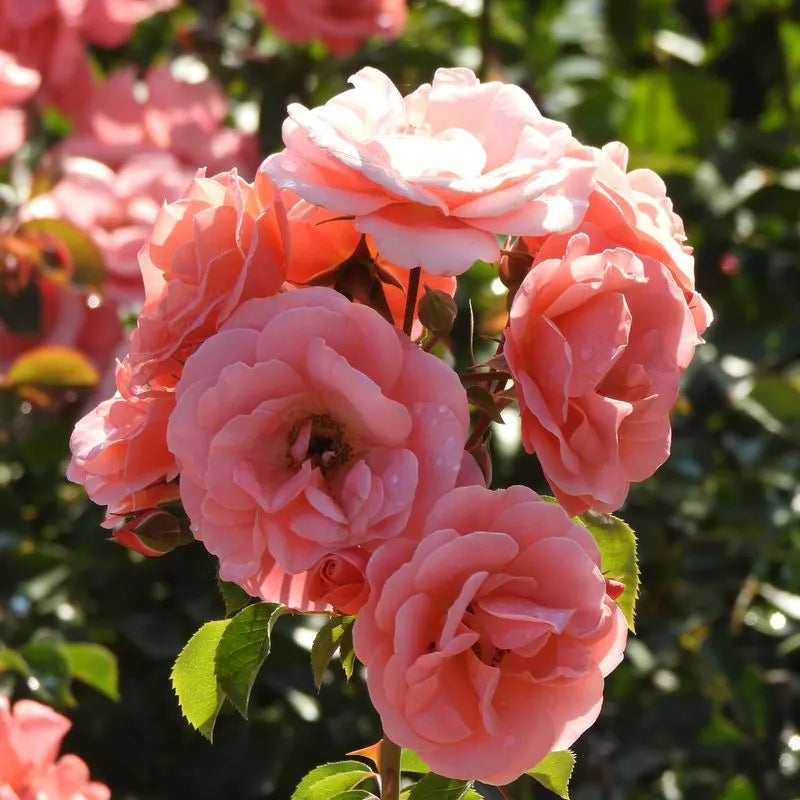
What Are Floribunda Roses?
Floribundas are cluster-flowered roses that over the years have been bred and improved to produce repeated – sometimes almost continuous – flushes of bloom from early summer until the first frosts. With a warming climate, that can mean up to Christmas. They’re generally hardier, more disease-resistant, and easier to care for than hybrid teas – the classic, one-flower per stem, florist’s rose – making them an understandably popular choice for British gardens. Most grow to between 75cm and 1.2m tall, though a few varieties are even more compact.
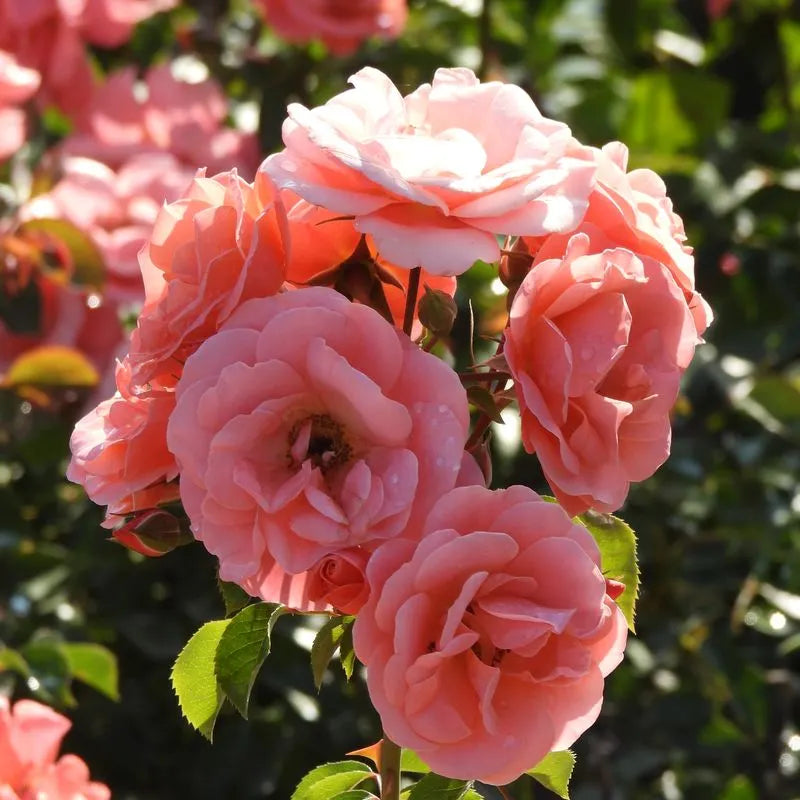
Where to Plant Floribunda Roses
Position is almost everything…
Light: Full sun is ideal — at least five to six hours of direct sunlight daily. Light shade is tolerable but reduces flowering, while no floribunda does well in full shade.
Soil: Roses thrive on heavy soils – ours are grown in soil that is almost clay, but they will do well in most soils provided there is some drainage (so avoid waterlogged sites). On thin, sandy, or chalky soil, dig in plenty of organic matter before planting and it never hurts to improve the planting area as roses are gross feeders – an elderly term meaning they are very greedy…

Spacing: The books recommend 45–60cm between plants for good air circulation, which helps prevent fungal diseases. We believe it’s better to stay toward the top of that bracket. And plant clumps of the same variety in threes in a triangle with equal sides.
Avoiding replant disease: Replant disease (also called soil sickness) can weaken new roses planted where old ones grew. It is not actually a disease, as the failure of the new rose is caused by the previous rose depleting the levels of essential nutrients and trace elements in the planting area. Leave the soil for 2-3 years, and you can plant as many roses as you like. However, if you cannot wait, either dig out a large volume of soil and replace it with fresh, or do the best you can, but add Rootgrow to the planting mix. The owner of Ashridge swears by this and has the roses to prove it.
When to Plant
Bareroot roses: Bareroot roses should be planted from November to the end of March while they are dormant. These are roses that were grown in open ground and that have been lifted for sale. This is the traditional and most economical way to buy roses — they establish quickly and suffer less transplant stress. They are also generally bigger, healthier and have virtually no carbon footprint.

Potted roses: Can be planted year-round, though autumn and spring are ideal. Water thoroughly before planting and keep well watered through the first summer.
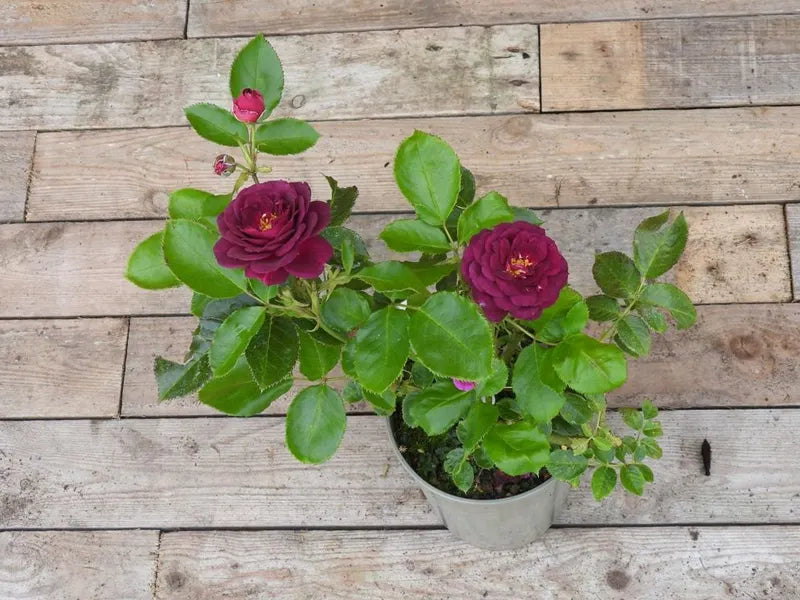
How to Plant Floribunda Roses
- Soak bareroot roses in water for an hour or so before planting. If you are planting several, a good tip is to keep them in a bucket of water while you are planting. That way they cannot dry out. For potted roses, water the plant really well, making sure the compost is soaked.
- Dig a hole wide enough to spread the roots without cramping; roughly 40–50cm across and deep enough that the graft union (the bulge where stems meet roots) will sit at soil level once planted.
- Improve the excavated soil by mixing in well-rotted garden compost or manure — about one part organic matter to three parts soil is a sensible mix.
- If using Rootgrow or another mycorrhizal fungi product, sprinkle it directly onto the roots or into the planting hole so it makes contact with the roots.
- Position the rose, spread the roots, and backfill with your improved soil, firming gently (don’t stamp) as you go.
- Water thoroughly — really soak the planting area. If you then mulch with a 5–8cm layer of well-rotted manure or compost you will stop water loss and probably won’t need to water them again.
Feeding Floribunda Roses
Spring: Apply a balanced rose fertiliser as new growth begins, typically end-March to early April. A mulch of well-rotted manure at the same time feeds the soil and retains moisture.
Summer: Feed every few weeks with a high-potash liquid feed (tomato fertiliser works well) from when the first buds form until late August. This encourages more flowers.
Autumn: Stop feeding by early September to let the plant harden off before winter.
Watering
Established roses are reasonably drought-tolerant, but newly planted roses need regular watering through their first spring and summer (although see my note about mulching after planting) – a good soak once a week in dry spells rather than little and often. However, roses in containers need daily watering in hot weather.
How to Prune Floribunda Roses
If your roses are in an exposed site, they can be loosened by the wind. This is called windrock, and it weakens your roses. Where this is the case, just reduce their height by about a third in November. You don’t need to worry about pruning to a bud because this is a precautionary chop. The real pruning takes place in late winter — February to early March in most of the UK – before new growth starts, but after the worst frosts.
- Remove dead, diseased, and damaged wood — cut back to healthy white pith.
- Remove weak or spindly stems entirely, cutting back to the base or to a strong outward-facing bud.
- Cut the remaining strong stems back to an outward-facing bud roughly 30–40cm above soil level. This encourages an open, vase-shaped framework with good air circulation.
- Clear the centre of any crossing or congested growth.
The aim is to leave four to six strong, well-spaced stems. Don’t be timid — floribundas respond well to firm pruning and will produce more flowers for it.
Deadheading
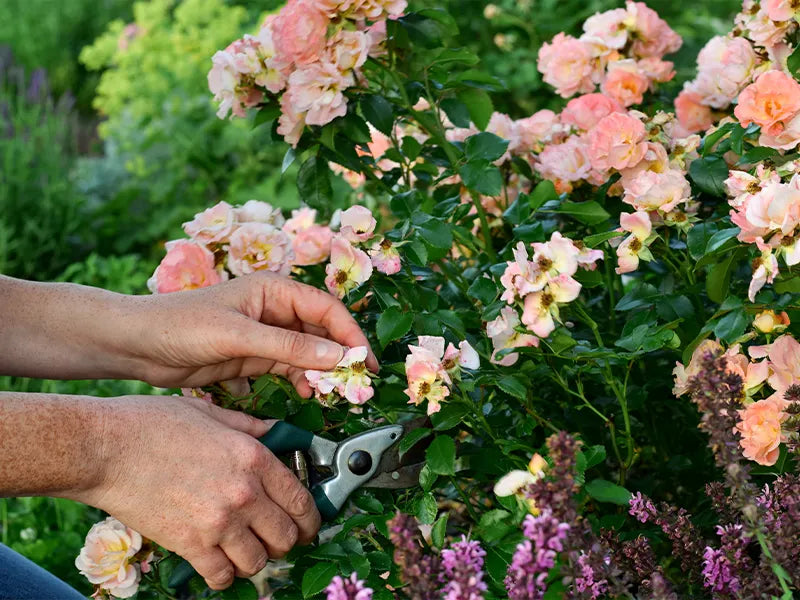
Deadheading maximises flowering. So remove spent flowers whenever you see them to encourage further flushes. Cut back to the first leaf below the deadhead with five leaflets (not three), or to a strong outward-facing bud. Stop deadheading in late autumn if you want hips to form for winter interest.
Common Problems and Disease Resistance
Modern floribundas are generally bred for good disease resistance, but keep an eye out for:
Black spot: Dark spots on leaves, followed by yellowing and leaf drop. Remove affected leaves promptly, clear fallen debris, and avoid overhead watering. Resistant varieties are your best defence.

Powdery mildew: White powdery coating on leaves, usually in dry conditions with cool nights. Improve air circulation and water at the roots, not the leaves.
Aphids: Clusters of greenfly on new growth in spring. A strong jet of water knocks them off; ladybirds and other predators usually keep them in check.
Choosing disease-resistant varieties and maintaining good garden hygiene (clearing fallen leaves, pruning for airflow) prevent most problems without spraying. Our golden rules are never to put any rose “bits” (deadheads, leaves, pruning, etc.) on the compost heap. Bonfire or dump, please! And always clear up rose detritus – fallen leaves in particular – in the autumn. You will remove overwintering fungal spores at the sme time.
Growing Floribunda Roses in Containers
Floribundas — especially the very small varieties — do well in large pots, making them ideal for patios, balconies, and courtyard gardens.
Container size: 10 litres is a bare minimum for the very smallest bush roses. We would prefer to see them in containers that are around 40cm in diameter and depth. Bigger is better — roses are hungry, thirsty plants.
Compost: Use a loam-based compost (loam = soil as opposed to peat or other fibre) such as John Innes No. 3, which holds water and nutrients better than multipurpose composts
Watering: Daily in hot weather. Containers dry out fast.
Feeding: Weekly liquid feed during the growing season.
Repotting: Every two to three years, repot into fresh compost or top-dress by replacing the top few centimetres of compost.
Recommended Floribunda Varieties
- Absolutely Fabulous — compact, fragrant, yellow, excellent disease resistance
- Joie de Vivre — soft pink, very compact, good for pots
-
Iceberg — classic white, long-flowering, very reliable
Browse our full range of floribunda roses.






Leave a Reply