A Guide to Growing Shrub Roses
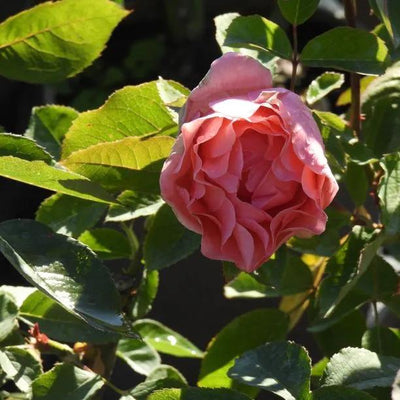
Shrub roses are the classic, versatile garden rose — bigger and less formal than floribundas and hybrid teas, with generous flowers, often wonderful scent, and a natural form that looks good in borders, shrubberies, hedges, and cottage gardens alike. The group is large, including Old Rose families such as Bourbon, Damask, Moss, and Alba, along with Modern Shrub varieties and Hybrid Musks. What they have in common is a bushy, arching habit, excellent disease resistance, tolerance for a wide range of growing conditions, and, apart from some basic "maintenance" very little work for you, the gardener.
This guide covers everything you need to know about planting, feeding, pruning, and caring for shrub roses in the UK. For advice on specific varieties, see the individual product pages, which link back here. If you're growing floribundas, hybrid teas, climbers, or ramblers, those rose types each have their own guides.
Where to Plant Shrub Roses
Sun and shelter
All roses flower best with lots of light; however, as a group, shrub roses are more shade-tolerant than the other groups, which tend to need all the light they can get. So no need to be too fussy; while full sun is ideal, most shrub roses will be perfectly happy if they get sun in the morning or afternoon. Several varieties, particularly Hybrid Musks like Ballerina and Buff Beauty, will perform well in quite shady areas, including north-facing positions (we have Ballerina under a north-east facing window and it flowers all summer).

Shelter from strong, persistent wind matters more than most gardeners realise. Taller shrub roses (like Souvenir du Dr Jamain) — anything above about 1.2m — are vulnerable to wind rock, where autumn gales loosen the roots in the soil before they have a chance to anchor properly. A hedge, fence, or wall to break the wind makes a big difference. If your site is exposed, choose compact or naturally dense varieties, and consider the autumn trim described in the pruning section below.
Soil
Roses love heavy soils, which are moisture and nutrient-rich, and don't dry out in summer the way sandy soil does. But they will grow in most soils, provided the ground isn't waterlogged in winter or dust in summer. If your soil is light and sandy, dig in plenty of well-rotted organic matter before planting and mulch generously every spring. If it is very clayey and stays wet all winter, improve drainage by adding coarse grit when preparing the planting hole.
Shrub roses are hungry plants. They flower hard, often for months, and that takes energy. A rich, moisture-retentive soil with good organic content will keep them going far better than thin, starved ground.
Spacing
Shrub roses are generally the biggest of the bush rose groups, so give them room. As a guide, plant most varieties about 90cm–1.2m apart in a border, adjusting for the expected spread of the specific variety. For an impenetrable ornamental rose hedge, you can close it up to 40-60cm. Always check the product page for the variety's expected height and spread — some compact shrub roses, such as Little White Pet, need less space, while vigorous ones, such as Sally Holmes, need more.
When planting in groups, Ashridge (and the RHS) recommend planting the same variety in threes or fives for the strongest visual effect — a mass of one colour is far more striking than one of each.
How to Plant Shrub Roses
Bareroot (November to March)
Bareroot roses are the traditional — and best value — way to buy. They are lifted to order from the growing fields while dormant (so from November onwards) and you should plant them as soon as possible after delivery. If you can't plant straight away, heel them into a temporary trench or stand them in a bucket of damp compost in a cool, frost-free spot. Don't let the roots dry out.
Before planting, soak the roots in a bucket of water for a couple of hours. Trim any damaged or whippy-long root ends with sharp secateurs before planting.
Dig a hole large enough for the roots to spread out comfortably. Improve the soil from the hole by removing weeds, large stones, and old roots, then mixing in about 25% by volume of well-rotted compost or manure. Form a small mound at the base of the hole, set the rose on top, and spread the roots over it. Position the graft union (the knobbly point where the stems meet the rootstock) at or just above soil level. Sprinkle Rootgrow mycorrhizal fungi onto the roots so it makes direct contact, then backfill with the improved soil, firming gently as you go. Water in thoroughly.

Potted (any time of year)
Soak the pot in a bucket of water for 30-45 minutes before planting. Gently loosen some roots from the outside of the rootball — this encourages them to grow outward into the surrounding soil rather than continuing to circle. Plant at the same depth as the rose was in its pot, with the graft union at soil level. Apply Rootgrow, backfill, firm, and water. Potted roses will need watering more often and for longer than barerooted plants.
Planting against a wall or fence
Some larger shrub roses can be trained as short climbers against a wall or fence — Ballerina, Buff Beauty, and Sally Holmes all respond well to this. Plant at least 45cm away from the base of the wall so that rain can reach the roots, and angle the rose slightly toward the support. Tie in the main stems as they grow.
Avoiding replant disease
If you're planting a new rose where an old one grew, you risk replant disease — a soil-borne condition that stunts growth. The three main options are: wait at least 12 months before planting (grow annual bedding in the meantime — sweet peas are ideal as they fix nitrogen); dig out a block of soil at least 1m square and 40–50cm deep and replace it with fresh soil from elsewhere in the garden; or simply plant your new rose in a different spot. Whichever approach you take, apply Rootgrow fungi when you plant. We have experimented with only using Rootgrow; we remove the old rose, dig out a normal size planting hole, add a bit of compost in which we mix a little Rootgrow and then sprinkle more on the wet roots of the new rose. Finish off as normal. Our success rate is 100%. Just sayin'.
For more detail on planting technique and replant disease, see our complete guide to planting rose bushes.
How to Feed and Mulch Shrub Roses
Shrub roses are hungry feeders. A good feeding routine makes the difference between a rose that merely survives and one that flowers its heart out.
Spring (March–April): Once the soil has warmed up, apply a generous mulch of well-rotted garden compost or horse manure around the base of each rose, keeping it clear of the stems. This feeds the soil, retains moisture, and suppresses weeds. At the same time, give each rose a handful of bonemeal or a proprietary rose feed, lightly forked into the surface.
Midsummer (June–July): Give repeat-flowering varieties a second feed after the first flush of flowers. A liquid rose feed or another scattering of granular fertiliser will fuel the next round of blooms.
Autumn: Stop feeding by late August. You don't want soft new growth going into winter — it's vulnerable to frost damage.
If you planted with Rootgrow, its beneficial fungi will be working away underground, extending the root system and helping the rose access water and nutrients far beyond its own roots. The fungi are self-sustaining once established.
How to Prune Shrub Roses
Shrub roses need a lighter touch than floribundas and hybrid teas. The aim is to maintain a good shape, encourage fresh flowering wood, and keep the centre of the bush open for air circulation — not to cut them down to stumps every year.
The basics — every year
Start every pruning session the same way. Remove the DDD wood: anything that is Dead, Diseased, or Damaged. Cut out crossing stems that rub against each other. Remove thin, spindly growth that will never produce decent flowers. Use sharp secateurs and cut to an outward-facing bud where possible — this keeps the centre of the bush open and promotes a natural vase shape.
When to prune
The main prune is in late February or early March, just as the buds begin to swell. In the north of England and Scotland, wait until March. Don't worry if you forget — April is still fine. It is far better to prune late than not at all.
In autumn (November), give taller shrub roses a trim to reduce the top growth by about a third. This is not a proper prune — it's simply to prevent wind rock during winter gales. You'll do the real shaping in late winter.
Year 1 (after planting)
Go easy. The rose is putting its energy into establishing roots. Remove only dead, damaged, or diseased wood. Cut all remaining shoots back by about 10cm to encourage bushy growth. Step back and look at the shape — trim anything that sticks out awkwardly beyond a rough semicircle.
Year 2
A little firmer. Cut healthy shoots back by about a third. Remove weak, spindly growth entirely. Shape the bush into an open vase — wider at the top than the base — by cutting to outward-facing buds. Remove all old leaves left on the plant from winter; they can harbour fungal spores.
Year 3 onwards
Now the rose is established and you can prune with more confidence. Each late winter:
- Remove all DDD wood and crossing stems.
- Cut the strongest stems back by about a third to a half, always to an outward-facing bud.
- Remove the weakest stems entirely.
- Cut out one or two of the oldest, thickest stems at the base each year — the best flowers come from one- and two-year-old wood, so you want to keep renewing the framework.
- Aim for an open, goblet-shaped bush with good air flow through the centre.
Once-flowering shrub roses
Some Old Rose varieties — many Albas, Damasks, and Gallicas like Cardinal de Richelieu — flower once, in June or July, on wood produced the previous year. The species rose Canary Bird also flowers once, in May. If you prune these in late winter, you'll cut off the flowering wood. Instead, prune them immediately after flowering has finished, in July or August. Remove up to a third of the oldest stems at the base and shorten the remaining stems by a third. They'll produce new growth through late summer that will carry next year's flowers.
Deadheading
For repeat-flowering shrub roses, deadhead spent blooms throughout summer by snipping the stem back to the first set of five leaves below the flower. This redirects energy from hip production into new buds. Stop deadheading from late August if you want autumn hips — many shrub roses, particularly Hybrid Musks and Rugosas, produce spectacular hips that provide winter interest and food for birds.
For more detail on pruning technique, including a video walkthrough, see our complete guide to pruning rose bushes.
Common Problems and How to Avoid Them
Black spot, mildew, and rust
These are the three main fungal diseases of roses in the UK. Good cultivation is the best prevention: an open, airy bush shape; a spring mulch; clearing up fallen leaves in autumn; and not overcrowding your roses with neighbouring plants. Many modern shrub roses and Hybrid Musks have strong natural disease resistance — check the variety's product page for its rating. If problems persist, a spray with RoseClear Ultra will deal with all three.
Suckers
Almost all garden roses are grafted onto a rootstock. Occasionally, a shoot will sprout from below the graft union — this is a sucker from the rootstock, not from your named variety. Suckers typically have lighter green leaves and stems than the rose above, with small single white flowers if left to bloom. Trace the sucker back to where it joins the root and tear it off — cutting only encourages more to grow.
Wind rock
Taller shrub roses can be rocked by autumn and winter gales, loosening the roots and letting in water that freezes. An autumn trim (reducing the top growth by a third) prevents this. If a rose has been badly wind-rocked, firm the soil back around the base in spring and give it a hard prune to reduce the top growth until the roots re-establish.
Deer and rabbits
Deer love rose shoots and buds. If deer are a problem, the only reliable solutions are physical barriers — tree guards for young plants, or fencing for the whole bed. Rabbits tend to gnaw the bark at the base; a bit of chicken wire will protect young plants.
Month-by-Month Calendar
January–February: Order bareroot roses. Check stored bareroot plants for drying out. Begin planting when the ground isn't frozen or waterlogged.
March: Main pruning time. Mulch and feed. Plant bareroot roses (last chance before the season ends). Check for and remove suckers.
April–May: New growth appears. Water newly planted roses in dry spells. Watch for aphids on soft new shoots — a strong jet of water usually dislodges them.
June: First flush of flowers. Deadhead repeat-flowering varieties. Give a midsummer feed after the first flush finishes. Prune once-flowering varieties after they finish blooming (usually July).
July–August: Continue deadheading. Water in prolonged dry spells. Stop feeding by late August. Stop deadheading if you want autumn hips.
September–October: Enjoy late flowers and developing hips. Order bareroot roses for winter delivery.
November: Autumn trim: reduce tall shrub roses by about a third to prevent wind rock. Plant bareroot roses as they arrive. Clear fallen rose leaves from around the base — they can harbour black spot spores over winter.
December: Continue planting bareroot roses in mild spells. Plan next year's planting.
Frequently Asked Questions
What is the difference between a shrub rose and a floribunda?
Floribundas are modern bush roses bred specifically for mass flower production in clusters. They are typically more compact (60cm–1.5m), upright, and need hard annual pruning. Shrub roses are a broader group with a more relaxed, arching habit, generally larger (1m–2m), and need lighter pruning. Many shrub roses flower less often but have a stronger scent and produce ornamental hips — floribundas rarely do.
Can I grow shrub roses in a pot?
Compact varieties can do well in large containers (at least 40–50 litres). Keep them well watered and fed, and repot or top-dress every couple of years. Most full-sized shrub roses are too vigorous for pots — they'll do better in the ground.
Do shrub roses grow in shade?
More than most other rose types, yes. Hybrid Musks in particular — Ballerina, Buff Beauty, Felicia, Penelope — are notably shade-tolerant and will flower well in partial shade, including north-facing positions. Canary Bird, a species rose with single yellow flowers in May, also handles shade well and is one of the earliest roses to bloom. They won't flower quite as heavily as in full sun, but they'll perform far better than a floribunda or hybrid tea would in the same spot.
How hard should I prune a shrub rose?
Much less hard than a floribunda or hybrid tea. For repeat-flowering shrub roses, cut the strongest stems back by a third to a half in late February, remove the weakest growth entirely, and take out one or two of the oldest stems at the base each year. For once-flowering varieties, prune after flowering, not in winter. See the full pruning section above.
Do shrub roses need deadheading?
Repeat-flowering varieties benefit from deadheading through summer — it encourages more flowers. Stop in late August if you want autumn hips. Once-flowering varieties don't need deadheading at all, and many produce their best hips if you leave the spent flowers on.
Are shrub roses good for hedging?
Excellent. Their dense, bushy habit makes a beautiful informal flowering hedge. Plant 60–90cm apart, depending on the variety's spread. Rosa de Resht, Buff Beauty, Felicia, Ballerina, and Roseraie de l'Hay are all particularly good for hedging. Thorny varieties also make a surprisingly effective barrier.
When is the best time to plant shrub roses?
Bareroot roses are planted between November and March, while the plant is dormant. This is the cheapest and best way to establish roses. Potted roses can be planted at any time of year, but will need more watering if planted in summer.
Browse our full range of classic shrub roses, or see all of our rose varieties.










 Sign In
 Saved items
 Secure, One-Tap Checkout
 5 Star Feefo Rating
 Hand Picked, Delivered to Your Door!
 1 Year Bareroot Guarantee
 Platinum Trusted Service Award 2026
 Mail Order Plant Experts - Est. 1949


Comments (0)
Add a commentLeave a comment
Please note, comments need to be approved before they are published.