About Bareroot Hedging
Why choose bareroot?
A field-grown hedge plant has spent its whole life in open ground. Its roots have spread out and branched freely instead of circling the inside of a pot. Lifted while dormant, it hardly notices the move. Plant it between November and March and it roots into cold, damp soil over winter, ready to grow as soon as spring arrives. A potted plant set out in May has to do all of that while also coping with sun and drought.
Compared with pot-grown hedging, bareroot plants are:
- Cheaper, often by a wide margin, which matters when you need 300 of them
- Quicker to establish, because the roots have never been confined
- Lighter and easier to plant: smaller sizes go into a slit made with a spade, so there's no hole to dig
- Plastic-free, with no pots to stack or throw away
- Available in far more species and sizes
The catch is the calendar. Bareroot plants can only be lifted while dormant, so if you want to plant in June, you need potted hedging instead.
What arrives
A bundle of bareroot hawthorn looks like a handful of sticks, because in January that is exactly what hawthorn is. Scratch the bark with a fingernail and you'll find green underneath. If you still have doubts, read Help! My Bareroot Plants Look Dead before you reach for the phone.
Your plants are picked to order, quality-checked, and sent by next-working-day courier as soon as the order is ready. Keep them in their bags somewhere cool and sheltered, and plant within a few days. If the ground is frozen or waterlogged, heel them into a spare patch of soil until conditions improve. Above all, never let the roots dry out: a few minutes in a drying wind does more harm than a week in the bag.
Which size should you order?
- 40/60cm whips suit farms, field boundaries and large projects. This is the minimum size for Countryside Stewardship hedging, and it survives best in open field conditions.
- 60/80cm is the sweet spot for most gardens. It is sensibly priced, has decent height, and gives you a shorter wait for a proper hedge. It is still small enough to slit-plant.
- 80cm and above gives you privacy sooner and suits short front-garden hedges or filling gaps. Bigger plants need more water in their first summer, and anything over 1m (3ft) wants a trench rather than a slit.
If in doubt, go smaller. Small plants are cheaper, easier to plant and more forgiving. Clipped attentively, they make a denser base than big plants ever will.
How many plants per metre?
- Single-row garden hedge: 3 per metre, 33cm apart
- Double staggered row (stockproof or grant-funded): 6 per metre
- Box: 5 per metre, 20cm apart
For every other species and purpose, see the hedge spacing guide.
Planting and the first year
Dry soil kills more new hedges than anything else, and weeds come a close second. Through the first summer, soak the soil twice a week in dry spells. Give it a proper soaking, not a sprinkle. Keep a clear strip either side of the row, ideally under weed control fabric. In rural gardens, fit spiral guards, because a rabbit sees a newly planted hedge as a salad bar laid on for its benefit.
Step-by-step videos:
Our bareroot guarantee
Every bareroot plant is covered by the 1 Year Bareroot Guarantee. If anything is wrong when you unpack your order, let us know within 5 working days.
FAQs
Can I get evergreen hedging bareroot?
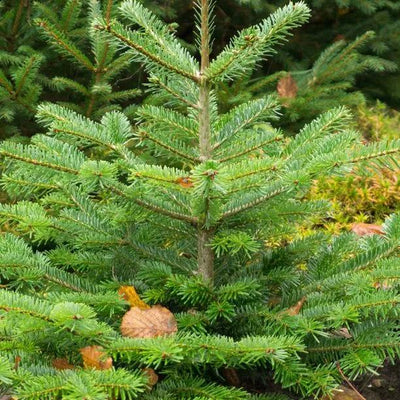
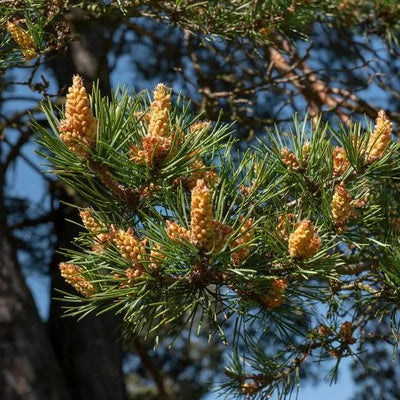
Yes. Yew, privet and several conifers come bareroot, Norway spruce among them. Conifers are usually sold smaller than broadleaves, because they resent being moved at large sizes.
Can I plant in frost?
Not into frozen ground, so wait for a thaw. Your plants will sit dormant and content in their bags, or heeled in, for some time.
Is bareroot better than potted?
Where you have the choice, yes. It is cheaper and establishes better. Potted plants earn their place outside the bareroot season, and for species or sizes that aren't available bareroot.
When should I order?
Now, for the widest choice. Popular sizes of beech, hornbeam and yew often sell out well before Christmas.


 Sign In
 Saved items


 5 Star Service Rating




 Secure, One-Tap Checkout
 5 Star Feefo Rating
 Hand Picked, Delivered to Your Door!
 1 Year Bareroot Guarantee
 Platinum Trusted Service Award 2026
 Mail Order Plant Experts - Est. 1949