

Sold as:

from £6.99

Sold as:
from £19.99
 5 Star Service Rating




 Secure, One-Tap Checkout
 5 Star Feefo Rating
 Hand Picked, Delivered to Your Door!
 1 Year Bareroot Guarantee
 Platinum Trusted Service Award 2026
 Mail Order Plant Experts - Est. 1949
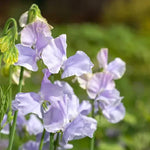






Bristol is a pale blue Spencer sweet pea bred in Somerset, practically a local for us at Ashridge. Phil Kerton raised it in the early 1990s, and it has been collecting awards ever since: the RHS Award of Garden Merit, the Award of Merit of Exhibition, the FC Harris Memorial Award for Best Seedling at Wisley and Harlow Carr, and the Clay Cup for the best vase at the National Sweet Pea Society National Show. That last one tells you everything about its quality as a cut flower.
The colour is a soft, uniform blue: the standards open with a cream rim and become gently waved, while the wings are a slightly paler shade that gives the whole flower a watercolour quality. The National Sweet Pea Society classifies it as Pale Blue, which is accurate but does not quite capture how pretty it is in practice. In a garden full of sweet peas, Bristol has a quiet presence that draws the eye precisely because it is not shouting.
Bristol's fragrance is strong for a Spencer, rated 3 to 4 by Somerset Sweet Peas. Combined with long, strong stems and well-spaced florets, it is one of the finest cutting sweet peas in our range. If you grow sweet peas primarily for the house rather than the garden, Bristol should be on your list.
Cut in the morning when the lowest bloom on the stalk is about to open fully. The soft blue shows beautifully in simple glass: a clear tumbler or a plain vase lets the colour speak for itself. A single-variety bunch of Bristol in clear glass on a white tablecloth is one of those arrangements that looks effortless and costs nothing but a walk to the garden. Expect five to seven days of vase life if you change the water daily.
The plant itself is a reliable grower at about 1.8m with standard support. It is vigorous without being unruly, and produces stems consistently from late June right through to September if you keep picking. The flowering habit is generous: once established, Bristol produces cutting-quality stems almost daily during its peak weeks in July and August. For a family that puts sweet peas on the kitchen table every few days, one row of Bristol is more than enough to keep you supplied.
For a tonal blue scheme, grow Bristol with Ballerina Blue (mid-blue Spencer) and Noel Sutton (violet-blue Spencer, AGM): three blues at different intensities, all well scented. For a classic blue-and-white cottage garden display, pair with White Frills (ruffled pure white).
For heritage contrast, try Bristol alongside Flora Norton (sky-blue Grandiflora, scent 5): one old, one modern, both blue, and the difference in flower form is itself part of the interest. The pale blue flowers are also a natural complement to honeysuckle on a shared support, where the warm creamy-yellow of native honeysuckle against Bristol's cool blue is a combination you see in old cottage gardens for good reason.
Full growing instructions are in our sweet pea growing guide.
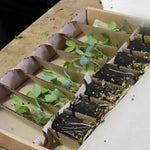
Growing sweet peas well means getting the early stages right. The seed, which we collect ourselves, is hand-sown at two seeds per plug in our Somerset polytunnel. After germination, the weaker seedling is removed. Every plant is then pinched out to encourage bushy growth and hardened off before dispatch. What you are buying are sturdy, garden-ready jumbo plug plants that have had the best possible start.
We send your sweet peas out by next-day courier between March and May, packed in purpose-designed recycled cardboard packaging. The moment they arrive, they are ready to go into the ground or a container. If anything is not right, we have real people on the phone in Somerset who will sort it out. We hold a Feefo Platinum Service Award and have been named a Which? Best Buy plant supplier – endorsements that came from our customers, not our marketing team.
Phil Kerton, from Somerset. He raised it in the early 1990s and it quickly became one of the most awarded sweet peas in the UK, collecting the AGM, the Award of Merit of Exhibition, the Harris Memorial Award, and the Clay Cup at the NSPS National Show.
Bristol is the palest and softest of our blues, with a watercolour quality and cream-edged standards. Ballerina Blue is a clearer mid-blue. Blue Velvet (AGM) is the deepest, with an almost matt, velvety finish. Growing all three gives you three distinctly different blues.
Stronger than most Spencers. Somerset Sweet Peas rate it 3 to 4, the kind of fragrance that greets you before you reach the plant. Grow it over a pergola near seating and the scent drifts down on warm evenings.
Outstanding. Well-placed florets, long stems, and consistent colour make it a perennial favourite on the show bench. The Clay Cup win at the NSPS National Show confirms its exhibition credentials at the highest level.
Bristol works well in a large pot with at least 4 litres of compost per plant. The pale blue flowers look particularly good against a dark wall or in a glazed blue pot. Provide a tall support, water daily in warm weather, and feed fortnightly once buds form. For more growing detail, see our pots guide. Browse our full range in the sweet pea collection.


 Sign In
 Saved items