


Sold as:

from £10.95

Sold as:
from £19.99
 5 Star Service Rating




 Secure, One-Tap Checkout
 5 Star Feefo Rating
 Hand Picked, Delivered to Your Door!1 Year Bareroot Guarantee
 Platinum Trusted Service Award 2026
 Mail Order Plant Experts - Est. 1949
 1 Year Bulb Guarantee
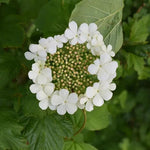
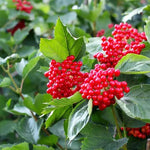

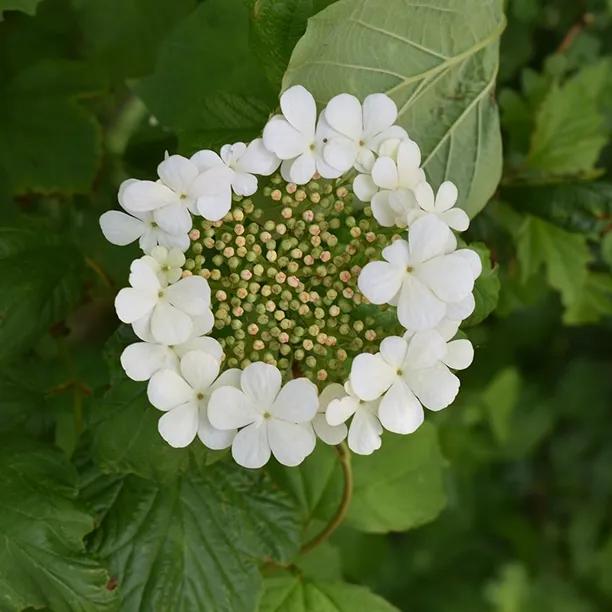
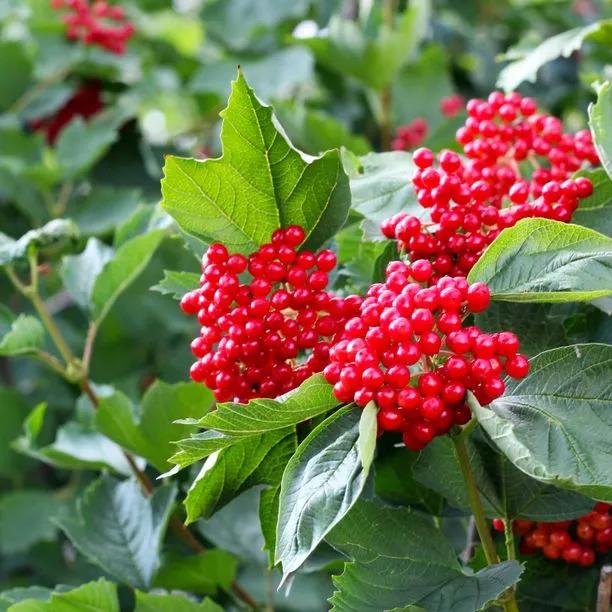




Guelder Rose, Viburnum opulus, is a vigorous, thornless, native deciduous shrub for mixed country hedges, with white lacecap flowers in late spring and early summer, translucent red berries into winter and red autumn leaves. It grows on chalk, clay, loam or sand in sun or partial shade.
Guelder Rose, Viburnum opulus, is one of Britain's most beautiful native shrubs, often used in a mixed country hedge. The flowers are quite unique, with a ring of dainty little smooth star shaped flowers rising above a bed of even smaller, bud-like blooms. The smaller flowers will ripen into blood-red fruit in time for the autumn display. The large, three lobed leaves (like a maple, which has more lobes) colour up in autumn with a jumble of pink, yellow & red tones (depending on the soil) that bleed together in a rough, rustic manner. It can grow to about 5 metres high.
It's a natural companion to Viburnum lantana in a mixed hedge, and we grow two more ornamental varieties that can also make good hedges, Viburnum bodnantense Dawn and the evergreen Viburnum tinus Eve Price.
Browse our selection of native hedging or see our full range of hedging plants.
Guelder Rose hedge plants are only delivered bareroot, during winter (Nov-April).
Choosing a size: When you are ordering plants for a hedge, we recommend smaller plants if you aren't in a rush. They're cheaper and easier to handle than large plants, and will give you a bushy hedge with little effort.
In the wild, it's often found in dappled woodland shade, but it needs full sun to give you the best show of flowers. It'll grow pretty much anywhere, including shady sites under large trees and chalky soils. It prefers a moist soil and will tolerate periods of waterlogging.
As a specimen shrub, it'll need little attention, just prune out the oldest stems from time to time.
Spacing a Guelder Rose hedge:
Standard country hedging: plant at 3 per metre, 33cm apart in a single row, or 6 per metre in a staggered double row, which has a W shape viewed top-down.
It makes an excellent mixed hedge plant, typically with hawthorn to provide thorns and more strength.
Given full sun, it's a fine, low maintenance ornamental shrub for any garden.
It isn't a rose at all, it is closely related to the elderflowers. The name probably comes from the Dutch region of Gelderland.
Other common names include Water elder, Cramp bark, Gatten, Whitten, and the European cranberry bush.
Their berries were one of the secondary food sources that our ancestors depended upon in hard times. Although it is possible to make jam with them, we don't recommend eating them fresh, as even slightly unripe fruit will cause stomach upsets.
When civilisation collapses again, and you find yourself living in the woods with nowhere to charge your phone, you could certainly feed yourself by boiling them up into a soup. Until then, we would leave the berries for the birds: bullfinches and mistle thrushes (which have the most charming scientific name: Turdus viscivorus) are especially partial to them.
In parts of Eastern Europe and Russia, the berries represent the beauty of a young woman and are a standard subject for Khokhloma painting. There is a song traditionally sung at weddings that begins:
Guelder rose, guelder rose, guelder rose mine!
In the garden there is raspberry, raspberry mine!
Under a pine, under a green pine
Lay me to sleep!
Bees: It is on the RHS list of Plants for pollinators, beloved by bees and butterflies.
Guelder rose is a mixer, not a soloist. Hazel and Common Dogwood are its thornless native partners. To have the mixing done for you, it is an ingredient of three of our packs: the conservation mix, the thornless mix and the stock-friendly mix. Native bluebells suit the foot of any of them.
Ashridge was established in 1949 and is a Which? Best Plant Supplier 2025. Your guelder rose is grown for us as hedging from the outset by specialist growers, lifted to order and kept dormant in a cold store. Bareroot plants are guaranteed for 12 months.
No. It is a viburnum, with fifteen other common names, water elder, crampbark and whitten tree among them. The flat white lacecap flowers earned it the rose.
After flowering, unless you want the fruit. The berries are the best thing about it, so prune only what you must.
Guelder rose has lobed, maple-like leaves and red berries. Wayfaring tree has oval, grey, downy leaves and berries that turn from red to black. Both are native, thornless viburnums.
Three per metre in a single row, 33cm apart, or six per metre in a staggered double row with the rows 40cm apart. In a mixed hedge, count it in with the rest.
Yes. It grows in sun or partial shade, in any aspect, exposed or sheltered. It flowers and fruits best in full sun, so give it the brighter side of the hedge.
Three: the native conservation mix, the native thornless mix and the stock-friendly farm mix. Buy it singly to gap up an old hedge or to add more berries to a new one.




 Sign In
 Saved items