

Sold as:

from £10.95

Sold as:
from £19.99
 5 Star Service Rating




 Secure, One-Tap Checkout
 5 Star Feefo Rating
 Hand Picked, Delivered to Your Door!
 1 Year Bareroot Guarantee
 Platinum Trusted Service Award 2026
 Mail Order Plant Experts - Est. 1949
 1 Year Bulb Guarantee
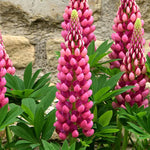
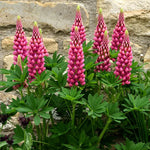
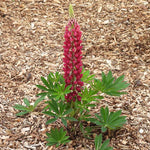

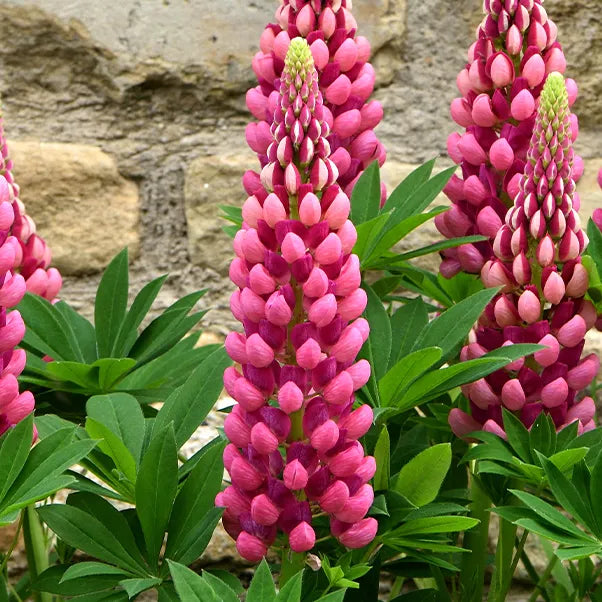
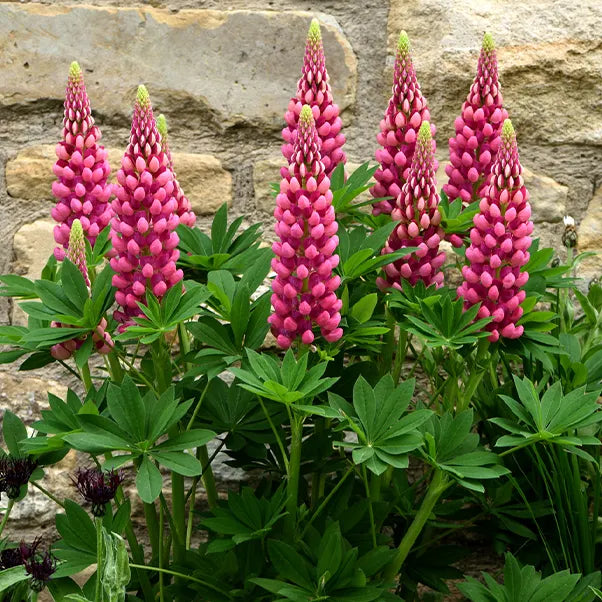
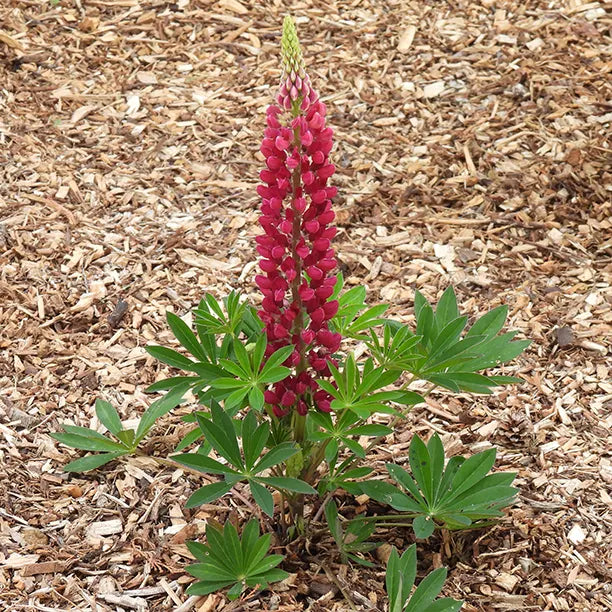
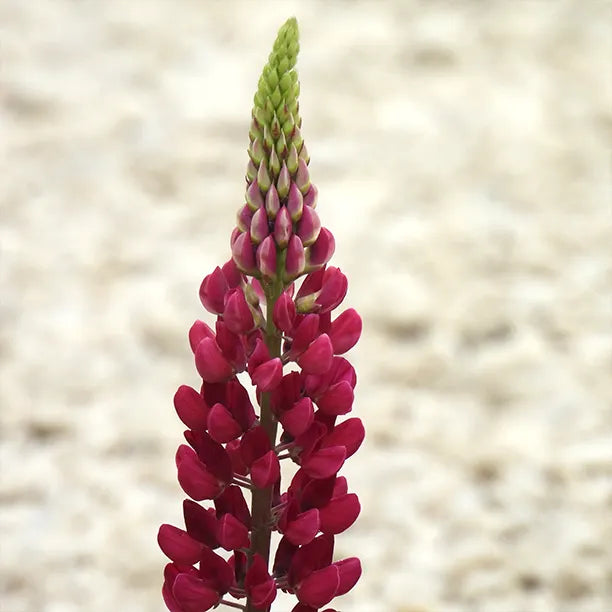




Lupinus 'Gallery Red' is a dwarf lupin reaching 50cm with upright red flower spikes in May and June. Compact enough for pots and smaller gardens where the taller West Country lupins would be out of scale, and reliably floriferous from the first growing season.
The West Country lupins are magnificent — tall, magnificently coloured, perennial in the proper sense — but they want space. At 90cm they command the back of a traditional border and will not be contained elsewhere without looking wrong. Gallery Red was developed specifically for gardeners who want the lupin look without the lupin scale. At 50cm it is essentially half the height: it works at the front or middle of a border, it fits in a generous container, and it does not require the kind of garden room that the West Country series demands. The red is a good, solid red — not orange-red or rose-red but a proper primary red, not subtle, and confident about it. The spires are upright, densely packed with flowers in the characteristic lupin formation, and they appear in May and June when the cottage garden border is at its most productive.
Deadhead promptly — do not wait until the spike has completely faded. Cut the whole spike back to a side shoot as soon as the first flowers drop, feed with a liquid fertiliser, and you will generally get a second, slightly smaller flush. Lupins are short-lived in most gardens — three to five years is realistic — but Gallery Red self-seeds willingly. Be aware that the seeds are toxic if eaten, especially for children and pets. And slugs find the emerging shoots in spring irresistible: protect them with whatever control you favour from March until the leaves have hardened off.
Red lupins are at their most effective against blue, purple, and silver. Gallery White alongside creates the classic red-and-white combination in a matched dwarf scale. Centaurea montana in blue flowers at the same time in May and June and its compact scale at 50cm matches Gallery Red perfectly — one of the most reliable blue-and-red combinations for the front of a cottage border. Delphinium Black Knight behind in deep violet repeats the vertical spike form at greater height. Caradonna salvia in violet-purple begins flowering just as lupins finish and carries the spire form on through summer.
We use peat-free compost and biological pest controls. Gallery Red is a compact, reliable lupin for gardens where the taller West Country types are too large — we're pleased to be stocking both sizes so you can choose according to what your garden needs. Every plant is guaranteed. See the full perennial collection.
Yes — lupin seeds, pods, and leaves contain quinolizidine alkaloids that are toxic if eaten, particularly in quantity. Garden lupins have higher alkaloid content than the edible lupini beans of Mediterranean cuisine. Keep children and pets away from the seeds and pods. Handling the plant does not cause harm, but wash hands before eating after gardening.
Height and longevity primarily. Gallery lupins (including Gallery Red) reach about 50cm and are seed-raised, making them compact and affordable for first-season impact. West Country lupins are vegetatively propagated named varieties at 90cm, longer-lived, and available in more complex colour combinations. Gallery suits front-of-border and pots; West Country suits the traditional back border.
Not well, generally. Lupins prefer free-draining, neutral to acid soil. Heavy clay that retains moisture through winter leads to crown rot and short-lived plants. If your soil is clay, plant on a slight mound with added horticultural grit, or grow Gallery Red in a container with good drainage. Sandy, chalky, and alkaline soils are also problematic — lime-rich soils cause yellowing and poor performance.
The emerging shoots in March and April are the most vulnerable period — slugs find young lupin growth particularly palatable. Use copper tape around the crown, nematodes, organic iron phosphate pellets, or a torchlit evening patrol. Once the stems have hardened and reached 20cm or so, slug damage becomes less critical. Lupin aphid is the other main pest: a large greyish aphid that colonises flower stems — spray with a soft soap solution or simply rub off with your fingers.
Yes — this is one of the few lupins where pot culture is genuinely practical. Use a pot at least 30cm in diameter and 30cm deep (lupins have a taproot), with well-drained compost and no added lime. Position in full sun, water consistently through the growing season, and feed with a low-nitrogen fertiliser from February. The taproot means lupins do not enjoy being repotted, so start in the final container.


 Sign In
 Saved items