

Sold as:

from £10.95


Sold as:
from £19.99
 5 Star Service Rating




 Secure, One-Tap Checkout
 5 Star Feefo Rating
 Hand Picked, Delivered to Your Door!
 1 Year Bareroot Guarantee
 Platinum Trusted Service Award 2026
 Mail Order Plant Experts - Est. 1949
 1 Year Bulb Guarantee







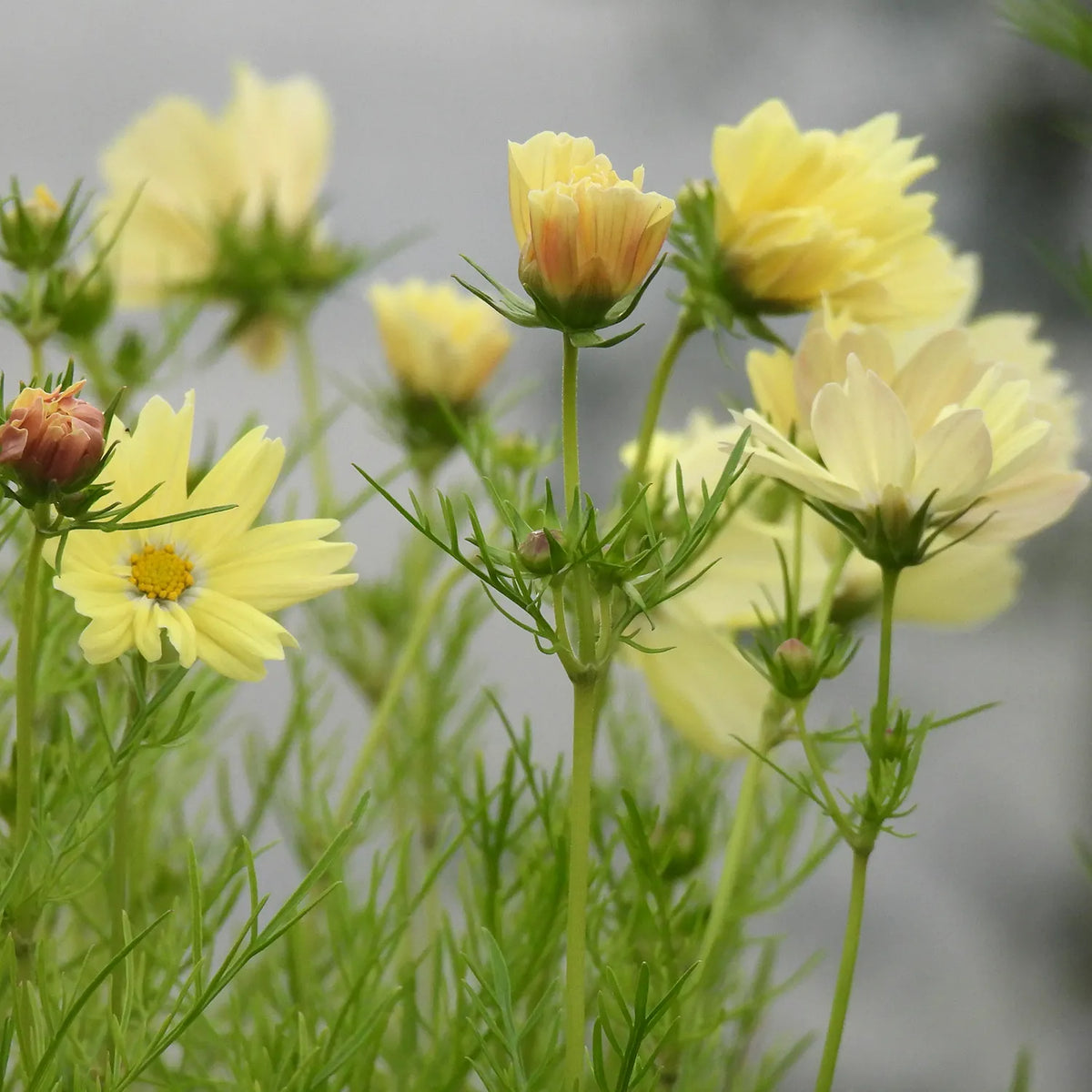


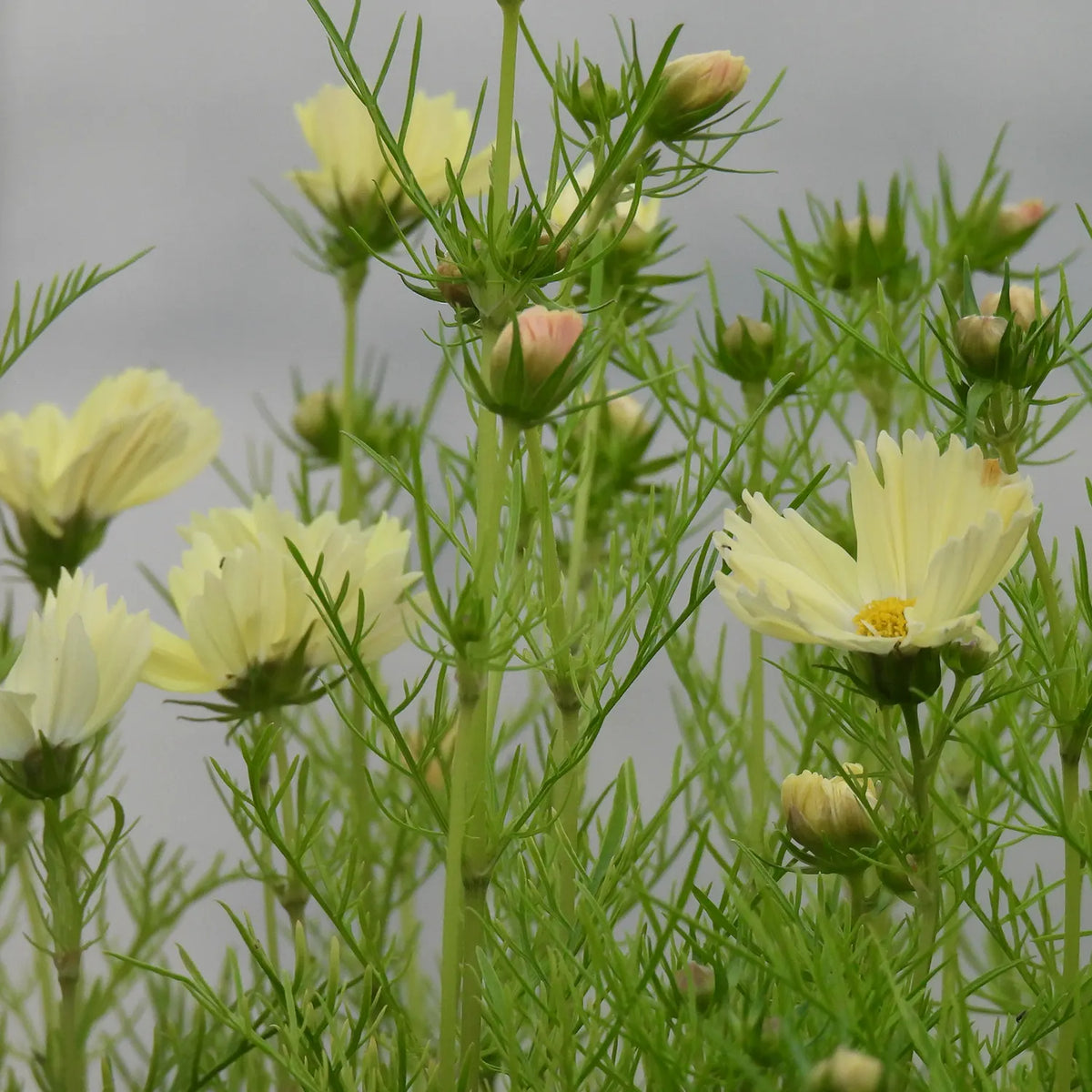




Xanthos really is a one-off. Until it arrived in 2016, cosmos came in shades of white, pink, and crimson, and that was it. There had been yellow cosmos before (Cosmos sulphureus produces orange and yellow flowers), but none within the Cosmos bipinnatus species that performed as well as the pinks and whites. Xanthos changed that. It won a Fleuroselect Gold Medal for the breakthrough, and it caused quite a stir among horticulturists and gardeners. The name comes from the Greek for golden, and the petals are a soft butter-yellow around a golden eye, fading gently towards white at the tips. It is compact (50–60 cm), early to flower, and will not flop or need staking.
Xanthos is also one of the few named cosmos varieties that is open-pollinated rather than a hybrid, which means it self-sows. In mild, well-drained gardens you may find seedlings appearing the following spring, and because it is open-pollinated they should come largely true. That same quality makes it something of a boundary case in global horticulture. Cosmos sulphureus was declared an invasive species in the American Southeast in 1996 because of its aggressive self-seeding in frost-free climates. In Britain, our winters solve the problem. What is a thug in Florida is a treasured annual here. Xanthos, with its gentle self-sowing in mild UK gardens, is closer to a gift than a threat.
Yellow against dark is always a winner. Velouette (crimson-mahogany stripes) next to Xanthos gives you a contrast that stops people in the garden. Dazzler (deep carmine) achieves a bolder version of the same thing. Sonata Carmine at the same compact height makes the simplest possible two-colour scheme, the kind of pairing that looks designed even if you did it on a whim.
For a container combination, try Xanthos with spikes of Salvia nemorosa 'Caradonna' (deep midnight-blue). The pale yellow against deep blue is always a winner, and both plants love sun and lean soil. Penstemons like 'Garnet' or 'Raven' (red-purple spikes) also look excellent behind a row of Xanthos. For more container ideas, try a single Xanthos with a low collar of bronze-leaved heuchera like Marmalade at its feet. Sometimes one pot, one idea, done simply, is better than a complicated scheme.
No contract growing, no outside growers. We hand-sow every cosmos plug at our nursery in Somerset, grow them on in our own polytunnels, and harden them off before dispatch. We buy in fresh seed each year because cosmos does not come true from saved seed. What you receive is a strong, garden-ready jumbo plug.
Dispatch by next-day courier from late April. Our plant guarantee covers anything that arrives damaged or fails to establish. If you have a question, you will speak to the team who grew your plants.
Xanthos reaches 50–60 cm (20–24 in), making it one of the most compact cosmos. It needs no staking and suits exposed sites, windy balconies, and the front of borders. Some growers report it flowers a little earlier than other cosmos, sometimes from late May in a warm year. For full growing advice, see our cosmos growing guide.
Fleuroselect is a European organisation that trials new flower varieties across multiple test sites. The Gold Medal is its highest award, given to varieties that represent a significant breeding breakthrough. Xanthos won in 2016 for being the first true yellow Cosmos bipinnatus. It was trialled across Europe and performed well in every location.
Yes, unlike most named cosmos varieties, Xanthos is open-pollinated and can self-seed in mild, well-drained gardens. Seedlings should come largely true to the parent variety, which is unusual for cosmos. In colder or wetter areas, or where the soil is mulched thickly over winter, self-sowing is less likely. It is a nice bonus rather than something to rely on for next year's display. Browse the full range in our cosmos collection.
Yes, Xanthos is excellent in containers. Its compact habit means it stays upright in a pot of 5 litres or larger with no support. Try it with dark-leaved heuchera at the base, or alongside deep blue salvia for a classic colour contrast. For full container advice, see our guide to growing cosmos in pots.
Yellow and dark is always a winning combination. Velouette (striped crimson), Dazzler (deep carmine), or Sonata Carmine (rich pink, same compact height) all make Xanthos glow. In containers, pair with deep blue salvias or penstemons for a strong colour contrast. Xanthos also works well as a warm accent among an otherwise pink-and-white cosmos planting.


 Sign In
 Saved items