
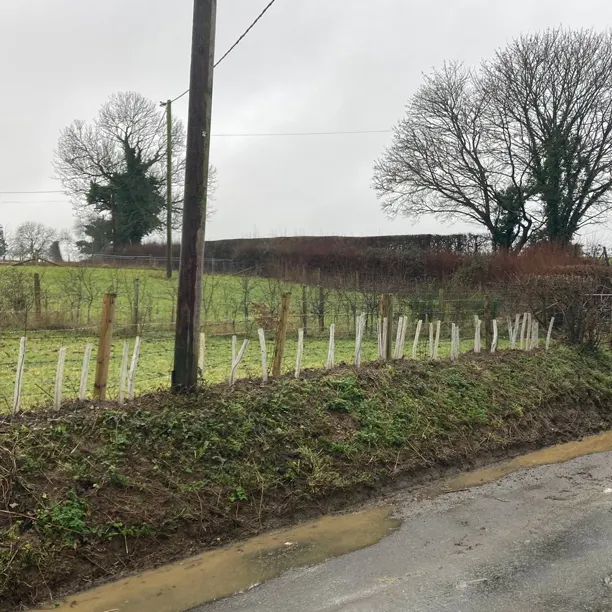
How Do You Grow a Hedge Successfully in the UK?
Growing a hedge successfully means choosing the right species for your soil, climate and purpose, planting at the correct time and spacing, then following a consistent programme of watering, feeding and formative pruning in the early years. Most hedges planted correctly and looked after in their first two seasons will establish quickly and go on to need very little attention. This guide covers every stage — from choosing a species through to long-term trimming — so you have a single authoritative reference for the whole process.
Related guides
- Best Hedging Plants — Buying Guide
- Evergreen Hedging Plants — Complete Guide
- Native Hedging — Mixed Species Guide
Which Hedge Species Should You Choose?
The right species depends on five factors: evergreen or deciduous, desired height, soil type, aspect and purpose. Getting this decision right before you spend any money is the single most important step in growing a good hedge.
Below is a quick-reference comparison of the most popular UK hedging plants:
| Species | Evergreen? | Typical Height | Growth Rate | Best For |
|---|---|---|---|---|
| Yew | Yes | 1–4 m | Slow–moderate | Formal, long-lived, wildlife |
| Beech | Semi (holds leaves) | 1–5 m | Moderate | Formal, autumn colour, rural |
| Hornbeam | Semi (holds leaves) | 1–5 m | Moderate–fast | Heavy clay, shade, formal |
| Laurel | Yes | 1.5–5 m | Fast | Privacy, shade, large gardens |
| Privet | Semi–evergreen | 0.5–3 m | Fast | Urban, low maintenance |
| Box | Yes | 0.3–1.5 m | Slow | Low formal edging, topiary |
| Mixed Native | Deciduous | 1.5–4 m | Moderate–fast | Wildlife, countryside, grants |
For evergreen year-round screening, browse our Evergreen Hedging range. For privacy in particular, see our curated Best Privacy Hedging collection. If you need help narrowing down your choices, our article on How to Choose the Right Hedge goes into much greater depth on matching species to conditions.
When Is the Best Time to Plant a Hedge?
The best time to plant a hedge in the UK is between November and March, during the dormant season, when bareroot plants are available and establishment rates are highest. Container-grown and rootballed plants can technically be planted year-round, but autumn and early spring remain ideal because cooler temperatures mean less watering stress on new root systems.
Bareroot hedging is the most economical way to plant. Plants lifted from open ground are sold without pots, with roots either bare or wrapped, and must be planted while dormant — typically October to April depending on species. They establish superbly because the root system is fully intact and there is no pot-to-soil adjustment required. Read our full guide on What Bareroot Means if this is new to you.
Key planting windows by plant type:
| Plant Type | Best Planting Window | Notes |
|---|---|---|
| Bareroot whips | November–March | Plant as soon as received; heel in if ground is frozen |
| Rootballed | October–April | Keep root ball moist; plant promptly |
| Container-grown | Year-round | Avoid planting during drought or hard frost |
| Instant hedging troughs | Year-round | Water thoroughly after planting; needs regular irrigation in summer |
For detailed seasonal guidance, see Best Time for Planting Hedges and Trees.
How Should You Prepare the Soil Before Planting?
Thorough soil preparation before planting is far more valuable than expensive aftercare products later. A hedge will occupy the same ground for decades, so investing an hour per metre of run at this stage pays dividends for the entire life of the hedge.
Follow these steps for best results:
- Clear the strip: Remove all perennial weeds — particularly couch grass, bindweed and ground elder — over a strip at least 60 cm wide (90 cm for double-row hedges). Roots left in the soil will compete aggressively with new plants during the critical first year.
- Cultivate deeply: Fork or rotovate to at least 30 cm. For very compacted or clay soils, double digging to 50 cm makes a significant difference to drainage and root penetration.
- Improve the structure: Work in well-rotted organic matter — garden compost, leaf mould or composted bark — at roughly one large barrowload per 3 metres of hedge. This improves drainage on clay, water retention on sand and supplies slow-release nutrients.
- Add mycorrhizal inoculant: Dusting the roots with mycorrhizal fungi at planting time accelerates establishment by extending the root zone. Apply directly to the roots just before placing the plant in the hole.
- Leave to settle: If time allows, prepare the trench two to four weeks before planting to allow the soil to settle and any residual weed seeds to germinate (which you then hoe off).
Our detailed guide on Preparing Soil for Planting Trees and Shrubs covers difficult soil types including chalk, heavy clay and sandy ground.
How Far Apart Should Hedge Plants Be Spaced?
Spacing depends on species, plant size and whether you are planting a single or double row. As a general rule, most hedging plants for a single-row garden hedge are spaced 3–5 plants per metre.
| Species | Single Row (per metre) | Double Row (per metre) | Notes |
|---|---|---|---|
| Yew | 3 | 5 | Slow-growing; closer spacing gives quicker results |
| Beech / Hornbeam | 3–4 | 5–6 | Vigorous; wider spacing still produces good hedge |
| Laurel | 2–3 | 4–5 | Large leaves; use secateurs not shears when trimming |
| Box | 5 | 7–8 | Low edging hedges can be planted at 15 cm centres |
| Native mix (whips) | 4–5 | 6–8 | Stagger rows for dense country hedge |
For a full explanation of the maths, see How Many Hedge Plants Per Metre? and Double Staggered Row Hedge Spacing.
How to plant: Dig a trench rather than individual holes wherever possible — a trench disturbs the soil profile evenly and makes it easier to keep plants in a straight line. Set plants to the same depth as they were growing previously (you can see the soil mark on bareroot plants). Firm the soil well around each plant, eliminating air pockets, then water in thoroughly even in wet weather.
If planting bareroot whips into grass or pasture where digging a trench is impractical, slit planting with a spade or bar is a quick, effective alternative.
What Aftercare Does a New Hedge Need in the First Year?
The first growing season is the most critical period in a hedge’s life. The single biggest cause of failure is water stress, not disease or poor quality plants.
Watering: Newly planted hedges need regular watering throughout their first spring and summer. A deep, infrequent soak (10–15 litres per plant, once or twice a week in dry spells) is far more effective than a daily trickle, which encourages shallow rooting. Continue until autumn; even evergreens planted in October will need watering through any dry spells before the soil temperature drops. Full guidance is in our Watering Your Hedging and Trees guide.
Mulching: Apply a 7–10 cm layer of bark chip, wood chip or well-rotted compost along the entire hedge line, keeping it 5 cm away from the stems. Mulch suppresses weeds, retains moisture and moderates soil temperature. Refresh annually for the first three years.
Weed control: Keep a 45 cm weed-free strip either side of the hedge for the first two or three years. Competition from grass and weeds is the second most common cause of poor establishment. Hand-weeding or careful hoeing is preferable to herbicides near young plants.
Feeding: A balanced, slow-release fertiliser applied in February or March of the first and second year supports strong growth. Avoid high-nitrogen feeds in late summer as they promote soft growth vulnerable to frost.
Our New Hedge Aftercare — First Year Guide covers all of this in detail with a monthly checklist.
How Should You Prune a Hedge in Its Early Years?
Formative pruning in the first two to three years shapes the hedge’s long-term structure and encourages dense, bushy growth from the base upwards. Many gardeners make the mistake of letting a hedge grow to its target height before trimming, which results in a thin, gappy base.
The approach differs slightly between species:
- Beech and hornbeam: After planting, cut back by one third to encourage branching. In subsequent years, trim the sides lightly twice a year and allow the top to grow upwards steadily.
- Yew: Minimal pruning in year one. Trim sides lightly in year two. Yew is slow but responds well to clipping once established.
- Laurel: Cut back by one quarter after planting to encourage lateral shoots. Trim with secateurs rather than shears to avoid shredding the large leaves.
- Box: Pinch out leading shoots after planting to encourage bushy growth from day one.
- Native/deciduous whips: Cut back by half in the first winter after planting. This dramatic-looking cut is the key to a dense country hedge — it forces multi-stem branching from very low down.
Full guidance, including photographs, is in our Trimming New Hedges — Formative Pruning article.
How and When Should You Trim an Established Hedge?
Most garden hedges require one or two trims per year. The exact timing depends on species and whether nesting birds are present — under the Wildlife and Countryside Act 1981, it is an offence to disturb active nests, so avoid cutting between March and August unless you have checked carefully for nesting activity.
| Species | Trims per Year | Best Timing |
|---|---|---|
| Yew | 1–2 | Late August–September; optionally again in late spring |
| Beech / Hornbeam | 1–2 | August; optionally again in late winter |
| Laurel | 1–2 | Late spring; late summer if needed |
| Box | 2–3 | Late May, late July, September |
| Privet | 3–4 | Every 4–6 weeks, spring through early autumn |
| Native deciduous | 1 | Late winter (February–March) or after nesting season |
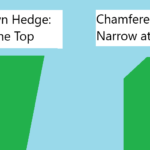
Shape matters: Always trim hedges slightly narrower at the top than the base — a slight taper (called a batter) ensures light reaches the lower foliage and prevents the base becoming bare and gappy. A chamfered or rounded top also sheds snow better than a flat top, reducing the risk of branches splaying under weight. See our guide on How to Cut a Chamfer Top on a Hedge for practical technique.
For comprehensive technique guidance, see How to Trim, Clip and Prune a Garden Hedge and How to Prune Trees and Clip Hedges.
Which Hedge Works Best in Difficult Conditions?
Not every garden has ideal conditions. The good news is that there is a suitable hedging plant for virtually every situation, including deep shade, coastal exposure, drought and heavy clay.
Shade and north-facing sites: Hornbeam is outstanding on clay in shade. Cherry laurel is one of the most shade-tolerant evergreens available. Browse our Best Hedging for Shade collection, and read our article Best Hedges for Full Shade.
Coastal and exposed gardens: Salt-laden winds and poor sandy soils rule out many species. Coastal Hedging includes robust options such as escallonia, griselinia and tamarisk that thrive in these conditions.
Dry soils and drought: Drought Tolerant Hedging includes berberis, box and several cotoneasters that cope well once established.
Wildlife gardens: A Mixed Native Hedge Pack containing hawthorn, blackthorn, hazel, field maple and dogwood provides the best combined value for birds, insects and mammals. See our Native British Hedging range and read Best Plants for a Small Garden Wildlife Hedge.
Security hedges: Thorny species deter intruders effectively. Berberis darwinii is evergreen, fast and ferociously spiny. Purple Berberis thunbergii adds year-round colour. Browse our full Thorny Hedging and Berberis Hedging ranges.
Pollinators and bees: Flowering hedges such as berberis, pyracantha and cotoneaster provide outstanding foraging. See our Best Hedging for Bees collection.
What Are the Most Common Hedge Problems and How Do You Fix Them?
Most hedge problems fall into three categories: establishment failures, disease, and poor structure caused by incorrect pruning. The majority are preventable with good practice from the outset.
Gappy or thin base: Almost always caused by insufficient formative pruning or by allowing a hedge to grow tall before achieving basal density. Fix by hard pruning the hedge back by a third to a half in late winter to force new growth from lower down. Beech, hornbeam and yew all respond well; see our articles on Pruning a Large Beech Hedge and Trimming and Hard Pruning Yew Hedges.
Box blight: A fungal disease causing browning and dieback in box hedges. Early identification and removal of affected material is key. Read our full Box Blight — Hedge Disease Guide.
Laurel leaf shot hole: Fungal spots on leaves that cause holes to develop. Usually cosmetic but can be severe in wet seasons. Details and treatment options in our Laurel Leaf Shot Hole Disease guide.
Yellow leaves on cherry laurel: Often caused by waterlogged soil, nutrient deficiency or natural shedding of old inner leaves. See Why Are My Cherry Laurel Leaves Turning Yellow?
Brown patches on yew: May indicate phytophthora root rot (usually linked to waterlogging), vine weevil damage, or simply drought stress. Our Dead and Dying Yew Trees and Hedges guide diagnoses the most common causes.
What If You Need an Instant Hedge?
If you need immediate height and density without waiting several years for plants to establish, Instant Hedging Troughs are the answer. These are pre-grown hedges supplied in long biodegradable troughs, typically 1 m in length and already 80–120 cm tall, ready to be dropped into a prepared trench.
Our Hornbeam Instant Hedge Troughs are a popular choice — hornbeam is reliably hardy, holds its leaves through winter and thrives on clay soils. The troughs are simply laid end to end in a prepared trench and backfilled; the roots grow through the trough material into the surrounding soil.
Instant hedging costs considerably more per metre than bareroot whips, but saves three to five years of waiting and is ideal for new-build gardens, areas that need screening urgently, or where a presentable hedge is required immediately after completion of building work. For a comparison of potted versus bareroot options, see Choosing and Planting Potted Hedging.
Frequently Asked Questions
How long does it take to grow a hedge?
Fast-growing species such as privet and laurel can form a usable hedge in two to three years. Slower species like yew take five to ten years to reach 1.5 m but live for centuries. Bareroot plants from a reputable nursery establish faster than you might expect.
What is the fastest-growing hedging plant in the UK?
Privet is among the fastest for garden hedges, growing 30–60 cm per year. For privacy screening, cherry laurel is both fast and evergreen. Our Fast Growing Hedges for Privacy guide compares the top options.
Can you grow a hedge from cuttings?
Yes — box, privet, willow and dogwood all propagate readily from cuttings. However, it is far more time-efficient to buy bareroot whips, which are inexpensive and establish in one season rather than the two to three years cuttings require before transplanting.
How deep should you plant hedge plants?
Bareroot and rootballed plants should be planted at the same depth they grew previously — look for the soil mark on the stem. Container plants go in at pot depth. Never bury the stem above the original soil level, as this can cause rot.
Do hedges need feeding?
A balanced slow-release fertiliser applied in early spring benefits most hedges, especially in the first three years. Established hedges on reasonable soil often need no feeding at all, though very formally clipped hedges that put on a lot of growth benefit from an annual spring feed.
How do you fill gaps in an existing hedge?
Plant new whips or pot-grown plants of the same species into prepared gaps during the dormant season. Soak the area thoroughly, apply mycorrhizal inoculant to the roots at planting, mulch heavily and water through the first summer. Hard pruning the plants either side encourages lateral growth to fill the gap.
Can you grow a hedge in a shady garden?
Hornbeam, yew, cherry laurel and box all perform well in shade. Our Hedging for Shade collection lists the most reliable options for north-facing or shaded plots.
Is it legal to cut a hedge during nesting season?
Under the Wildlife and Countryside Act 1981, deliberately disturbing active nests is illegal. Avoid cutting between March and August unless you have thoroughly checked for nesting birds. Outside these months, no restrictions apply in most circumstances.
What is the best hedge for wildlife?
A mixed native hedge using hawthorn, blackthorn, hazel, field maple and dogwood provides the richest habitat. Browse our Native British Hedging range and Mixed Hedge Packs.
How do you grow a low hedge for edging?
Box (Buxus sempervirens) is the classic choice for low edging hedges under 60 cm. Space plants 15–20 cm apart and clip two to three times a year. Our Planting a Box Hedge guide explains the full process. See also Best Plants for Low, Small and Narrow Hedges.
How wide will a hedge grow?
Most garden hedges are maintained at 30–60 cm wide, but untrimmed they would naturally grow 1–3 m wide or more. Annual clipping keeps width in check. The key is trimming sides as well as the top from the first year onwards.
Can hedges reduce noise from a road?
A dense, thick evergreen hedge does absorb and deflect some sound, but complete noise elimination is not realistic. A hedge at least 2 m tall and 1 m deep provides the best effect. Read our article Do Hedges Block Noise? for a realistic assessment.
Related Products
- Hornbeam Hedge Plants
- Hornbeam Hedging — 50 Pack
- Hornbeam Instant Hedge Troughs
- Box Hedge Plants
- Berberis darwinii (Darwin’s Barberry)
- Purple Berberis thunbergii
- Berberis julianae (Wintergreen Barberry)
- Berberis thunbergii (Green Japanese Barberry)
- Common Native Dogwood
- Elegantissima Dogwood
- Flaviramea Dogwood
- Instant Hedging Troughs — Full Range
- Mixed Hedge Packs
- Shop All Hedging Plants
Related Articles
- Best Hedging Plants — Buying Guide
- Evergreen Hedging Plants — Complete Guide
- Best Time for Planting Hedges and Trees
- How to Choose the Right Hedge
- How Many Hedge Plants Per Metre?
- New Hedge Aftercare — First Year Guide
- Trimming New Hedges — Formative Pruning
- How to Trim, Clip and Prune a Garden Hedge
- Watering Your Hedging and Trees
- Preparing Soil for Planting Trees and Shrubs
- Fast Growing Hedges for Privacy
- Double Staggered Row Hedge Spacing
- Beech Hedging — Planting and Growing Guide
- Best Hedges for Full Shade
- Best Plants for a Small Garden Wildlife Hedge
- What Does Bareroot Mean?

Leave a Reply