






 Sign In
 Saved items


October 16nd 2025•
Trees
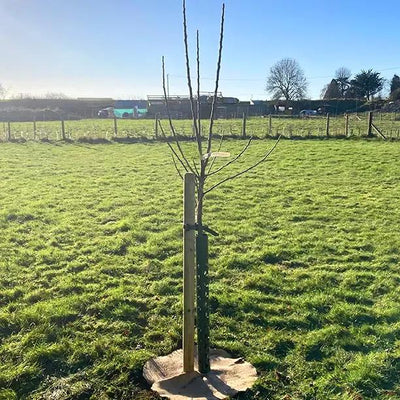
How to Plant a Tree With a Stake
Planting with a stake is optional but highly recommended.
Read More
 5 Star Service Rating




 Secure, One-Tap Checkout
 5 Star Feefo Rating
 Hand Picked, Delivered to Your Door!
 1 Year Bareroot Guarantee
 Platinum Trusted Service Award 2026
 Mail Order Plant Experts - Est. 1949
16/10/2025
Broadly speaking, bay laurel plants, Laurus nobilis, are easygoing, low maintenance, aromatic evergreens that are a joy to grow.
There are a handful of common problems that can affect bays, especially trees in pots, which always need extra care.
Spotting and fixing the problems promptly will give your bay a new lease of life.
They are resilient trees that respond well to pruning and replanting.
When your bays look bad, inspect the leaves, and inspect the soil moisture.
The most common causes of these problems are:
| Pot Grown Bays | Bays Growing in the Ground |
| Poor drainage is keeping the roots wet too long | Overwatering, often unintentional by lawn sprinklers, road run-off, etc. |
| Underwatering, sometimes the potting soil mix is not absorbent & the core stays dry | Location is too wet. Bay likes heavy clay on uphill places that dry in Winter, but not winter waterlogging. |
| Lack of nutrients |

Yellow leaves on bay trees are usually caused by overwatering, or by nutrient deficiency, both of which are more likely with potted trees.
Yellow leaves caused by constantly wet soil around the roots often happens to bays in pots that can't drain, and trees that are irrigated unnecessarily by sprinklers, road run off, etc.
Yellow leaves could also be nutrient deficiency, lack of N-P-K.
Again, it's typically an issue with pot grown trees, which cannot access soil nutrients.

Brown bay leaves in:
Established bay trees are very drought tolerant, a few brown stems here and there don't mean anything.
Mulching around the base is enough, watering should not be necessary.

Peeling or cracked bark can be a sign of stress from fluctuating moisture levels when dry spells are followed by British rain, or extreme winter cold.
Bay trees are hardy down to at least -10℃, but when the temperature drops below zero for extended periods, exposed bark peeling is common.
No intervention is usually required, the tree will revive when the weather warms up, but a bit of horticultural fleece (we're selling our last tubes of it) during the worst winter months is recommended for recently planted bays that are still setting in.
Bay trees in pots are most vulnerable in Winter, protecting the pot from frost is beneficial; horticultural fleece is one option, or moving it into a sheltered place beside the house.
Leaf spots can be a sign that:
These sap sucking bugs are a common pest on bay trees.
They live under their brown flat waxy disc, initially quite inconspicuous under leaves and stems.
The bugs themselves cause little damage to the tree, but where their numbers build up, so does their collective excretion of sticky residue.
This waste product gets colonised by black sooty moulds.
These unattractive fungi block light and stop the leaf from making energy for your plant.
Bay sucker (Lauritrioza alacris) is a sap sucking bug that feeds on bay leaves, causing them to become discoloured and distorted at the shoot tips, the leaves turn brown, not a good look.
Check the undersides of the leaves, bay suckers are small greyish white insects as larvae, and look like large winged aphids as adults.
Bay suckers rarely become infestations that lasting damage to the tree.
Encourage natural predators such as ladybirds into your garden.
Wipe them off with a soft brush and the jet of a hose.
Bay trees in pots need repotting and pruning to stay in top condition.
If the top of a bay is snapped off or dies back, prune back to healthy wood and it should regrow:
Bay tree leaves turning yellow or brown are common symptoms of too much water or too little water, and sometimes depleted potted soil.
Keeping potted bays lightly fed, watered but also well drained, repotted every few years, are often all it takes to keep them gorgeously glossy and green.

Comments (49)
Add a commentBay trees are slow to come into flower, and life in a pot can be tough: if a plant is malnourished, it physically can’t flower. How do you feed it?
Does it get full all around sun outdoors in Summer? Is it well lit indoors in winter beside a South facing window, or maybe has its own little grow-light? Being in gloom for half the year will be bad for flowering. It’s a Mediterranean plant, as you know: not much gloomy weather there in general.
Bay’s unimpressive, small flowers are semi-hidden by the leaves, and fade quickly, so it’s no loss.
Hello Shirley,
You’ve got to give me more than that! Are they in pots, do you check them for sucker bugs, what region do live in & how has the weather been, do you take them dancing on weekends or do they go themselves? So many questions.
My guess is you either don’t fertilise them, and they are hungry.
Or you do fertilise, and it could be too much, or a macronutrient other than the staple N-P-K is lacking, such as Iron or Magnesium, all of which needs some common sense and soil tests.
Julie, I don’t know. Are they in pots or in the ground?
If pots, are they rootbound?
If in the ground, are they both firm, or does the poorly one move in the soil when you push it around?
Do dogs/cats pee on one and not the other?
Hi Paola, my opinion is that your neighbour is looking for something to make problems about.
There is probably no cure for this, so good luck!
Best regards,
Ashridge
Hi Teresa,
“This is the first year we didn’t get it pruned/shaped as left it too late.”
Yes, if the plant was clipped yearly, it’s normal for it to adjust when allowed to grow. The outer leaves look good, it’s losing old leaves from the centre, so the tree sounds fine.
Not sure what you mean by left pruning too late? You can clip and trim your Bay at any time to tidy. Hard restoration pruning is ideally done in Spring, but I would only prefer to delay hard pruning garden plants at the extremes of summer heat or winter freeze.
Right now in September is a good time to prune it and encourage new growth from lower down – bay laurel may grow back best when coppiced .
“filled three wheely bins [of leaves] since the spring.” + " area under the tree, which has shuttlecock ferns is quite dry, so during dry periods I have watered the area. "
You water, you collect leaves: do you also mulch the soil, or is there grass / paving / beds around the bay tree?
By removing leaves to tidy the garden, the soil could be exposed to drying wind and sun; exposed soil may crust, and encourage rain to run off it. By covering the soil with mulch (any organic matter), it stays moist in dry Summer weather, with rich soil life that makes it fertile and sponge-y.Bay is a drought tolerant Mediterranean plant that should not need watering.
The ferns will catch all the light rain in Summer, but they also shade the soil well.
Leave a comment
Please note, comments need to be approved before they are published.