Best Hedge Plants for Drought Tolerance & Dry Gardens
Order Potted Plants & Troughs Now For Spring Delivery
Pre-Order Bareroot Plants For 2026 Spring Planting Season
Remember that all of these plants are only drought tolerant when they are well established. They need time to develop strong, deep roots, which will take one or two growing seasons.
Like any other new plant, you must water them well in warm, dry weather for their first couple of years.
Best Evergreen Hedge Plants for Dry Locations
- Yew - The King of Hedges
- Green Privet - The most reliable, easy-going, reasonably vigorous evergreen hedge
- Holly - Prickles and a dark, brooding presence
- Laurels
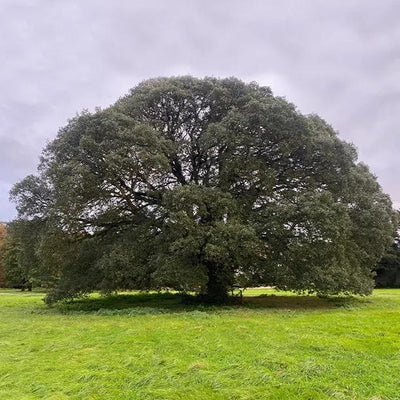
- Holm Oak - Its native range is North Africa and the Mediterranean, so dry soils are no problem, however it's not recommended for the colder areas of Eastern & inland Scotland
- Pyracantha - The thorniest option, great bright berries for later season interest
- Orange Cotoneaster and Cotoneaster simonsii
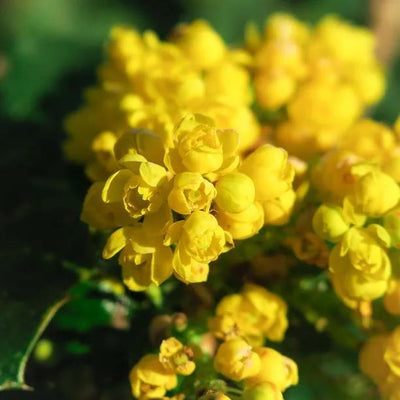
- Evergreen Berberis such as darwinii and julianae do well even in dry shade
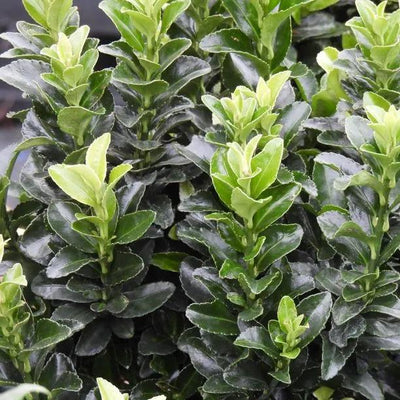
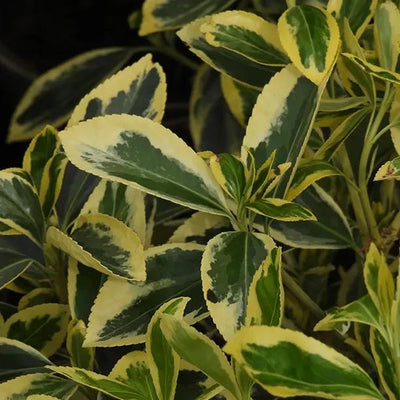
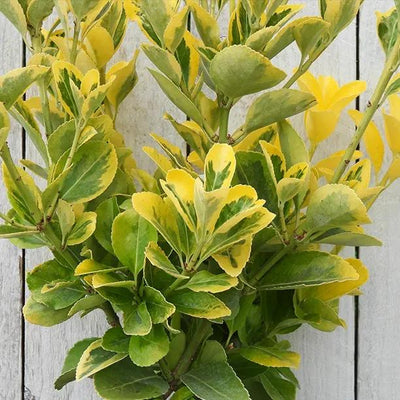
- Evergreen Euonymus - Tall Japanese Spindle varieties such as Bravo and Ovatus Aureus have brightly coloured foliage
- Shrub Honeysuckle: Lonicera nitida - It's the most common hedge plant for car parks for a reason! It's not as pretty as the plants above but still a rugged choice for out of sight places
- Box - Slow growing but very shade & drought tolerant, as long as there is good air flow to decrease humidity
Special Mention:
- Lavender & Perovskia are too short to be barrier hedges, but they look wonderful planted in rows
Is Gorse a Good Choice for My Garden?
- Gorse, Ulex europaeus, is a very drought tolerant plant, however it's not ideal for garden use.
- It spreads aggressively via seed
- It does not look as nice as other options
- Still, its dense, prickly mass and long flowering season are great for preserving dunes and supporting wildlife
Best Deciduous Hedge Plants for Dry Locations
- Beech - Requires full sun and loves dry conditions
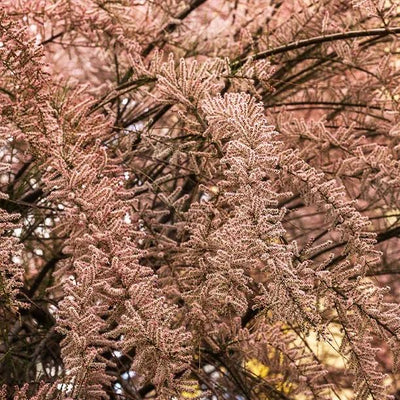
- Hawthorn - The toughest country hedge plant all-round, it tackles dry soil better than Blackthorn or Hazel. Mix with Tamarisk on the coast for a beautiful combo.
- Wild Ramanas roses come in white and pink-red; the more ornamental purple variety Roseraie De L'Hay is recommended for a front garden hedge
- Elaeagnus - Oleaster - Thorny, with lovely grey-green leaves.
- Deciduous berberis - green, or purple
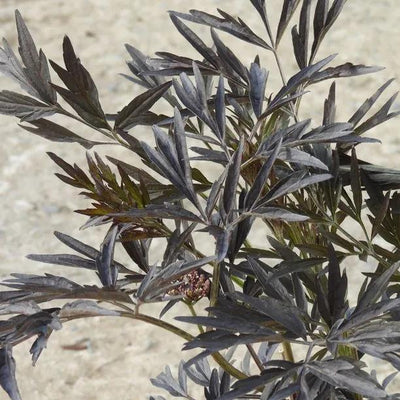
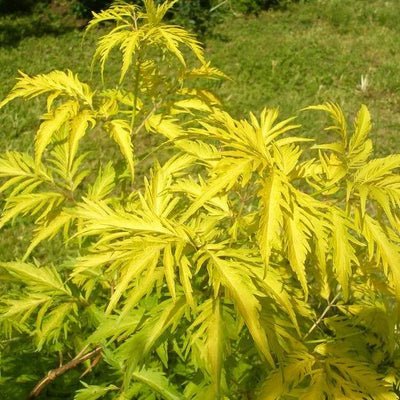
- Elderflower, Sambucus nigra, especially its gold or purple leaf varieties
- Pink Snowberry - Symphoricarpos chenaultii is shade-tolerant and grows in almost any soil
Special Mention:
- "Wallspray" Cotoneaster horizontalis is too short to make a proper hedge, but is a great shrub for planting in corners against walls & fences
Coastal Plants are Drought Tolerant
Soil beside the sea tends to be dry: sandy, rocky and poorly fertile.
It's a safe bet that coastal hedge plants will do well on dry soil in general.
Coastal plants are almost all drought tolerant, and this page lists others that are not good for the coast.
What is the difference between Bareroot and Pot Grown Hedge Plants?
Bareroot plants are by far the best value, the easiest to handle & plant because they weigh so little, and offer the most selection.
They are only delivered during winter and early spring, about November to March, when the plants are dormant, which conveniently is also the best time of year to plant almost all woody species.
Some plants or larger sizes can only be delivered in pots, and some popular species are sold both bareroot in winter and potted the rest of the year.
There is nothing wrong with pot-grown plants, but if you have a choice, bareroot is better.
When and How do I Plant Hedging?
Plan your hedge in advance, calculate the spacing, prepare the soil, and be ready to give it the watering & trimming it needs during the first couple of years of growth.
5-minute videos: how to plant bareroot country hedges and how to plant formal hedges.
Hedge plants should have a good ratio of root to shoot, so younger hedge plants up to 80cm tall with their slim roots, which can still be slit planted, are more convenient. Larger hedging, with its bulky roots, is harder to plant, requiring more digging.
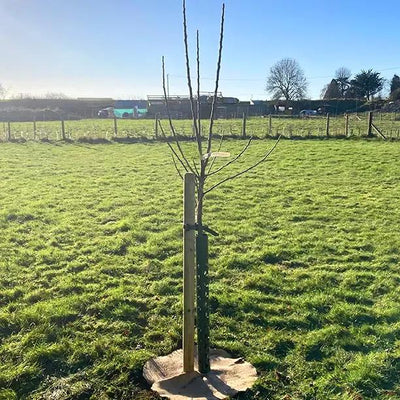
A new hedge needs water in dry weather (irrigation pipes make this chore easy), regular weeding or mulch fabric to suppress weeds, and in the countryside protection from rodents and deer: spiral guards with bamboo supports are usually enough, but if deer pressure is high then sturdier tree guards with small stakes are wise, unless you fence off the area.
In our experience, deer repellents are effective until a hungry deer in winter braves them for a meal!
Ready the Ground: In late summer, destroy the weeds or cut them short and smother them with polypropylene weed control fabric. Doing this early is best, as it allows time for a second weeding.
Hedge spacing:
Almost all bareroot hedging is 33cm apart, 3 plants per metre for a single row, or 6 plants per metre in stockproof, staggered double rows 45cm apart (for a wildlife hedge, leave up to 100cm between rows).
For a country hedging grant, the approval document tells you the spacing to use. Formal hedges can be 3 plants per metre for boundary hedges or 2 per metre for interior hedges and large rootballed plants.
Box (Buxus) hedging is best planted at 5 per metre, 20cm apart.
When to Plant Hedging
- Prime bareroot hedge planting season starts in November and ends in March; in Scotland, it can go on for another four weeks.
- Evergreens such as Yew and Laurel can be planted from early Autumn onwards, while deciduous plants, such as Beech or Hawthorn, should wait until a little later, between November and March or April, depending on the weather.
- Pot-grown hedge plants can be planted year round.
Good planting days are overcast and still, with a drizzle forecast afterwards; on sunny, windy days, the roots will dry out quickly when left out of the bag or bucket.
Keep hedging in bags for up to a week, in the shade, to prevent overheating or roots drying out. Don't stack bags. Never move plants when the ground is frozen or covered with snow. Leave them where they are until the ground thaws. Read more on planting in cold weather.
If planting is delayed for over a week after delivery, heel bareroot plants into a trench at a 45-degree angle, covering the roots well with soft soil. It will keep for weeks like this.
Keeping the roots slightly damp is important, but do not keep any plants in a bucket of water: a 30-second dunk is great.
Slit or Trench Planting
Slit planting is the easiest way to plant bareroot hedging of 60/80cm or less, as in our video on how to plant a country hedge. Have a bucket of water to hold the plants.
Push your spade into the soil, to the depth of the roots.Rock backwards and forwards to widen the slit. For a bigger slit, cut at right angles to the first slit to make a T or L shaped notch.
Take a plant from the bucket, sweep the roots into the hole from one side without squashing them.Firm hedging in well with the ball of your foot: don't damage the bark, but be really firm.
The root collars should finish at or slightly above soil level: don't plant them deep.
We recommend planting in teams of three for large jobs. One makes the slit, one sweeps the roots down into it, and one firms the soil back in, checking it's at the right level. An amateur team ought to manage 500 plants a day, or 100 metres of double rot hedging.
Pit or trench planting is for pot-grown hedging and larger bareroots, generally on plants over 100cm tall, as in our video on formal hedge planting.
Dig a hole big enough for the roots and centre the plant in the hole with the root collar barely below ground level. Replace the soil, gently tugging the plant as you firm it and the soil settles round the roots; the root collar ends up at, or slightly above, soil level.
When putting replacements into existing hedging, cut a hole in the hedge and work over a section of soil, improving it with compost.
Hedge plant protection: Rural locations usually need our perforated spirals against rabbits and voles, and bamboo canes to hold the spiral up with the young plant. For trees that you want to grow above the hedge, we suggest using tree guards and stakes.
Aftercare
All Hedges:
1. Water when it is dry: new hedges are on "water life support" for their first summer at least. We recommend an irrigation system like a leaky pipe. Otherwise, soak the soil around your plants twice a week in dry weather.2. Hoe down weeds and grass for about 75cm on either side of your hedge; hand-pull weeds that grow out from under mulch fabric right next to your plants.3. Firm the soil back down after a frost, or if your plants are pushed around by the wind: put up a temporary windbreak if necessary.4. Check the hedge to remove and record losses; replace them in one go next planting season. Do not be concerned if evergreens drop their leaves.5. Mulch yearly, when the soil is moist and warm.
Weeds kill hedging, more than rabbits in most gardens. Mulches suppress weeds and preserve soil moisture, which gives an astonishing boost to your hedge's growth rate!
- Organic mulches are best for garden hedging, including grass clippings, compost, woodchips, cardboard, carpet felt, only don't pile it up around the trunks of your new plants.
- One application of weed control fabric, woven plastic mulch, lasts for years.
Hedge Trimming is the key to dense, bushy foliage.
Developing hedges are best cut in autumn, winter, or very early spring, any time the weather is not freezing.
A mature hedge can be trimmed any time.
Cut mixed country hedging back to 6-8inches (15-20cm) immediately after planting, this creates several low side shoots when it starts to grow in Spring: the base of a bushy hedge.
- Reduce those new shoots by 50% in the autumn/winter following planting.
- Trim gently every winter thereafter, until desired height is reached.
- One rough cut per year is all mature hedges need. Aim to leave 2-3cm of growth from the previous year.
Hedgerow trees like Ash, Oak, or Silver Birch are planted in the same way as a hedging plant, but only their lowest branches are pruned off, to encourage a single trunk. A short tree shelter is convenient, so their tops aren't trimmed with the rest of the hedge.
Hedge Laying is used to regenerate old country hedges. Well-planted hedging is stock-proof in about 5 years and, if trimmed every 1-2 years, it should be over 50 years before it first needs laying. If you want to lay your hedge for the practice, you could do so from the 5th year onwards.
Trim formal hedging only lightly; do not trim the leading stem of Yew at all until it reaches the desired height. With small beech plants, you can pinch out the last leaf buds at the tips of each stems by hand.• To look their best, mature formal hedges like Beech and Privet require clipping twice a year; slow growers like Box and Yew are fine with one.
What is the difference between an ornamental shrub and a hedge plant?
- Hedging plants (listed on this page) are mostly delivered bareroot, and used to make a secure, functional barrier hedge.
- They are clipped / trimmed at least once or twice a year in order to maintain bushy, leafy growth.
- Ornamental garden shrubs are mostly pot-grown and primarily intended for border specimens, and for ornamental, rather than barrier hedging (or low edging around paths and borders).
- They are generally pruned once a year at most, in order to encourage more flowering the following year, but many of them only need pruning when they are getting too big.
Naturally, there is plenty of overlap: a plant's use in your garden is up to you!
For example, the classic formal evergreen plant for low hedges and topiary, Box, given enough time, could be grown as a tall hedge, and over many decades a tall tree.
Dogwoods are an example of where the wild species, Cornus alba and Cornus sanguinea, are used for practical country hedging, usually mixed with other natives like Hawthorn.
Their colourful cultivars like Cornus 'Midwinter Fire' or C. 'Westonbirt' are typically hard pruned down to a stump every Spring for their display of brightly coloured new shoots.
However, if you want to jazz up your regular hedge with those bright bark cultivars, or hard prune the wild species as a border specimen for a natural look, that's your call. If you don't like how it looks, we'll be here for you when you want to change it.
What is the difference between a sapling tree and a hedge plant?
Only their intended use!
Most hedge plants are sapling trees (the rest are naturally bushes/shrubs), sold at the ideal starting sizes for hedge use.
If you plant, say, a beech hedge plant and leave it to grow naturally, it will become a normal beech tree, not a hedge.
- All the young trees listed as suitable 'hedge plants' are also used for forestry planting.
- Only the trees listed as 'sapling trees' are not really suitable for clipped hedge plants (such as Oak or Sycamore: it's not that you can't possibly make a hedge with them, it's more that the final result will look unsatisfactory, especially in winter with no leaves), although most of them are good for taller screening - all such exceptions will be clearly noted in the product description.
Many of the sapling trees sold for hedging in this section are also delivered in large standard sizes, which are the same tree, just grown with a straight, unforked stem.
What are the Cheapest Hedge Plants?
Bareroot hedge plants & trees are always cheaper than their pot-grown equivalent, because they are grown out in the field, and cost much less to transport.
However, there is no reduction in quality, and in most cases bareroot plants establish even better than their pot-grown version.
The absolute best value hedging you can buy is our country hedge mix (250 plants per pack, consisting of 4 native species - that's 83 metres of single row hedge, or 41 metres of double row), closely followed by our conservation mix (50 plants per pack, consisting of 6 native species - that's 16.5 metres of single row hedge, or 8 metres of double row), and then all our other ready mixed hedge packs of 50 plants.
For an evergreen hedge, reliable old green privet is your best value option; golden / variegated privet is slightly more expensive, but to make it more affordable we do sell it in a smaller size.
Buying the smallest plants of a given variety saves you money, they establish more reliably than big plants, and allow you to do more formative pruning, which means you get an even denser and better hedge in the end.


 Sign In
 Saved items


 5 Star Service Rating




 Secure, One-Tap Checkout
 5 Star Feefo Rating
 Hand Picked, Delivered to Your Door!
 1 Year Bareroot Guarantee
 Platinum Trusted Service Award 2026
 Mail Order Plant Experts - Est. 1949