

Sold as:

from £10.95

Sold as:
from £19.99
 5 Star Service Rating




 Secure, One-Tap Checkout
 5 Star Feefo Rating
 Hand Picked, Delivered to Your Door!
 1 Year Bareroot Guarantee
 Platinum Trusted Service Award 2026
 Mail Order Plant Experts - Est. 1949
 1 Year Bulb Guarantee
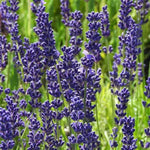
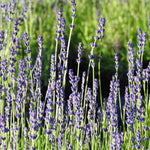
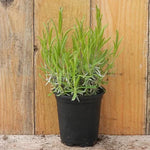





Havana does something that very few English lavenders manage. The flower buds open in two stages, with the dark purple calyces showing first while the lighter corollas emerge gradually from within, so for a week or two the spikes look almost striped. Once fully open, the effect softens into a rich, saturated purple that holds well until you cut it back. The colour is close to Hidcote territory, but the bicolour bud stage gives Havana a personality of its own. By the way, the bicolour effect is more pronounced in cooler springs. A sudden warm spell in May can push the flowers open so fast that you barely notice it.
The plant itself sits at about 60cm — a bit taller than Hidcote, a shade shorter than most Lavandins. The habit is upright and reasonably compact, though in our trial beds, we have noticed plants in their second year can spread a bit wider than the first-year growth might suggest, so give them room. The scent is pure English lavender: sweet, floral, no camphor. Havana is a relatively recent Dutch introduction from Armada Young Plants B.V., and it was bred to compete directly with Hidcote as a bedding and border variety. Whether it actually beats Hidcote is a question that starts arguments among lavender growers. Our position is deeply self-serving: they are different enough to grow both.
Most of the classic English lavenders arrived by accident or selection — Hidcote was found in a garden, Munstead was chosen by Gertrude Jekyll from seedlings. Havana is different. It came out of a deliberate breeding programme at Armada Young Plants in the Netherlands, selected for uniformity, flower colour, and compact habit. That commercial breeding background means Havana tends to be very consistent from plant to plant. If you are planting a row of twenty, they will look like a row of twenty rather than a row of eighteen good ones and two oddballs. That matters less in a cottage garden and more if you want a crisp, even display along a path or driveway.
The trade-off is that Havana does not yet have the track record of Hidcote or Munstead. Those varieties have been in UK gardens for the best part of a century, and we know exactly how they age, how they respond to bad winters, and how long they live. Havana hasn't been around for long enough, so that sort of data is thinner on the ground. Everything we have seen so far is encouraging, but a few years of globally warmed Somerset winters is not the same as seventy years of the real thing.
A line of Havana along the front of a sunny border, with rosemary behind it, is about as low-maintenance as planting gets — both want the same poor, well-drained soil and neither needs feeding. Stachys byzantina (lamb's ears) planted at the feet of Havana picks up the silver foliage theme and adds a contrasting texture that looks good even when neither plant is flowering. Loddon Pink or Rosea planted alongside will give you a purple-and-pink combination without mixing sub-species. Salvia nemorosa 'Caradonna' is worth considering too — it flowers at a similar time and the dark stems echo Havana's deep calyces.
Your Havana lavender is grown right here in the West Country and dispatched when soil temperatures are right for planting — not before. We deliver by next-day courier, every plant is guaranteed, and if anything goes wrong or you just want planting advice, real people in the office here in Somerset will pick up the phone. Browse our English lavender collection or see all our lavender plants. We hold a Feefo Platinum Service Award, for whatever that is worth (we think quite a lot, actually).
Our guide to growing lavender covers the fundamentals. Here are the things people ask us most about Havana.
All English lavenders are excellent for bees, and Havana is no exception. The open flower structure makes it easy for honeybees, bumblebees, and solitary bees to access the nectar. In our experience the bees do not show a strong preference between Havana and Hidcote — they will work whichever is flowering. Planting a mix of early and late varieties extends the season, so consider adding a Lavandin like Grosso that flowers from mid-July onwards to keep the pollinators fed after the English varieties finish.
With help, yes. Lavender needs drainage above almost everything else, and clay holds water around the roots in winter, which is usually what kills it. Dig in plenty of grit — horticultural grit, not sand — and plant slightly proud of the surrounding soil level so water drains away from the crown. A gravel mulch around the base helps too. On heavy clay in a low-lying spot, a raised bed or large container is honestly the better option. Havana is no more or less tolerant of clay than other English lavenders.
Certainly. Semi-ripe cuttings taken in late summer (August or early September) root well in a free-draining compost mix. Take non-flowering shoots about 10cm long, strip the lower leaves, dip in hormone rooting powder and push them into a pot of half perlite, half compost. Keep them sheltered and lightly moist over winter. Havana, being a named cultivar, will come true from cuttings — seed-grown plants will not be the same variety.
Annual pruning. That is the whole answer, really. Our lavender pruning guide has a short video showing exactly where to cut.
Late April through June, when the soil is warming and the risk of prolonged cold, wet weather has passed. May is the sweet spot for most of England and Wales. In Scotland and northern England, waiting until late May or early June is sensible — lavender roots establish faster in warm soil, and a cold snap after planting sets them back. Autumn planting can work in mild, well-drained gardens in the south, but spring is safer for P9-sized plants like Havana. Water in well after planting and then leave the plant to find its own moisture. Lavender hates being fussed over.


 Sign In
 Saved items