


Sold as:

from £10.95

Sold as:
from £19.99
 5 Star Service Rating




 Secure, One-Tap Checkout
 5 Star Feefo Rating
 Hand Picked, Delivered to Your Door!1 Year Bareroot Guarantee
 Platinum Trusted Service Award 2026
 Mail Order Plant Experts - Est. 1949
 1 Year Bulb Guarantee

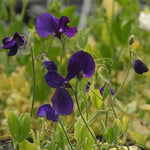
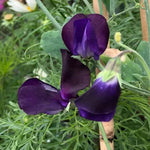

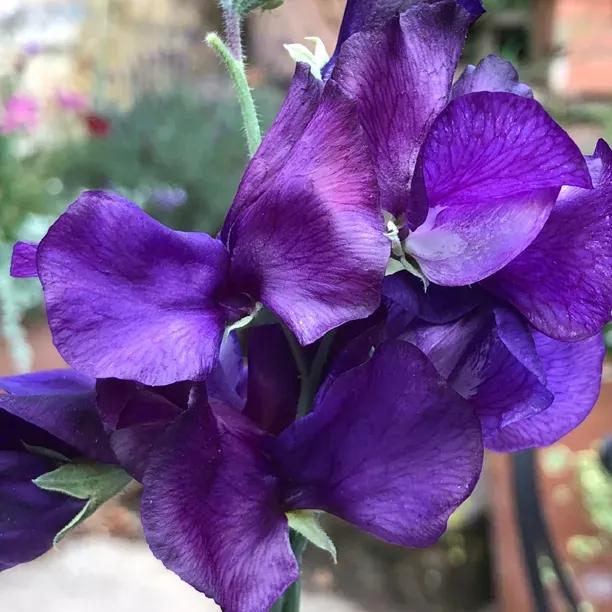
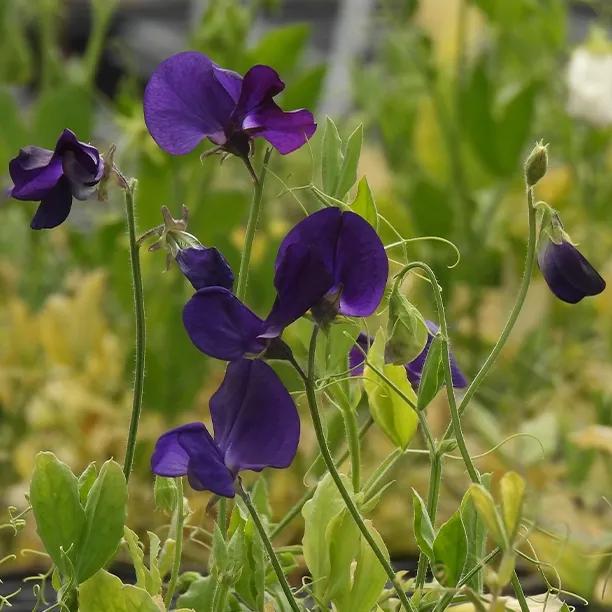
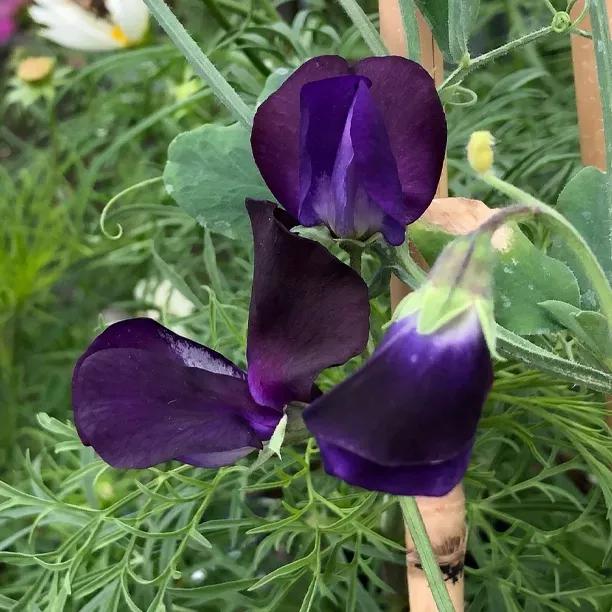





There are blue sweet peas that lean towards lavender and there are blue sweet peas that lean towards purple. Blue Velvet does neither. It is a deep, saturated violet-blue with a quality that its name describes honestly – the petals have a soft, almost textile finish that absorbs light rather than reflecting it. The colour is intense without being harsh. In a vase by itself, Blue Velvet has the quiet authority of a single-colour arrangement done well. In a mixed bunch, it anchors whatever you put it with.
Bernard Jones bred Blue Velvet, introduced it in 1972 and it has stayed popular on the strength of its reliability and garden performance. The flowers are large, properly waved Spencers carried 3–4 to a stem on long, straight stalks. It grows with the steady, unflappable temperament that Jones's introductions are known for. Plant it, support it, pick it, and it will keep producing from late June until you stop bothering.
Blue is the most requested colour in sweet peas and the hardest to get right. Many varieties marketed as blue are really lavender, lilac, or mauve – perfectly nice, but not what the customer was after. Blue Velvet delivers a genuine blue, darker and more concentrated than Noel Sutton and richer than Ballerina Blue, both of which have a lighter, airier character. Where those two float, Blue Velvet grounds.
In the border, plant it where it catches the afternoon sun. The colour reads differently through the day: cooler and deeper in the morning, warmer and more violet in late light. Against a pale wall or white-painted trellis the effect is striking. For cutting, pick first thing when the dew is still on the petals and the colour is at its most intense.
The scent is a 3 on the Parsons scale – pleasant and noticeable, with the classic sweet pea sweetness, but not a room-filler. If you want serious fragrance alongside that colour, pair it with a scent star and let each variety do what it does best. For planting, support, and feeding guidance, see our sweet pea growing guide.
Our Harry (lavender-blue Spencer) is the natural partner – a lighter blue next to Blue Velvet's deeper tone creates a blue gradient on the same support that shifts as the light changes through the day. For warm contrast, Valerie Harrod (coral-pink Spencer, AGM) plays off the violet-blue to striking effect – the kind of combination that stops visitors mid-path.
On a wall or pergola, Blue Velvet threads beautifully through rambling roses. Paul's Himalayan Musk (blush-pink) or Rambling Rector (cream-white) provide the backdrop, with the deep blue sweet pea weaving through and filling the gaps with colour and scent. The rose carries on after the sweet peas are spent, so the structure is never bare. It is the kind of planting that looks as though it happened by accident but improves every garden it touches.
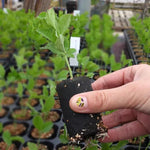
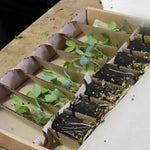
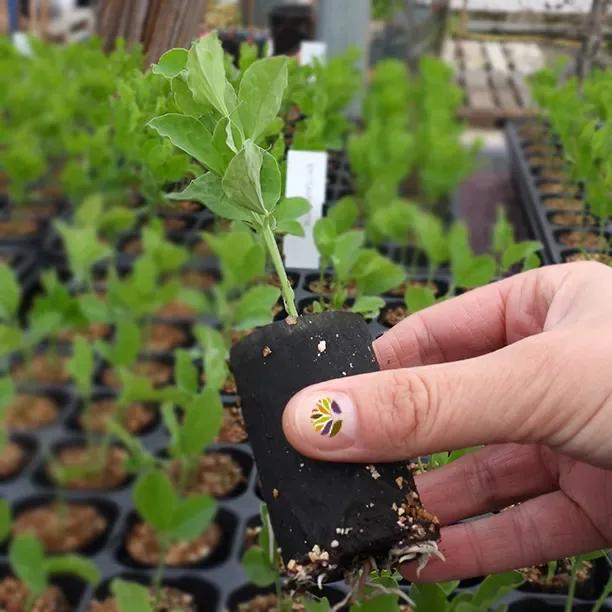
We grow many thousands of sweet peas every year and have been doing so here in Somerset since the early 2000s. We germinate our own seed (we collect it ourselves), hand-sown at two seeds per plug to ensure at least one strong plant. These are pinched out to encourage bushy growth and hardened off before dispatch. You simply get healthy, beautifully grown, garden-ready jumbo plug plants to give you the best possible start.
We send your sweet peas out by next-day courier between March and May, packed in purpose-designed recycled cardboard packaging. The moment they arrive, they are ready to go into the ground or a container. If anything is not right, we have real people on the phone in Somerset who will sort it out. We hold a Feefo Platinum Service Award and have been named a Which? Best Buy plant supplier – endorsements that came from our customers, not our marketing team.
No, it does not hold the RHS Award of Garden Merit. It has stayed in catalogues since 1972 because it flowers consistently and does well in UK gardens.
A deep violet-blue with a velvety finish to the petals. Not lavender, not mauve, a concentrated, rich blue that reads as properly blue in the garden and in a vase. The colour holds well throughout the life of each bloom, maybe darkening very slightly as it ages.
As with so many Spencer sweet peas, Blue Velvet does not carry the strongest scent. We would grade it as medium; pleasantly fragrant, enough to enjoy from a cut bunch on the table. Not a scent powerhouse, but reliably "there". If fragrance is your priority, pair it with a Grandiflora like Matucana or a Semi-Grandiflora like Albutt Blue for the best of both worlds.
After the last frost, typically late April in southern England and into May further north. Our plugs arrive garden-ready between March and May, already pinched out and hardened off. If they arrive before your last frost date, keep them in a bright, sheltered spot until conditions allow planting.
Yes, all sweet peas are annuals so you get one glorious season, then they are done. The perennial sweet pea (Lathyrus latifolius) lasts for years but has none of the colour range or fragrance of the annual types. So for a fresh start each year, our sweet pea collection takes the effort out of propagation.


 Sign In
 Saved items