
Sold as:

from £10.95

Sold as:
from £19.99
 5 Star Service Rating




 Secure, One-Tap Checkout
 5 Star Feefo Rating
 Hand Picked, Delivered to Your Door!1 Year Bareroot Guarantee
 Platinum Trusted Service Award 2026
 Mail Order Plant Experts - Est. 1949
 1 Year Bulb Guarantee
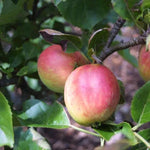
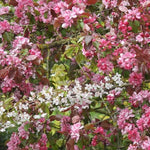
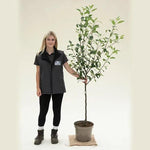
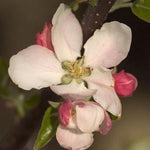
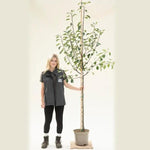




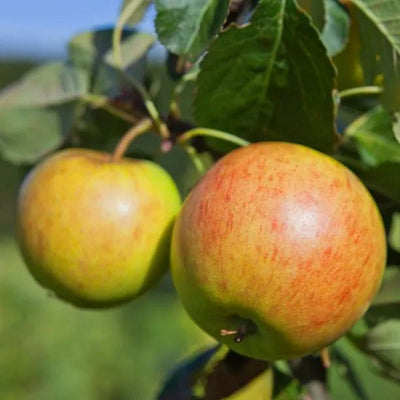
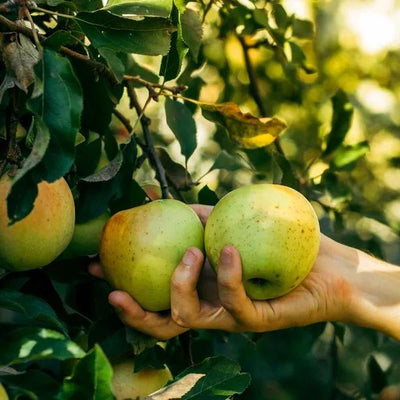
Cox's Orange Pippin is the classic English eating Apple: aromatic, juicy and flushed orange-red. Ours is the self-fertile form, so one tree crops on its own. Pick it in early October and eat it through to January. It wants sun, shelter and good care, and it is happiest in the drier east.
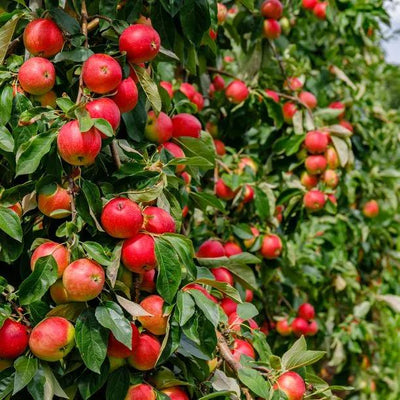
'Coxs Orange Pippin' apple trees carry quintessentially English eating apples that juice very well: in a good season they are an unusual orange-russet colour. It stores to mid-winter in a cool place, and you can freeze the juice from any excess apples.
The tree is quite slow-growing and upright; it's ideal for low maintenance cordons & espaliers.
Browse our range of apple trees, or all our fruit trees.
Read our guide to buying apples.
Delivery season: Bareroot plants are delivered from late autumn to spring, November to April. Pot grown plants, year round.
Apples like rich, well drained soil, and will thrive on clay in locations that do not get waterlogged in winter.
A full day of sun and shelter from the wind is ideal.
Cox's Orange Pippins are more susceptible to disease than most, unsuitable for organic growing commercially.
It's not ideal for the more humid, warmer areas in the West and South of Britain, where scab and canker are more common. Although it'll perform better in a cooler climate, it's not recommended for the North & Scotland because its flowers are easily damaged by late spring frosts.
They're generally happier in the drier Eastern parts of the country, although we have a large stock tree here in Somerset that crops wonderfully, thanks to the attention we give it. We do not spray it apart from with organic winter wash, we only follow best practice: plenty of mulch annually, sweeping up fallen leaves and fruit, removing bad ones, and some water in a dry summer spell so the tree is never stressed.
Rootstocks:
We use MM106 for Cox, the UK standard for medium-sized trees, ideal for gardeners. It gives a half-standard about 4m tall, and a bush about 3m.
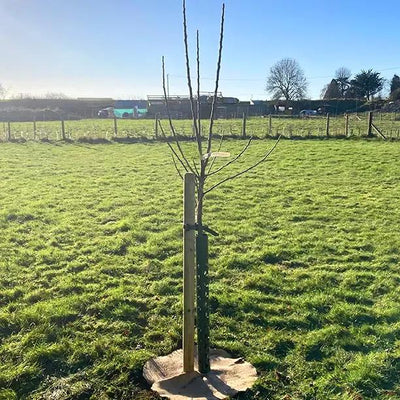
MM106 maidens are suitable for cordons, fans and espaliers. We don't sell ready-trained cordons, fans or espaliers but you can just buy maidens and train them yourself: we can pre-prune them to whichever form(s) you choose and we send you instructions at pruning time in subsequent years.
Cox Disease notes:
Disease susceptibility: Scab, Canker (high), Mildew, Fireblight, Cedar Rust, Bitter Pit (moderate). Recommended alternative is Fiesta, which has similar flavour and better disease resistance.
Your trees are self fertile, making decent crops without a pollination partner, but still perform best with one.
Cox is in Pollination Group C, which cross-pollinates with other apple trees in Groups B, C and D.
Use our Fruit Pollination Checker to quickly find pollination partners, or Apple Pollination Guide to learn more.
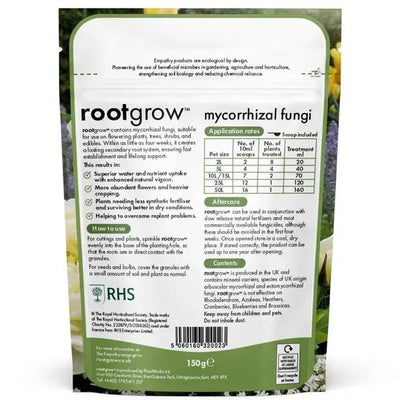
Cox crops alone, and better with a partner that flowers in group B, C or D. Fiesta has a similar flavour and is easier to grow, and Sunset, Katy and Red Falstaff are in group C too. Pear trees give a shared orchard a different season. Dust bareroot roots with Rootgrow as you plant.
Ashridge has sold trees since 1949 and is a Which? Best Plant Supplier 2025. Your Cox's Orange Pippin is grafted onto MM106 rootstock, and maidens are pre-pruned before despatch for the form you choose. Bareroot trees are lifted to order while dormant and guaranteed for 12 months.
Not this one. We grow the self-fertile form, which sets a decent crop on its own pollen. A partner from group B, C or D still brings heavier crops.
It is a self-fertile sport of the original, with the same fruit. It is listed as 'Self Fertile Cox's Orange Pippin'. The original needs a partner, and it is not the tree we sell.
It crops in early to mid-autumn and stores to mid-winter. Pick in early October, and keep sound fruit somewhere cool, dark and airy.
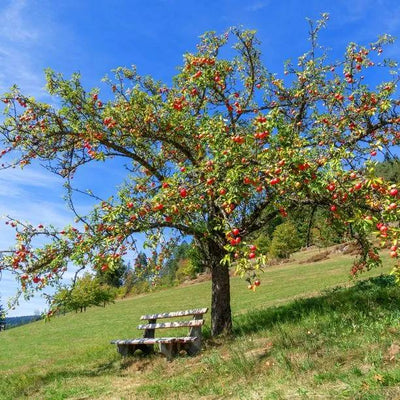
On MM106, a pruned bush is kept at about 3 metres and a half-standard at about 4 metres. Left unpruned, the rootstock gives a tree about 4.5 metres tall and wide.
In full sun and shelter, on deep, fertile soil that drains well. It is difficult to grow well in cool, wet areas, so it is happiest in the drier east.
You buy a maiden and make the shape yourself, which is how a cordon is made. Tell us the form you want and we pre-prune the maiden before despatch. MM106 suits cordons, fans and espaliers.
Bareroot only, from November to April, while the trees are dormant. You can order at any time of year and your tree is lifted and sent once the season opens.




Coxs Orange Pippin Apple Trees needs a different apple tree nearby, in flower at the same time, to produce fruit. The varieties below are compatible pollination partners.


 Sign In
 Saved items