
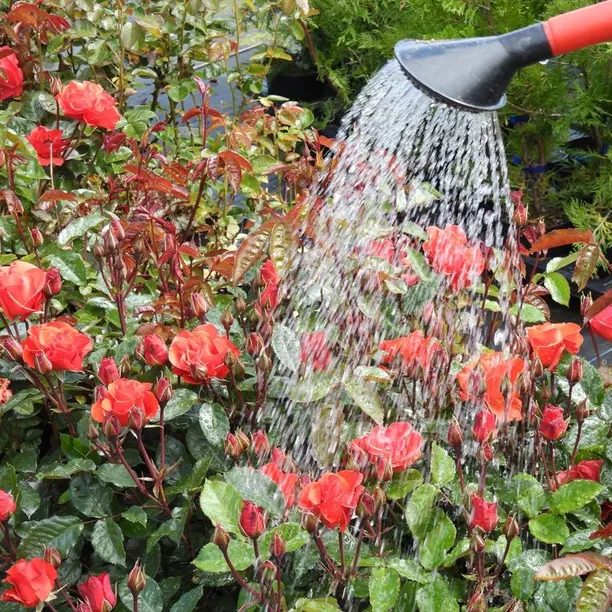
When should you feed roses?
Roses are heavy feeders and respond visibly to a well-timed feeding programme. In the UK, the main feeding season runs from early spring through to midsummer, with an optional light autumn application for established plants. Feed too early or too late in the season and you risk soft growth that is vulnerable to frost or disease.
Related guides
- Best Rose Varieties for Shady Gardens
- Which rose should I buy? Choosing the right rose for walls, borders, scent, shade and cutting
- Roses – to climb or to ramble?
- David Austin Roses — Varieties and Growing Guide
- How to deadhead roses — when to stop, and varieties you should leave alone
Why does feeding roses matter so much?
Roses produce an extraordinary quantity of flowers relative to their root system, and they draw heavily on soil nutrients to do it. Without adequate feeding, even a healthy rose will produce fewer, smaller blooms, duller foliage, and weaker stems that are more susceptible to pests and diseases such as blackspot and mildew.
Soil nutrients are depleted in three main ways: uptake by the plant, leaching by rainfall, and decomposition of organic matter. In a typical UK garden, rainfall alone is sufficient to strip readily available nutrients from the root zone within a season. A structured feeding programme replaces what is lost and anticipates what the plant needs at each stage of its growth cycle.
The three primary nutrients roses need are:
- Nitrogen (N) — drives leafy, vegetative growth and overall vigour.
- Phosphorus (P) — promotes root development and helps newly planted roses establish.
- Potassium (K) — encourages flower production, strengthens cell walls and improves disease resistance.
A dedicated rose fertiliser will balance these appropriately for each season. Magnesium is also important — it forms the core of chlorophyll molecules — and many rose formulations include it. If you see yellowing between the veins of older leaves, a magnesium deficiency is the likely cause.
When and how do you feed roses in spring?
Give roses their first feed of the year in early to mid-March, once the soil temperature is reliably above 5 °C and you can see buds beginning to swell. Feeding before this point wastes fertiliser — cold soil biology cannot process nutrients efficiently, and tender new shoots encouraged by an early feed are vulnerable to late frosts.
For the spring feed, choose a granular rose fertiliser with a relatively high nitrogen content to fuel the burst of new growth. Scatter the granules evenly around the base of each plant, staying a few centimetres clear of the main stems, and water in thoroughly if rain is not expected. Follow the manufacturer’s rate — over-feeding does not produce proportionally better results and can scorch roots.
After feeding, apply a 5–7 cm mulch of well-rotted garden compost, bark, or manure over the root zone. This conserves soil moisture, suppresses weeds, and moderates soil temperature — all of which allow the plant to make full use of the nutrients you have just applied. Keep the mulch clear of the bud union (the swollen point at the base of a grafted rose) to prevent rot.
| Month | Action | Fertiliser type | Key nutrient emphasis |
|---|---|---|---|
| March | First spring feed + mulch | Granular rose food | High nitrogen |
| May | Pre-flowering feed | Granular or liquid rose food | Balanced N-P-K |
| Late June/July | After first flush | Granular or liquid rose food | Higher potassium |
| Late July | Final summer feed (no later) | Liquid rose food | High potassium, low nitrogen |
| September (optional) | Autumn soil conditioner | Potassium-rich, low nitrogen | Potassium only |
How do you feed roses during summer to keep them flowering?
Repeat-flowering roses — which include most modern hybrid teas, floribundas, climbers and shrub roses — need a second feed in May to sustain flowering through the season. A third application after the first flush has faded (typically late June or early July) is the most impactful feed of the year for encouraging a strong second and third bloom cycle.
By midsummer, switch emphasis from nitrogen to potassium. A feed that is high in potash (potassium) firms up cell walls, deepens flower colour, and helps the plant resist disease. Many gardeners use a liquid rose feed for speed of uptake at this point in the season — liquid nutrients are available to roots within days rather than weeks, which matters when you want a repeat flush to follow quickly after deadheading.
Cut off all feeds by the end of July at the absolute latest. An August feed encourages soft, leafy growth that will not harden before the first frosts, leaving the plant vulnerable. The energy spent on that flush of growth is also energy the plant cannot invest in building food reserves for next year.
Do once-flowering roses need the same feeding programme?
Once-flowering roses — which include most old roses, many shrub roses and the majority of ramblers — have a simpler feeding requirement because they do not need to be pushed into repeat bloom. A single balanced feed in March or early April is usually sufficient, followed by the midsummer potassium-rich application if you wish to strengthen next year’s flowering wood.
Species and wild roses are the most self-sufficient of all. In fertile garden soil they often need no additional feeding beyond an annual mulch of well-rotted compost. Over-feeding wild roses, in particular, tends to produce vigorous leafy growth at the expense of flowers and hips. If you grow a rambler such as Albertine or American Pillar, a single spring feed and a thick mulch is all they need to put on their spectacular annual show.
| Rose type | Feeds per season | Key timing | Notes |
|---|---|---|---|
| Hybrid tea | 3–4 | Mar, May, after each flush (to late July) | Heaviest feeders; respond dramatically to good nutrition |
| Floribunda | 3 | Mar, May, late June/early July | Consistent feeding maintains heavy cluster production |
| Climbing rose | 2–3 | Mar, May, after first flush | Feed generously — large root-to-canopy ratio |
| Rambling rose | 1–2 | Mar, optional potash in July | Once-flowering; avoid over-feeding |
| Shrub rose | 1–2 | Mar; second feed if repeat-flowering | Varies by variety — check if once or repeat-flowering |
| Patio rose | 3–4 | Mar, May, after each flush (to late July) | Container-grown plants deplete compost quickly; liquid feed fortnightly in summer |
| Wild/species rose | 0–1 | March if soil is poor | Mulch is usually sufficient |
Should you feed roses in autumn?
As a rule, do not apply a general-purpose or nitrogen-rich fertiliser to roses after late July. However, a potassium-only soil conditioner (such as sulphate of potash) can be applied in September to help woody stems harden and ripen before winter without pushing any new growth. This is particularly worthwhile for roses in cold or exposed gardens.
What autumn does call for is mulching rather than feeding. A generous layer of well-rotted farmyard manure or garden compost applied in October or November insulates roots against frost, improves soil structure over winter, and releases a slow trickle of nutrients that will be available to the plant the following spring. This is one of the best things you can do for roses at any time of year and costs very little effort relative to the benefit.
Do not apply fresh manure directly around roses — it can burn roots and may introduce weed seeds. Always use manure that has composted for at least six months.
How do you feed roses growing in containers?
Roses in pots and containers need more frequent feeding than those in open ground because nutrients are rapidly depleted from the limited volume of compost, and every watering leaches a little more out through the drainage holes. For containerised roses, apply a slow-release granular rose fertiliser in spring, then supplement with a liquid rose feed every one to two weeks throughout the flowering season.
Patio roses and compact varieties are particularly popular in containers — browse our patio rose collection for varieties suited to this purpose. Whatever variety you choose, use a loam-based compost rather than a peat or peat-free lightweight mix for containers, as it holds nutrients for longer and provides a more stable root environment.
Repot container roses every two to three years into fresh compost. Between repottings, the annual feeding programme is your primary means of maintaining fertility. Signs that a container rose is nutrient-stressed include pale or yellowing foliage, very small flowers, and noticeably reduced vigour compared with previous seasons.
When do you start feeding newly planted roses?
Do not feed a bare-root rose at planting time. The priority for a newly planted rose is root establishment, and a high-nitrogen feed can actually inhibit this by pushing leafy top growth before the root system is ready to support it. Instead, incorporate bone meal into the planting hole — it releases phosphorus slowly and encourages root development without stimulating excessive leaf growth.
For bare-root roses planted between November and March, begin the standard feeding programme in the following spring, once you can see clear signs of healthy new growth. For pot-grown roses planted later in the season, wait four to six weeks after planting before applying any fertiliser, then join the regular programme from that point.
In the first season, a single balanced spring feed and a good mulch is more than adequate. Resist the temptation to over-feed a new rose in an attempt to accelerate establishment — patience and good watering will do more good.
Can you feed roses organically?
Yes, and many gardeners find that organically fed roses are healthier over the long term, with improved soil biology supporting disease resistance. The key organic options for roses are:
- Well-rotted farmyard manure — applied as a mulch in autumn or spring; releases nutrients slowly and improves soil structure dramatically.
- Bone meal — a good source of slow-release phosphorus; ideal at planting time and as a spring soil amendment.
- Seaweed meal or extract — rich in trace elements, potassium and natural growth stimulants; excellent as a liquid feed or soil conditioner.
- Comfrey liquid — made by steeping comfrey leaves in water for several weeks; high in potassium and a good home-made alternative to a commercial potash feed.
- Fish, blood and bone — a balanced all-round organic fertiliser for spring application.
The limitation of organic feeding is that nutrient release depends on soil temperature and microbial activity, so the timing of availability is less predictable than with synthetic fertilisers. Compensate by applying organic feeds a few weeks earlier than you would apply a synthetic equivalent, and always combine them with good mulching to keep the soil biology active.
For more detail on organic approaches, see our guide to organic care for roses.
How do you recognise nutrient deficiencies in roses?
Roses that are not receiving adequate nutrition display characteristic symptoms that allow you to identify the missing element and correct it quickly. The table below covers the most common deficiencies seen in UK rose gardens.
| Symptom | Likely deficiency | Correction |
|---|---|---|
| Pale green or yellow leaves overall; poor vigour | Nitrogen (N) | Apply a nitrogen-rich rose feed in spring |
| Yellowing between leaf veins (older leaves first) | Magnesium (Mg) | Foliar spray of Epsom salts (magnesium sulphate) at 20 g per litre |
| Yellowing between leaf veins (youngest leaves first) | Iron (Fe) | Apply sequestered iron; check soil pH (iron unavailable above pH 7.5) |
| Poor root development; slow establishment | Phosphorus (P) | Incorporate bone meal at planting; apply superphosphate to established plants |
| Weak stems; poor flower colour; increased disease susceptibility | Potassium (K) | Apply sulphate of potash or a high-potash rose feed |
| Purple-tinged foliage; slow spring growth | Phosphorus (P) or cold soil | Wait for soil to warm; add bone meal if persistent |
Note that blackspot and other fungal diseases can cause yellowing and leaf drop that is sometimes confused with nutrient deficiency. If symptoms appear suddenly and in a pattern consistent with disease (dark spots, spreading patches), refer to our guide on rose diseases before reaching for the fertiliser.
Which roses reward feeding most generously?
Repeat-flowering roses with large, complex blooms benefit most visibly from a consistent feeding programme. The contrast between a well-fed and a poorly-fed specimen of a hybrid tea or floribunda can be striking within a single season.
Varieties that respond particularly well to regular feeding include:
- Alec’s Red — a classic fragrant hybrid tea that produces deeper crimson blooms and stronger stems with consistent potassium feeds.
- Absolutely Fabulous — a vigorous floribunda that delivers wave after wave of butter-yellow flowers when fed and deadheaded regularly.
- Arthur Bell — an exceptionally healthy floribunda whose vivid yellow flowers and strong fragrance are at their best with adequate nutrition.
- Aphrodite — a soft pink hybrid tea with a classic high-centred form that becomes truly impressive when well nourished.
- Bantry Bay — a repeat-flowering climber that covers a wall or fence with semi-double pink blooms throughout summer when given spring and midsummer feeds.
- Alibaba — a generous climbing rose that thrives with regular feeding, producing clusters of warm-toned blooms across an extended season.
- Amber Queen — a compact floribunda whose rich amber colouring intensifies noticeably with potassium-rich summer feeds.
| Variety | Type | Feeds recommended | What feeding improves |
|---|---|---|---|
| Alec’s Red | Hybrid tea | 3–4 per season | Flower size, colour depth, stem strength |
| Absolutely Fabulous | Floribunda | 3 per season | Repeat-flush frequency, truss size |
| Bantry Bay | Climbing | 2–3 per season | Coverage, repeat flowering, disease resistance |
| Albertine | Rambling | 1 per season | Vigour, flowering wood production |
| Ballerina | Shrub | 1–2 per season | Overall vigour, abundance of small blooms |
What are the most common feeding mistakes to avoid?
The most damaging mistakes in rose feeding are feeding too late in the season, applying too much nitrogen in summer, and feeding into dry soil. Here is a concise list of the errors to avoid:
- Feeding after late July — encourages soft growth that will not harden before autumn frosts, leaving the plant vulnerable to cold damage and dieback.
- Applying fertiliser to dry soil — concentrated nutrients in dry conditions can scorch root hairs. Always water the soil thoroughly the day before applying granular feed, and water in after applying.
- Over-relying on nitrogen through summer — excess nitrogen produces masses of dark green leaf growth but suppresses flower production. Switch to higher-potassium formulations from late May onwards.
- Ignoring pH — roses perform best in slightly acidic soil (pH 6.0–6.5). In very alkaline soil, many nutrients become chemically unavailable regardless of how much fertiliser you apply. Test your soil and correct with sulphur if necessary.
- Feeding newly planted bare-roots immediately — the shock of transplanting means roots cannot readily absorb nutrients. Give the plant several weeks to settle before feeding.
- Using a general lawn fertiliser on roses — lawn feeds are very high in nitrogen and often contain selective weedkillers that are toxic to roses. Always use a dedicated rose formulation.
Frequently Asked Questions
When is the best time to feed roses in the UK?
The first feed should be in early to mid-March when buds start to swell. Repeat-flowering roses need further feeds in May and again after each flowering flush, up to the end of July.
Can I feed roses with tomato food?
Yes — a high-potash tomato liquid feed is a reasonable midsummer substitute for a dedicated rose feed, encouraging flower production rather than leafy growth. It lacks some trace elements specific to rose formulations, however.
How often should I feed a climbing rose?
Feed climbing roses two to three times a season: in March, in May, and once after the first flowering flush. Their large canopy demands generous nutrition.
Should I feed roses before or after pruning?
Feed after pruning. In the UK, main pruning takes place in late February to March; the first feed follows once you can see buds beginning to break, typically mid-March. Feeding before pruning wastes nutrients on growth you will remove.
Do roses need feeding in their first year?
Newly planted roses need minimal feeding in the first season. Incorporate bone meal at planting, mulch well, and begin the standard feeding programme the following spring. Do not over-feed while the plant is establishing.
Is Epsom salts good for roses?
Epsom salts (magnesium sulphate) corrects magnesium deficiency, which shows as yellowing between leaf veins. Mix 20 g per litre and apply as a foliar spray in spring. Do not use routinely if no deficiency is present.
How do I feed roses growing in pots?
Container roses exhaust nutrients quickly. Apply a slow-release granular feed in spring and supplement with liquid rose food every one to two weeks throughout the flowering season.
What happens if you over-feed roses?
Over-feeding — particularly with nitrogen — produces abundant dark green foliage at the expense of flowers. Excess salts in the soil can also scorch roots. Always follow the stated application rate on the fertiliser pack.
Can I use homemade comfrey liquid on roses?
Yes — comfrey liquid is high in potassium and makes an excellent organic midsummer feed. Dilute it to the colour of weak tea (roughly 1:15) before applying to avoid root scorch from the concentrated liquid.
When should I stop feeding roses in autumn?
Stop all nitrogen-containing feeds by the end of July. A potassium-only conditioner (sulphate of potash) can be applied in September to harden stems before winter, but no general fertiliser should be applied after late July.
Do shrub roses need as much feeding as hybrid teas?
No. Shrub roses are generally more robust and self-sufficient than hybrid teas. One or two feeds per season alongside a good annual mulch is sufficient for most shrub rose varieties.
Does soil pH affect how well roses respond to feeding?
Yes, critically. Roses need pH 6.0–6.5 to access nutrients efficiently. Above pH 7.5, iron and manganese become unavailable regardless of feeding. Test your soil every two or three years and correct with garden sulphur if alkalinity is a problem.
Related Products
- Shop All Roses
- Hybrid Tea Roses
- Floribunda Roses
- Climbing Roses
- Rambling Roses
- Shrub Roses
- Patio Roses
- Scented Roses
- Absolutely Fabulous Floribunda Rose
- Alec’s Red Hybrid Tea Rose
- Bantry Bay Climbing Rose
- Albertine Rambling Rose
- Arthur Bell Floribunda Rose
- Amber Queen Floribunda Rose
- Ballerina Shrub Rose
Related Articles
- How to grow roses — planting, feeding, pruning and year-round care
- How to deadhead roses — when to stop, and varieties you should leave alone
- How and when to prune roses — shrub, climbing, rambling and standard roses
- Organic Care for Roses
- Rose diseases — blackspot, mildew and rust explained with prevention and treatment
- Rose Black Spot Disease — Leaves and Treatment
- How to grow floribunda roses — planting, pruning and care
- How to grow shrub roses — planting, pruning and care
- Roses – to climb or to ramble?
- Pruning Climbing Rose Bushes
- Types of roses — climbing, rambling, shrub, floribunda, hybrid tea and old roses explained
- Rose replant disease — what it is and how to avoid it when replacing roses



Leave a Reply