
What are the main types of roses and how do they differ?
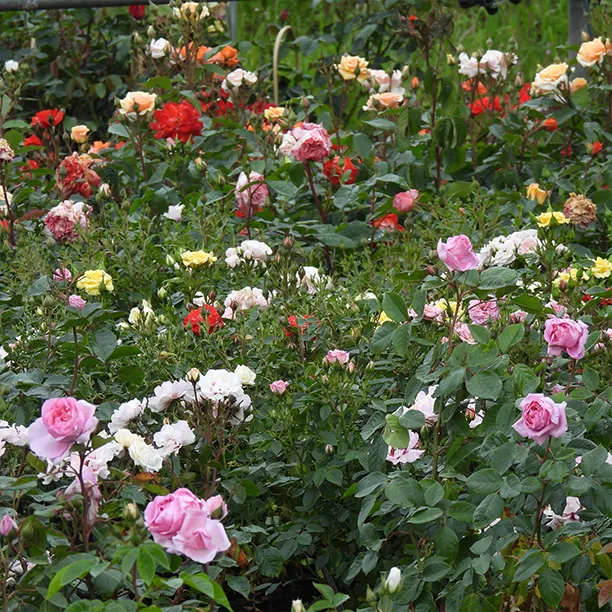
Roses fall into six principal categories — climbing, rambling, shrub, floribunda, hybrid tea, and old roses — each with distinct growth habits, flowering patterns, and garden uses. Understanding which type suits your space and expectations is the single most important step before buying. Choose the right category and a rose will reward you for decades; choose the wrong one and you may spend years wrestling with a plant in the wrong place.
Related guides
- Best Rose Varieties for Shady Gardens
- Which rose should I buy? Choosing the right rose for walls, borders, scent, shade and cutting
- Roses – to climb or to ramble?
- David Austin Roses — Varieties and Growing Guide
- How to deadhead roses — when to stop, and varieties you should leave alone
What are climbing roses and where do they grow best?
Climbing roses are repeat-flowering plants with long, stiff canes that need to be tied to a support; unlike ramblers, they do not scramble unaided. Most modern climbers flower from June through to the first frosts, producing large, often scented blooms on new growth made each season.
The key distinction is stiff versus flexible stems. A climber’s canes are woody and upright, making them ideal for training against walls, fences, pergolas, and obelisks where you want a tidy, managed display. Because they repeat-flower, climbers suit gardens where summer-long colour matters — a house wall, a garden arch framing a path, or a fence that needs dressing all season.
Climbers are pruned in late autumn or early spring: the sideshoots (laterals) are shortened to two or three buds while the main framework canes are kept long and tied in as horizontally as possible to encourage flowering all the way along their length. Training canes at an angle or horizontally is the single best trick for maximising bloom count.
Most climbers reach 2.5–4 m, though some compact varieties are bred specifically for pillars or smaller gardens. They perform best in full sun but several tolerate a lightly shaded wall — see our Best Roses for Shade collection if your wall faces north or east.
| Variety | Colour | Height | Notes |
|---|---|---|---|
| Bantry Bay | Deep pink | 3–4 m | Repeat-flowering, healthy, good for walls |
| Alibaba | Crimson-red | 2.5–3 m | Compact, suited to pillars and obelisks |
Browse our full Climbing Roses collection for the complete range.
What are rambling roses and how do they differ from climbers?
Rambling roses produce one spectacular flush of flower, usually in June or July, on long flexible stems that can reach 6–12 m or more. They are largely self-supporting once established, threading themselves through trees, over outbuildings, or across pergolas with minimal help.
The practical difference from climbers comes down to three things: flowering period (once only vs repeat), stem flexibility (pliable vs stiff), and vigour (ramblers are significantly more powerful growers). A rambler’s one-off flush is typically more dramatic than a climber’s — a mature Albertine in full bloom is one of the great sights of the English garden — but there is nothing further until the following summer. For this reason, ramblers suit positions where you want big impact rather than continuous colour: growing into an old apple tree, smothering a garden shed, or draping over a large pergola.
Ramblers are pruned after flowering, usually in August, by removing the oldest canes at the base to make way for the vigorous new growth that will carry next year’s blooms. This is quite different from the winter pruning of climbers.
| Feature | Climbing Rose | Rambling Rose |
|---|---|---|
| Flowering | Repeat (June–frost) | Once (June–July) |
| Stem type | Stiff, upright | Long, flexible |
| Typical reach | 2.5–4 m | 4–12 m+ |
| Best use | Walls, fences, arches | Trees, sheds, large pergolas |
| Pruning time | Late autumn / early spring | After flowering (August) |
| Self-supporting? | No — must be tied in | Largely yes |
Popular varieties include Albertine (salmon-pink, intensely fragrant) and American Pillar (bold pink with white eye, exceptionally vigorous). See all options in our Rambling Roses collection.
What are shrub roses and are they easy to grow?
Shrub roses are a broad, informal category encompassing all roses that grow as free-standing bushes rather than climbers or bedding plants. They include modern shrub roses, species roses, and the English (or David Austin) roses, and they are generally the most forgiving type for gardeners who dislike fussy routines.
The typical shrub rose is larger and more relaxed in habit than a hybrid tea or floribunda — expect 1.2–2 m in height and spread — with a natural, arching shape that suits cottage gardens, mixed borders, and informal planting schemes. Many are highly fragrant and produce attractive hips in autumn, extending their season of interest well beyond the flowers.
Pruning requirements are lighter than for bedding roses: an annual removal of old, crossing, or diseased wood in late winter is generally enough, with a light tidy after the first flush if the variety is repeat-flowering. Shrub roses are also among the most disease-resistant types, particularly modern breeding lines.
Ballerina is a classic example — a musk hybrid bearing huge clusters of single pink flowers with white centres, perfect for the back of a border. Alfred de Dalmas is an old moss rose with creamy-pink blooms and exquisite fragrance, bridging the gap between old and shrub rose categories. Browse the full range in our Shrub Roses collection.
What are floribunda roses and why are they so popular?
Floribunda roses produce large clusters of medium-sized blooms throughout the season, combining the reliability of polyantha roses with the flower quality of hybrid teas. They are arguably the most versatile garden rose, equally at home in formal beds, mixed borders, containers, and low hedging.
The word “floribunda” means “free-flowering” and that is precisely what these roses do — they rarely stop from June until November. Unlike hybrid teas, where each stem carries a single large bloom, a floribunda stem carries a spray of perhaps five to fifteen flowers, creating a dense, colourful display that is visible at a distance. They are also slightly more forgiving of less-than-perfect conditions than hybrid teas.
Floribundas are pruned in late winter (February–March in most of the UK) by cutting all stems back to approximately 30–45 cm from the ground. This hard pruning encourages strong new growth and the best flowering. Unlike shrub roses, they benefit from regular deadheading throughout summer to keep the display going.
| Variety | Colour | Height | Notable quality |
|---|---|---|---|
| Absolutely Fabulous | Butter yellow | 90 cm | Strong fragrance, disease-resistant |
| Arthur Bell | Golden yellow | 90 cm | Fruity scent, fades attractively to cream |
| Amber Queen | Amber-apricot | 60 cm | Compact, spicy fragrance |
| Angel Eyes | Soft pink | 75 cm | Delicate clustered blooms, ideal for borders |
| Belle de Jour | Coral-orange | 80 cm | Vivid, long-season display |
See all options in our Floribunda Roses collection.
What are hybrid tea roses and are they still worth growing?
Hybrid tea roses produce large, high-centred, classically shaped blooms — one to a stem — on upright, repeat-flowering bushes. They are the “exhibition” rose of the twentieth century and, while fashions have shifted towards more naturalistic planting, hybrid teas remain unbeaten for cut-flower quality and bold, formal impact.
The hybrid tea emerged in the late nineteenth century as a cross between hybrid perpetual and tea roses, eventually dominating the rose world for most of the twentieth century. Modern varieties are significantly more disease-resistant than their predecessors, which had a reputation for requiring intensive spraying — a reputation that is now largely outdated for the better newer cultivars.
Hybrid teas grow 75–120 cm tall in a fairly upright, stiff habit. They suit formal rose beds, cutting gardens, and situations where you want individual blooms of great quality rather than overall mass effect. Pruning is hard — back to 30–45 cm in February–March — and they benefit from generous feeding throughout the season.
| Variety | Colour | Scent | Best for |
|---|---|---|---|
| Alec’s Red | Deep cherry-red | Strong | Cutting, exhibition |
| Aphrodite | Soft pink | Moderate | Borders, cutting |
| A Whiter Shade of Pale | Creamy white | Strong | White garden, cutting |
| Birthday Boy | Orange-red | Light | Gifts, celebrations |
Browse the full Hybrid Tea Roses collection. If you are growing for cutting, also see our guide to Roses for the Cutting Garden.
What are old roses and how do they differ from modern varieties?
Old roses are those belonging to classes that existed before 1867 — the year the first hybrid tea was introduced — including gallicas, damasks, albas, centifolias, moss roses, and Bourbons. They are prized for extraordinary fragrance, complex flower form, and a romantic, antique quality that modern roses rarely match.
The defining characteristics of most old rose classes are: a once-flowering (or, in the case of Bourbons and some Portlands, lightly repeat-flowering) season in early summer; richly quartered or globular flower forms in colours from white through pale pink to deep purple-crimson; and a heaviness of fragrance that is the benchmark against which all other roses are measured. Many also produce good hips in autumn.
The trade-off is that the majority flower only once. For some gardens this is entirely acceptable — the display, when it comes, is incomparable, and the plant earns its space through foliage, hips, and graceful habit for the rest of the year. For others, the lack of repeat-flowering is a serious drawback. Honest advice: if you have room for only one rose and want colour all summer, choose a modern shrub, climber, floribunda, or hybrid tea. If you have space for a dedicated planting and value scent and history above all else, old roses are without equal.
Alfred de Dalmas, a nineteenth-century moss rose, is a perfect introduction to the group — compact, fragrant, and lightly repeat-flowering. For a fuller exploration of the distinctions within old roses, see our article on Old vs Antique Rose Varieties.
What are patio and miniature roses, and where do they work best?
Patio and miniature roses are compact, dwarf-growing varieties bred specifically for containers, small beds, and confined spaces; most reach 30–60 cm in height. They carry all the flowering qualities of larger roses in a much smaller package, making them the practical solution for balconies, courtyard gardens, and windowboxes.
Patio roses are technically a sub-category of floribunda, scaled down in both plant size and flower size but retaining the clustered, repeat-flowering habit. Miniatures are even smaller and are sometimes grown as houseplants, though they perform better outdoors. Both types require the same care as other bedding roses — hard pruning in late winter, regular feeding, and deadheading — but their small size makes these tasks quick and manageable.
Our Patio Roses collection covers this group in full.
What are wild and species roses?
Wild or species roses are the natural, unimproved ancestors of all cultivated roses, growing as large, suckering shrubs with single five-petalled flowers followed by colourful hips. In the UK the most familiar is Rosa canina, the dog rose of hedgerows, but many ornamental species from Asia and America are also grown in gardens.
Wild roses offer something almost no cultivated variety can match: complete robustness. They need essentially no care, tolerate poor soils and drought, and support an enormous range of wildlife — pollinators love the open single flowers, and birds and small mammals rely on the hips through winter. They are the right choice for a wildlife garden, a native hedge, or a large naturalistic scheme where the goal is ecological value alongside ornament.
The compromise is scale and informality: most species roses are too large and vigorous for a small, tidy garden. See our Wild Roses collection for species and near-species varieties suitable for UK gardens.
How do you choose the right type of rose for your garden?
The right rose type depends on five factors: available space, desired flowering season, how formal or informal you want the planting, how much maintenance you are willing to do, and whether fragrance is a priority.
| Your situation | Best rose type | Why |
|---|---|---|
| House wall or fence, colour all season | Climbing rose | Stiff canes, repeat-flowering, manageable size |
| Large tree or outbuilding to cover | Rambling rose | Very vigorous, largely self-supporting |
| Cottage-style mixed border | Shrub rose | Relaxed habit, minimal pruning, often fragrant |
| Formal rose bed, long season of colour | Floribunda | Dense clusters, continuous flowering, tidy habit |
| Cut flowers, exhibition-quality blooms | Hybrid tea | Large individual blooms, long stems |
| Scent above all else, historical interest | Old rose | Unmatched fragrance and flower complexity |
| Container, balcony, small space | Patio / miniature rose | Compact habit designed for restricted planting |
| Wildlife garden, native hedge | Wild / species rose | Maximum ecological value, near-zero maintenance |
If fragrance is your primary criterion, our Scented Roses collection draws together the most fragrant varieties across all types. If you are dealing with shade, the Best Roses for Shade collection narrows the choice to varieties that genuinely tolerate reduced light.
What care do different types of roses need?
Most roses share the same basic needs — fertile, moisture-retentive but well-drained soil, an open sunny position, adequate feeding, and timely pruning — but the pruning regime and timing differ significantly between types.
As a general rule: hard-prune bedding roses (floribundas and hybrid teas) in late winter; lightly prune shrub roses in late winter, removing old and crossing growth; prune climbers in autumn, shortening laterals only; prune ramblers after flowering in summer by removing the oldest complete canes. Old roses are pruned lightly after flowering if once-blooming, or in late winter if repeat-flowering.
All roses benefit from a specialist rose fertiliser applied in April and again after the first flush of flowers in July. Bare-root roses planted between November and March establish faster and more cheaply than pot-grown plants; pot-grown roses can be planted at any time the ground is workable. For full planting and aftercare guidance, see our comprehensive guide: How to grow roses — planting, feeding, pruning and year-round care.
Specific pruning techniques for each type are covered in detail in our guide How and when to prune roses.
Frequently Asked Questions
What is the easiest type of rose to grow?
Shrub roses, particularly modern varieties and species hybrids, are the most forgiving. They need only light annual pruning, tolerate a range of soils, and are generally more disease-resistant than hybrid teas or floribundas. Browse our Shrub Roses collection.
What is the difference between a climbing rose and a rambling rose?
Climbers repeat-flower all season on stiff canes and must be tied to a support. Ramblers flower once in summer on flexible stems and can largely support themselves. Ramblers are much more vigorous. See our detailed guide Roses – to climb or to ramble?
Do floribunda roses smell?
Many do, but fragrance varies by variety. Absolutely Fabulous and Arthur Bell are notably fragrant. For the most scented choices across all types, see our Scented Roses collection.
What is the difference between old roses and modern roses?
Old roses belong to classes that pre-date 1867, characterised by complex flower forms and intense fragrance, but most flower only once. Modern roses (floribundas, hybrid teas, modern shrubs) generally repeat-flower throughout summer. Read more: Old vs Antique Rose Varieties.
Can I grow roses in shade?
A few varieties tolerate partial shade reasonably well, though no rose thrives in deep shade. Our Best Roses for Shade collection and the advice article Best Rose Varieties for Shady Gardens cover the subject in detail.
What is a hybrid tea rose?
A hybrid tea is a repeat-flowering bush rose producing one large, classically shaped, high-centred bloom per stem. They are the traditional “florist” rose, ideal for cutting and formal beds. Browse Hybrid Tea Roses.
Are shrub roses and old roses the same thing?
Not exactly. Old roses are a specific group of historic classes predating 1867. Shrub roses is a broader modern category that includes old roses, modern shrubs, and species hybrids. All old roses are shrub roses, but not all shrub roses are old roses.
How big do rambling roses get?
Most ramblers reach 4–8 m; very vigorous varieties such as American Pillar can exceed 10 m in ideal conditions. Always check the eventual size before planting and ensure your support structure is adequate.
When should I buy and plant roses?
Bare-root roses are available from November to March and are best planted as soon as received. Pot-grown roses can be purchased and planted year-round, though autumn and spring are ideal. Avoid planting into frozen or waterlogged ground.
What rose type is best for pots and containers?
Patio and miniature roses are specifically bred for containers, but compact floribundas and some shrub roses also work well in large pots with regular feeding and watering. See our Patio Roses collection.
Are David Austin roses a type of rose?
David Austin roses are not a separate botanical class — they are modern shrub roses bred to combine the fragrance and flower form of old roses with the repeat-flowering habit of modern varieties. See our full guide: David Austin Roses — Varieties and Growing Guide.
What roses are best for wildlife?
Wild and species roses are unsurpassed for wildlife, offering open flowers for pollinators and abundant hips for birds. Single-flowered shrub roses such as Ballerina are also excellent. Browse our Wild Roses collection.
Related Products
- Shop All Roses
- Climbing Roses
- Rambling Roses
- Shrub Roses
- Floribunda Roses
- Hybrid Tea Roses
- Patio Roses
- Wild Roses
- Scented Roses
- Best Roses for Shade
- Gift Wrapped Roses
- Special Occasion Roses
Related Articles
- Roses – to climb or to ramble?
- How to grow roses — planting, feeding, pruning and year-round care
- How and when to prune roses — shrub, climbing, rambling and standard roses
- How to grow floribunda roses — planting, pruning and care
- How to grow shrub roses — planting, pruning and care
- Old vs Antique Rose Varieties — The Difference
- David Austin Roses — Varieties and Growing Guide
- Best Rose Varieties for Shady Gardens
- How to deadhead roses — when to stop, and varieties you should leave alone
- Pruning Climbing Rose Bushes
- Rose diseases — blackspot, mildew and rust explained
- Roses for the Cutting Garden


Leave a Reply