
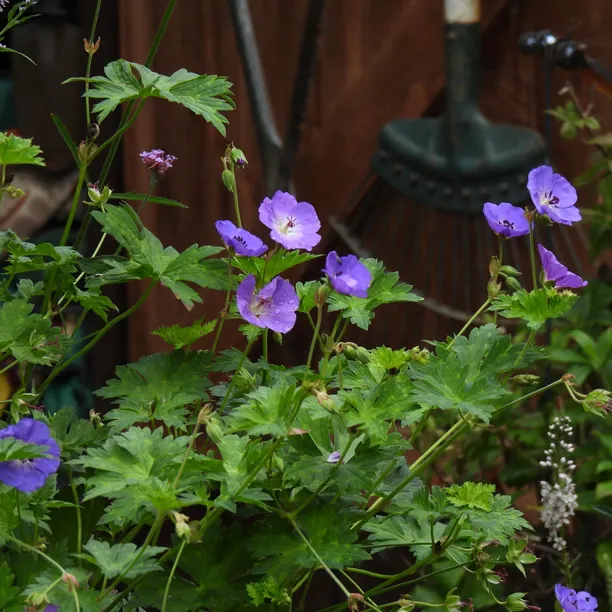
What Are the Best Low Maintenance Perennials for Borders?
Low maintenance perennials are herbaceous or evergreen plants that return reliably year after year with minimal intervention — no annual replanting, little feeding, and only occasional tidying. The best choices for UK borders combine drought tolerance, pest resistance, and long flowering seasons, giving you genuine value for very little effort.
Related guides
- Best Ground Cover Perennials
- Best Hardy Perennials for UK Gardens
- How to Grow Perennials — Complete UK Guide
- Best Perennials for Shade
What Actually Makes a Perennial Low Maintenance?
A genuinely low maintenance perennial needs to tick several boxes: it must be self-supporting, largely pest- and disease-free, tolerant of typical UK weather, and require no deadheading to keep flowering or stay tidy.
Many plants are marketed as easy, but “low maintenance” means different things in different contexts. Here is a practical checklist to judge any perennial before you buy:
- No staking required — floppy plants waste time and look untidy if you miss a week.
- Drought tolerance — once established, they should cope with dry spells without watering.
- Slug and snail resistance — or at least not irresistible to them.
- Long season of interest — whether from flowers, foliage, or both, so you get returns from a single plant.
- Clump-forming rather than invasive — spreading rhizomatously through the border creates work, not saves it.
- No need for annual division — though dividing every three to five years refreshes vigour, it should not be compulsory every season.
The plants below have been selected on all of these criteria. None of them will demand weekly attention, and most will establish in a season and then largely look after themselves.
Which Types of Low Maintenance Perennials Suit Different Borders?
The right plant depends on your soil, aspect, and how formal or naturalistic you want the border to look. The table below groups the most reliable, genuinely low-effort perennials by their typical growing conditions.
| Plant | Best Position | Soil Preference | Season of Interest | Maintenance Level |
|---|---|---|---|---|
| Agapanthus | Full sun | Well-drained | Summer–early autumn | Very low |
| Heuchera | Partial shade to full sun | Most soils | Year-round foliage | Very low |
| Salvia | Full sun | Well-drained to dry | Late spring–autumn | Very low |
| Ornamental Grasses | Full sun to light shade | Most soils | Year-round structure | Low |
| Verbena bonariensis | Full sun | Well-drained | Summer–autumn | Very low |
| Hosta | Shade to partial shade | Moist, humus-rich | Spring–autumn foliage | Low (slug vigilance needed) |
Why Is Agapanthus One of the Easiest Perennials You Can Grow?
Agapanthus (African Lily) is genuinely one of the lowest-effort flowering perennials available: once established in a sunny, well-drained spot, it flowers reliably every summer with virtually no intervention beyond removing spent stems in autumn.
Established clumps are drought-tolerant, require no staking, and are ignored by slugs, deer, and rabbits. Modern evergreen varieties such as the Agapanthus collection from Ashridge Trees are far hardier than old-fashioned deciduous types and will survive most UK winters in the ground without lifting, particularly in free-draining soil or raised beds.
Key care points — and there are very few:
- Plant in the sunniest spot available with good drainage; wet, cold soil in winter is the main killer.
- Apply a dry mulch of grit or bark around the crown before the first hard frost in northern and midland gardens.
- Divide clumps every five to seven years when flowering declines; they actually prefer to be slightly crowded.
- Feed once in spring with a low-nitrogen, high-potassium fertiliser (a tomato-type feed works well) to encourage blooms rather than leafy growth.
| Variety | Flower Colour | Height | Evergreen? | Best For |
|---|---|---|---|---|
| Ever Sapphire | Rich sapphire blue | 50–60 cm | Yes | Compact borders, pots |
| Brilliant Blue | Vivid mid-blue | 60–70 cm | Yes | Mid-border impact |
| Ever White | Pure white | 50–60 cm | Yes | White/silver schemes |
| Black Jack | Deep violet-blue | 70–80 cm | Yes | Bold, dramatic planting |
| Fireworks | Bicolour blue/white | 60–70 cm | Yes | Unusual, collectors’ piece |
If you want to try more than one variety without committing to individual plants, the Mixed Agapanthus (Three Varieties) pack is an easy way to establish a colour range in one go.
Are Heucheras Truly Low Maintenance All Year Round?
Yes — heucheras are among the very few perennials that earn their border space every single month of the year, providing evergreen foliage in a remarkable range of colours from bronze and burgundy through to lime green and silver, with no meaningful care required beyond an annual tidy in early spring.
They tolerate partial shade to full sun (though foliage colours are often richer in dappled light), grow in almost any well-drained soil, and are resistant to most pests. The one task they benefit from is being “replanted” every three to four years: they tend to grow upwards on a woody stem, and pushing the crown back down into the soil or replanting it slightly deeper keeps them looking their best. This takes about five minutes per plant and is not exactly demanding.
Our Heuchera collection includes a wide range of foliage colours. Some standout low-maintenance varieties:
- Black Beauty — near-black leaves that create dramatic contrast; flowers freely in summer.
- Forever Purple — rich, consistent purple foliage that holds its colour well through summer heat.
- Lime Marmalade — fresh, acid-green leaves that light up shady corners.
- Cherry Cola — warm bronze-red, incredibly versatile against both dark and pale companions.
- Crème Brûlée — peachy-caramel tones, one of the warmest colour offerings available.
- Marmalade — a classic; burnt-orange-amber tones work beautifully in autumn-themed plantings.
- Cherry Truffles — glossy, deeply ruffled dark cherry-red leaves with superb winter colour retention.
Why Do Salvias Make Such Reliable Low Maintenance Border Plants?
Hardy perennial salvias tick every low-maintenance box: they are drought-tolerant once established, virtually pest-free, self-supporting, and flower for months without deadheading — in fact, leaving the spent spikes on the plant often triggers a second or even third flush of bloom.
The key is siting: salvias want sunshine and sharp drainage. In wet, heavy clay they may struggle through winter, but in a sunny border with reasonable drainage or on a slight slope, they are exceptionally reliable. Cut them back by about half in late spring once new basal growth appears — avoid cutting into old wood in autumn as this can cause losses in a hard winter.
Browse the full Salvia collection for the latest varieties. Nemorosa types (such as ‘Caradonna’ and ‘Ostfriesland’) are especially hardy and free-flowering; the taller Salvia ‘Amistad’ type (deep violet) is borderline hardy in most of the UK but worth the slight risk for its extraordinary season-long performance.
Do Ornamental Grasses Really Need Almost No Looking After?
Ornamental grasses are among the most structurally rewarding low maintenance perennials you can grow: once established they need almost nothing beyond a single annual cut-back, and they provide movement, texture, and winter seedhead interest that few flowering perennials can match.
There are two important maintenance distinctions to understand:
- Deciduous grasses (e.g. Miscanthus, Pennisetum) — cut back hard to the base in late winter/early spring before new growth emerges. Leave them standing through winter for seedhead interest and wildlife benefit.
- Evergreen grasses (e.g. Festuca, Carex) — do not cut back hard. Instead, comb through with fingers or a wide-toothed rake in spring to remove dead material, and trim lightly if needed.
Explore the Ornamental Grasses collection for the full range. Grasses pair superbly with agapanthus, salvia, and verbena in a sunny, naturalistic border.
Is Verbena bonariensis Really as Easy as People Say?
Verbena bonariensis is perhaps the most effort-to-reward efficient perennial in UK gardening: tall, airy, insect-magnetising, and almost entirely self-sufficient once established, it flowers from midsummer to the first hard frosts without any deadheading, staking, or feeding.
Despite its height (often 120–150 cm), it is so slender that it never needs staking and casts almost no shade on neighbouring plants. It self-seeds reliably — often enough that you will have new plants appearing around the garden — which is either a bonus or something to manage depending on your outlook. Simply hoe off unwanted seedlings as they appear; they are easy to remove while small.
It is not fully hardy in all UK regions: in cold, wet winters it may die, but because it self-seeds so readily, you will almost always have replacement plants coming through. Browse our Verbena collection for available varieties.
Are Hostas Low Maintenance Despite Their Reputation for Slug Damage?
Hostas are genuinely low maintenance in every respect except one: slugs and snails find them irresistible, particularly in the critical first weeks after emerging in spring. Once you have a slug management strategy in place, however, hostas are extraordinarily rewarding — bold foliage from April to October, minimal feeding or watering needs, and a complete lack of disease problems.
The most practical approach to slug management without constant effort:
- Choose slug-resistant varieties — thick-leaved, glaucous (blue-grey) types are far less damaged than thin-leaved green ones.
- Apply wool pellets or grit around emerging shoots in early spring when damage risk is highest.
- Grow in pots with copper tape around the rim — hostas thrive in containers, and pot culture is the ultimate low-maintenance slug solution.
- Site in areas with good air circulation rather than damp, enclosed spots.
Explore the full Hosta collection for slug-resistant varieties with thick, textured foliage.
How Do You Design a Border Using Low Maintenance Perennials?
The most effective low-maintenance border relies on the “right plant, right place” principle combined with planting density: crowding out weeds with generous planting and using a consistent mulch layer are the two things that will save you more time than any plant selection choice.
A practical framework for a sunny, mixed low-maintenance border:
| Layer | Plant Role | Suggested Plants | Spacing |
|---|---|---|---|
| Back | Height and structure | Miscanthus, Verbena bonariensis, tall Agapanthus | 60–90 cm apart |
| Middle | Colour and season-long interest | Salvia, Agapanthus, Pennisetum | 45–60 cm apart |
| Front | Edging and weed suppression | Heuchera, compact Agapanthus, Festuca | 30–45 cm apart |
After planting, apply a 5–7 cm layer of garden compost or composted bark mulch over the entire border surface, keeping it clear of plant crowns. This single action suppresses the majority of weed germination and dramatically reduces the need to weed throughout the growing season.
If you prefer not to design from scratch, the Mixed Perennial Collections offer pre-selected combinations that take the guesswork out of choosing compatible varieties.
What Annual Tasks Do Low Maintenance Perennials Actually Require?
Even the most self-sufficient perennials need some attention across the year — but for the plants in this guide, those tasks are minimal, predictable, and quick to complete.
| Season | Task | Plants Affected | Time Required |
|---|---|---|---|
| Early spring | Cut back deciduous grasses; refresh mulch | Grasses, all perennials | 1–2 hours per border |
| Mid-spring | Cut back salvias; apply potassium feed to agapanthus | Salvia, Agapanthus | 30 minutes |
| Early summer | Hoe off verbena seedlings you do not want | Verbena | 15 minutes |
| Autumn | Remove agapanthus seed heads; mulch crowns in cold areas | Agapanthus | 30 minutes |
| Winter | Leave grasses and verbena standing for wildlife and structure | Grasses, Verbena | No action needed |
Browse the full Shop All Perennial Plants collection to find everything you need to build a genuinely low-effort border.
Frequently Asked Questions
What is the lowest maintenance perennial you can grow in a UK border?
Agapanthus and heuchera are hard to beat. Once established, both are drought-tolerant, pest-resistant, and require only occasional tidying. Browse our Agapanthus and Heuchera collections for specific varieties.
Do low maintenance perennials need feeding?
Most need very little feeding. Agapanthus benefits from one application of high-potassium feed in spring. Heucheras and grasses rarely need feeding if mulched annually with compost.
Which low maintenance perennials are best for shade?
Heucheras and hostas are outstanding in shade. Both provide year-round or season-long foliage interest with minimal care. See our Hosta collection and Best Perennials for Shade guide for more detail.
Are low maintenance perennials suitable for clay soil?
Hostas and many grasses tolerate clay well. Agapanthus and salvias prefer better drainage — improve clay borders with grit and compost before planting, or grow these in raised sections.
How do I stop perennials spreading and creating more work?
Choose clump-forming varieties rather than rhizomatous spreaders. The plants in this guide — agapanthus, heuchera, salvia, and ornamental grasses — are all well-behaved, non-invasive choices.
Can low maintenance perennials grow in pots?
Yes — agapanthus and heucheras are particularly well suited to container growing. Pot culture also solves slug problems for hostas. Use a loam-based compost and ensure good drainage holes.
Do I need to divide low maintenance perennials?
Not frequently. Most benefit from division every four to six years to refresh vigour, but it is not essential annually. See our guide on how to divide herbaceous perennials for step-by-step advice.
Which perennials have the longest flowering season?
Salvia and verbena are outstanding for long flowering — often four to five months without deadheading. Browse our Salvia collection for the most reliable repeat-flowering varieties.
Are low maintenance perennials good for wildlife?
Exceptionally so. Salvia and verbena are pollinator magnets; ornamental grasses provide nesting material and seedhead food for birds; agapanthus flowers attract bees reliably throughout summer.
When is the best time to plant low maintenance perennials?
Early autumn or mid-spring are ideal — soil is warm enough for root establishment and moisture is usually sufficient without heavy watering. Read our detailed guide on when to plant herbaceous perennials.
Can I buy a ready-selected mix of low maintenance perennials?
Yes — our Mixed Perennial Collections offer pre-chosen, compatible combinations that take the planning effort out of designing a new border.
Do agapanthus need lifting for winter in the UK?
Modern evergreen varieties such as Ever Sapphire and Brilliant Blue are generally hardy enough to remain in the ground in most UK regions with a dry mulch over the crown for protection in cold winters.
Related Products
- Agapanthus (African Lily) Plants
- Heuchera (Coral Bells) Plants
- Hosta Plants
- Salvia Plants
- Verbena Plants
- Ornamental Grass Plants
- Mixed Perennial Collections
- Shop All Perennial Plants
- Agapanthus Ever Sapphire
- Agapanthus Brilliant Blue
- Agapanthus Black Jack
- Agapanthus Ever White
- Agapanthus Fireworks
- Mixed Agapanthus (Three Varieties)
- Heuchera Black Beauty
- Heuchera Forever Purple
- Heuchera Lime Marmalade
- Heuchera Cherry Cola
- Heuchera Crème Brûlée
- Heuchera Marmalade
- Heuchera Cherry Truffles
Leave a Reply