
from £5.25
Sold as:

from £8.99

Sold as:
from £24.99
 5 Star Service Rating




 Secure, One-Tap Checkout
 5 Star Feefo Rating
 Hand Picked, Delivered to Your Door!
 1 Year Bareroot Guarantee
 Platinum Trusted Service Award 2026
 Mail Order Plant Experts - Est. 1949


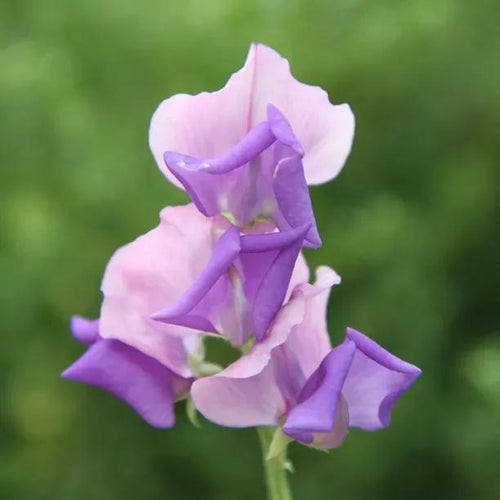

Erewhon is a sweet pea like no other. It is a reverse bicolour — the wings (lower petals) are a deep lavender-blue, darker than the pale mauve-pink standards above them. In almost every other bicoloured sweet pea, that arrangement is the other way round. The effect is strange and beautiful, like looking at a familiar flower through a mirror.
Bred by Dr Keith Hammett in New Zealand, Erewhon is technically a hybrid between Lathyrus odoratus and Lathyrus belinensis, a Turkish species only discovered in 1987. Hammett spent roughly thirty years crossing the two in an attempt to produce a yellow sweet pea — a goal that remains unfulfilled. What emerged instead was something nobody expected: intensified blue tones and that extraordinary reversed colour pattern. Traditional plant breeding, not genetic modification; just patience measured in decades.
The scent is strong and typically sweet-pea, the stems are long and sturdy, and the flowers are borne in good numbers. This is a Modern Grandiflora type — heritage scent and vigour combined with larger blooms and longer stems than the old-fashioned varieties.
Erewhon takes its name from the 1872 novel by Samuel Butler, a satirical utopia set in a fictionalised version of New Zealand — Hammett's home country. The title is an anagram of "Nowhere", which is what utopia literally means. It is pronounced E-re-whon, not Air-one.
Lathyrus belinensis was found growing wild in Turkey's Antalya province in 1987; its yellow and orange flowers prompted immediate excitement among breeders hoping to create a yellow variety. Hammett obtained seed and began crossing it with existing sweet peas. Instead of the hoped-for yellow, blue came through. He redirected his programme, combining the belinensis crosses with his long-running work on reverse bicolours, and eventually produced Erewhon.
Give Erewhon a prominent position. The reverse colouring is subtle and easily lost if you plant it among a crowd of other sweet peas in different shades. A single obelisk or wigwam by a path or doorway — somewhere you pass daily — lets you appreciate what makes it unusual. Full sun, rich soil, and consistent moisture, as with all sweet peas. Full growing instructions are in our sweet pea growing guide.
White or cream varieties will not compete with the unusual colouring. Jilly (ivory Spencer, AGM) or Mrs Collier (primrose cream Grandiflora) both provide a clean backdrop. For a contrasting bicolour combination, pair it with Matucana — one subtle, one dramatic.
The unusual lavender-blue tones also make Erewhon a good candidate for growing alongside a late-flowering clematis on the same support — a viticella type in a complementary purple creates a layered effect that lasts well into autumn.
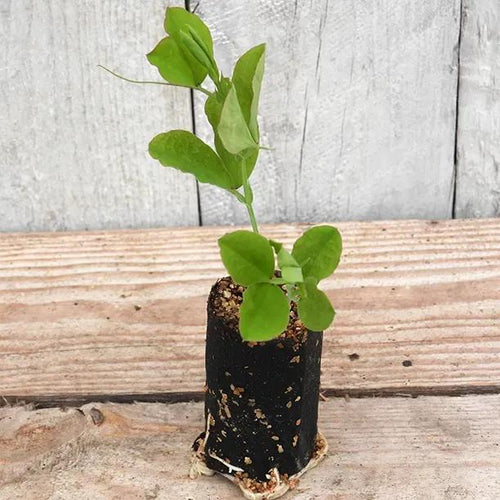
We have been growing sweet peas in Somerset since the early 2000s. The seed - which we collect - is hand-sown at two seeds per plug and the weaker seedling is removed. Every plant is then pinched out to encourage bushy growth and hardened off before dispatch. What you are buying are sturdy, garden-ready jumbo plug plants that have had the best possible start.
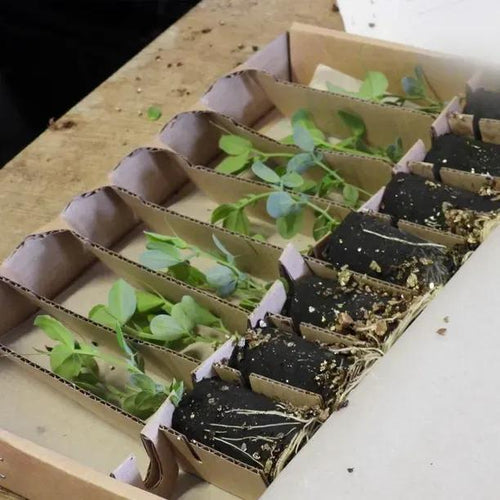
We send your sweet peas out by next-day courier between March and May, packed in purpose-designed recycled cardboard packaging. The moment they arrive, they are ready to go into the ground or a container. If anything is not right, we have real people on the phone in Somerset who will sort it out. We hold a Feefo Platinum Service Award and have been named a Which? Best Buy plant supplier — endorsements that came from our customers, not our marketing team.
In most bicoloured sweet peas, the standard (upper petal) is darker and the wings (lower petals) are paler. Erewhon is the opposite: pale mauve-pink standards with deeper lavender-blue wings below. It was the first commercially available sweet pea to display this colour arrangement reliably.
Very much so. As a Modern Grandiflora it carries the intense fragrance of the heritage types — rich, honeyed, and powerful enough to fill a room from a handful of stems. One of the more rewarding varieties to cut for indoors.
It is a hybrid between Lathyrus odoratus and Lathyrus belinensis, classified as Lathyrus × hammettii after its breeder. In the garden it behaves exactly like any other annual sweet pea — same growing conditions, same season, same need for picking and feeding.
Yes. Use a generous pot with a rich planting mix and provide sturdy support — Erewhon is vigorous and reaches 6–7ft. Site the pot near a bench or table where you can study the flowers properly; the interplay between the pink standards and blue wings shifts in different light. Our growing guide covers container planting in detail.
No — annual, one season. Fresh seedlings each spring is the simplest approach.


 Sign In
 Saved items