
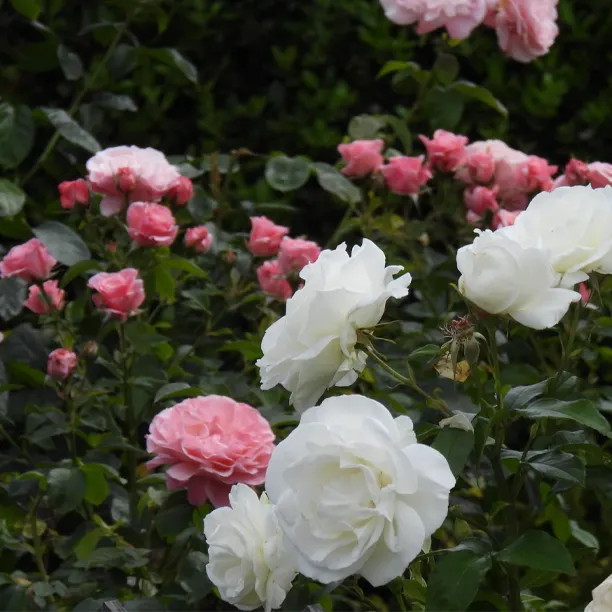
Which rose should I buy — and how do I choose the best rose for my garden?
The best roses for your garden depend on where you want to grow them, how much space you have, and what you want from them — scent, colour, long flowering, or structure. With hundreds of varieties split across climbing, rambling, shrub, floribunda, hybrid tea, and patio types, narrowing the field by situation is the most reliable way to find the right plant. This guide works through the most common scenarios, with honest variety recommendations and a clear comparison of rose types, so you can buy with confidence.
Related guides
- Best Rose Varieties for Shady Gardens
- Roses – to climb or to ramble?
- David Austin Roses — Varieties and Growing Guide
- How to deadhead roses — when to stop, and varieties you should leave alone
- How to grow floribunda roses — planting, pruning and care
What are the main types of roses, and which is right for me?
There are six broad groups of garden roses, each with distinct habits, sizes, and uses. Understanding the group first saves a great deal of searching.
| Rose type | Typical height | Flowering | Best use |
|---|---|---|---|
| Climbing rose | 2.5–4 m | Repeat (most) | Walls, fences, pillars, pergolas |
| Rambling rose | 4–10 m | Once (summer) | Trees, large arches, wild gardens |
| Shrub rose | 1–2 m | Repeat or once | Borders, hedging, mixed planting |
| Floribunda rose | 60–120 cm | Repeat | Borders, massed colour, cutting |
| Hybrid tea rose | 75–120 cm | Repeat | Exhibition, cutting, formal beds |
| Patio / miniature rose | 30–60 cm | Repeat | Containers, small gardens, edging |
A more detailed breakdown — including old roses, species roses, and the difference between climbing and rambling types — is covered in our guide to types of roses. For now, the tables throughout this article will help you match type to situation quickly.
What are the best roses for walls and fences?
For walls and fences, climbing roses are almost always the right choice: they are repeat-flowering, manageable in size, and produce larger individual blooms than ramblers. They need training and tying in to horizontal wires fixed 45 cm apart, but reward that effort with flowers from June through to October.
Ramblers cover walls faster and more dramatically, but most flower only once in midsummer and can reach 6–8 m, so they suit larger, less formal situations — the side of a barn, a boundary wall, or growing through a large tree.
| Variety | Type | Colour | Scent | Height |
|---|---|---|---|---|
| Alibaba | Climbing | Deep crimson | Moderate | 3 m |
| Bantry Bay | Climbing | Deep pink | Light | 4 m |
| Albertine | Rambling | Salmon-copper pink | Strong | 5–6 m |
| American Pillar | Rambling | Bright pink/white eye | Slight | 5–6 m |
North-facing walls are a special case — see the dedicated section on shade below. For south- and west-facing walls, almost any climbing or rambling rose will thrive; for east-facing walls, choose a variety with proven vigour such as Bantry Bay, which tolerates lower light levels better than many. Full guidance on training, pruning timing, and wire spacing is in our articles on climbing and rambling roses and pruning climbing roses.
What are the best roses for shade?
No rose thrives in deep, dry shade, but a number of varieties tolerate partial shade — receiving three to four hours of direct sun per day — and still flower reliably. These are mostly ramblers, certain old shrub roses, and a handful of robust floribundas.
The key rule is: the more sun a spot receives, the wider your choice. A lightly shaded border against a north-facing fence with reflected light from a pale wall or paving is very different from the dry, gloomy root zone beneath a dense canopy of evergreens. The latter is genuinely not suitable for roses.
| Variety | Type | Shade tolerance | Notes |
|---|---|---|---|
| Albertine | Rambling | Good | Strongly scented; once-flowering |
| American Pillar | Rambling | Good | Very vigorous; once-flowering |
| Ballerina | Shrub | Moderate | Repeat-flowering; musk scent |
| Bantry Bay | Climbing | Moderate | Good on east-facing walls; repeat |
| Arthur Bell | Floribunda | Moderate | Strongly scented golden yellow; repeat |
Browse the full best roses for shade collection, and read our in-depth guide to roses for shady gardens for aspect-by-aspect advice, including which diseases become more problematic in low-light positions and how to counter them.
What are the best scented roses?
Fragrance in roses is concentrated in the petals and released most strongly on warm, still mornings, so plant scented roses where you will actually smell them — near a path, beside a seat, or below a window. The strongest scents come from old shrub roses, many hybrid teas, and certain ramblers such as Albertine.
It is worth knowing that scent varies between individuals and even between days; heat, humidity, and the age of the flower all affect what you detect. The varieties below are consistently regarded as among the most fragrant in their class.
| Variety | Type | Scent character | Colour |
|---|---|---|---|
| Albertine | Rambling | Sweet, rich, fruity | Salmon-copper pink |
| Alfred de Dalmas | Shrub (moss rose) | Delicate, honey-sweet | Blush pink |
| Arthur Bell | Floribunda | Strong, fruity-sweet | Golden yellow |
| Alec’s Red | Hybrid tea | Classic rich damask | Cherry red |
| Absolutely Fabulous | Floribunda | Liquorice and myrrh | Warm golden yellow |
Browse the complete scented roses collection for the full range. If fragrance is your primary goal, hybrid teas and old shrub roses are reliably the most heavily scented groups; modern floribundas vary considerably, so check individual variety descriptions carefully.
What are the best roses for cutting?
The best cutting roses have long, straight stems, large or well-formed blooms, and a vase life of at least five to seven days once cut. Hybrid teas are the traditional choice for the cutting garden, but certain floribundas — which produce multiple blooms per stem — are excellent for mixed arrangements.
Cut roses early in the morning when stems are fully turgid, and place them immediately into clean water. Strip foliage from the lower half of the stem. Varieties with dense, many-petalled blooms tend to last longer in a vase than single or semi-double types.
| Variety | Type | Colour | Vase appeal |
|---|---|---|---|
| Alec’s Red | Hybrid tea | Cherry red | Classic long-stemmed; richly scented |
| Aphrodite | Hybrid tea | Soft blush pink | Elegant; excellent stem length |
| A Whiter Shade of Pale | Hybrid tea | Creamy white | Pristine; excellent for weddings |
| Absolutely Fabulous | Floribunda | Golden yellow | Clusters; good longevity |
| Amber Queen | Floribunda | Warm amber-apricot | Unusual warm tones; scented |
| Birthday Boy | Hybrid tea | Bright orange-red | Bold colour; strong stems |
See our full guide to roses for the cutting garden, and if you are looking for a variety suitable for a buttonhole or posy, our rose varieties for buttonholes article covers the best compact-bloomed choices. The hybrid tea collection and floribunda collection are the most productive starting points for cutting garden planting.
What are the best roses for small gardens and containers?
Patio and miniature roses are bred specifically for compact spaces — they reach 30–60 cm and flower repeatedly all summer, making them ideal for pots, raised beds, and narrow borders. However, a number of floribundas and compact shrub roses also work well in small gardens without being overwhelmed by their neighbours.
When growing roses in containers, choose a pot at least 40 cm wide and deep, use a loam-based compost, and water consistently throughout the growing season. Roses in pots need feeding more frequently than those in the ground — every fortnight from May to August with a balanced rose fertiliser. Read our guide on when and how to feed roses for the full feeding programme.
Good compact varieties from the Ashridge range include Angel Eyes, a neat floribunda with white blooms touched with pink that stays within 75 cm, and Ballerina, a shrub rose that forms a naturally rounded bush covered in small single blush-pink flowers. Belle de Jour is another compact floribunda with cheerful orange-apricot blooms. Browse the full patio roses collection for the complete range of dwarf and miniature varieties.
What are the best roses for hedging?
Shrub roses make the most effective rose hedges, combining ornamental flowers with a structure dense and thorny enough to deter intruders. Species roses and rugosa types are particularly useful because they produce attractive hips in autumn, extending their season of interest well beyond flowering.
Ballerina works well as a medium informal hedge, reaching around 1.5 m and flowering repeatedly. For a wildlife-friendly hedge with good autumn colour and hips, explore the wild roses collection. Wild and species roses generally require very little pruning and are significantly more disease-resistant than modern hybrid types, making them a low-maintenance hedging option.
Space shrub roses 75–90 cm apart for hedging, and resist the temptation to plant more tightly — good air circulation dramatically reduces disease pressure. Our guide to growing shrub roses covers planting distances, pruning, and aftercare in full.
How do I choose rose colour and bloom shape?
Colour and bloom form are personal, but a few practical pointers help. Warm colours — reds, oranges, and strong pinks — advance visually and work well at distance or in large borders. Pale colours — whites, blush pinks, and creams — are more versatile and show up well in evening light, making them ideal near seating areas.
Bloom form ranges from the classic high-centred spiral of the hybrid tea to the flat, quartered, densely petalled flowers of old shrub roses, and the loose, open singles of wild roses and many modern ramblers. Consider that very double flowers can “ball” (fail to open) in wet weather, which is a real disadvantage in parts of the UK with cool, damp summers. Singles and semi-doubles are far more weatherproof.
- Classic high-centred blooms: Aphrodite, Alec’s Red, A Whiter Shade of Pale
- Cluster/spray blooms: Amber Queen, Angel Eyes, Belle de Jour
- Old-fashioned quartered/cupped blooms: Alfred de Dalmas
- Single/wild-type blooms: Ballerina, American Pillar
For more on this topic, our articles on old vs antique roses and David Austin roses explore bloom form in much more depth.
What should I know about rose disease resistance before buying?
Disease resistance is one of the most practically important factors in choosing a rose, especially for gardeners who prefer not to spray. Blackspot, powdery mildew, and rust are the three main rose diseases in the UK, and susceptibility varies enormously between varieties.
As a general rule, wild and species roses are the most resistant; old shrub roses and rugosas are moderately resistant; many modern hybrid teas are more susceptible, particularly in high-humidity gardens or where air circulation is poor. Some floribundas — including Absolutely Fabulous and Amber Queen — have good disease-resistance ratings and are a sensible choice for organic or low-input gardens.
Our guide to rose diseases covers identification and treatment, and rose blackspot is examined separately. If you garden organically, the organic rose care guide will help you choose prevention strategies that do not rely on fungicides.
What are the best roses for gifts and special occasions?
A rose plant makes a far more lasting gift than a bunch of cut flowers, and many gardeners specifically seek out named roses that carry personal meaning — a birthday, a wedding anniversary, or a memorial planting. Named varieties such as Birthday Boy are obvious starting points.
Browse the special occasion roses collection for varieties chosen with gifting in mind, and the gift-wrapped roses collection if you need a ready-to-present plant. Both collections are available as bare-root plants in the dormant season and as potted plants for year-round gifting.
Frequently Asked Questions
What is the easiest rose to grow for a beginner?
Shrub roses and robust floribundas such as Absolutely Fabulous are the most forgiving. They require less precise pruning, tolerate variable soil, and have stronger disease resistance than hybrid teas.
Which roses flower the longest?
Repeat-flowering floribundas and hybrid teas typically bloom from June through October. Amber Queen and Angel Eyes are reliably long-flowering choices from the Ashridge range.
Can I grow roses on a north-facing wall?
Yes, with careful variety selection. Ramblers such as Albertine and climbing roses like Bantry Bay tolerate lower light. See the shade roses collection for all suitable varieties.
What is the difference between a climbing rose and a rambling rose?
Climbing roses are mostly repeat-flowering and reach 2.5–4 m; ramblers are usually once-flowering, far more vigorous (to 10 m), and better suited to covering large structures or growing through trees. Full details are in our climbing vs rambling guide.
Which roses are most strongly scented?
Old shrub roses, many hybrid teas, and ramblers such as Albertine carry the strongest fragrance. Browse the scented roses collection for the full fragrant range.
How far apart should I plant roses in a border?
Most shrub roses and floribundas should be spaced 60–90 cm apart. Hybrid teas can be planted a little more closely at 45–60 cm. Adequate spacing improves air circulation and significantly reduces disease pressure.
When is the best time to buy and plant roses?
Bare-root roses are available from November to March and are the most economical option; plant as soon as they arrive. Potted roses can be planted throughout the growing season but need consistent watering until established.
Do floribunda roses need deadheading?
Yes — removing spent trusses encourages the next flush of flowers. Our guide on how to deadhead roses explains the technique and which varieties you can leave alone in autumn for winter hips.
What soil conditions do roses prefer?
Roses prefer a deep, fertile, well-drained loam with a pH of 6.0–6.5. They do poorly in waterlogged ground or very light sandy soils. Incorporate plenty of well-rotted organic matter before planting, and mulch annually.
Can I plant a new rose where an old one has been?
This requires caution. Rose replant disease (soil sickness) can significantly reduce the vigour of a new rose planted in the same spot. Remove as much of the old root system as possible and replace the soil, or choose a different location. Read our full rose replant disease guide.
Which roses are best for wildlife?
Single-flowered roses — particularly wild and species roses — are best for wildlife. Their open flowers give pollinators easy access to pollen and nectar, and they produce abundant hips for birds in autumn.
What is the best rose for a very small space or container?
Patio and miniature roses from the patio roses collection are ideal. Compact floribundas such as Angel Eyes also work well in large containers with regular feeding and watering.
Related Products
- Shop All Roses
- Climbing Roses
- Rambling Roses
- Shrub Roses
- Floribunda Roses
- Hybrid Tea Roses
- Patio Roses
- Scented Roses
- Best Roses for Shade
- Wild Roses
- Special Occasion Roses
- Gift Wrapped Roses
Related Articles
- Types of roses — climbing, rambling, shrub, floribunda, hybrid tea and old roses explained
- Roses – to climb or to ramble?
- Best Rose Varieties for Shady Gardens
- Roses for the Cutting Garden
- How to grow roses — planting, feeding, pruning and year-round care
- How and when to prune roses — shrub, climbing, rambling and standard roses
- Pruning Climbing Rose Bushes
- How to grow floribunda roses — planting, pruning and care
- How to grow shrub roses — planting, pruning and care
- Rose diseases — blackspot, mildew and rust explained with prevention and treatment
- Rose replant disease — what it is and how to avoid it when replacing roses
- How to deadhead roses — when to stop, and varieties you should leave alone
- When and how to feed roses — spring, summer and autumn feeding explained
- Organic Care for Roses
- David Austin Roses — Varieties and Growing Guide
- Old vs Antique Rose Varieties — The Difference
- Rose Varieties for Buttonholes
Leave a Reply