
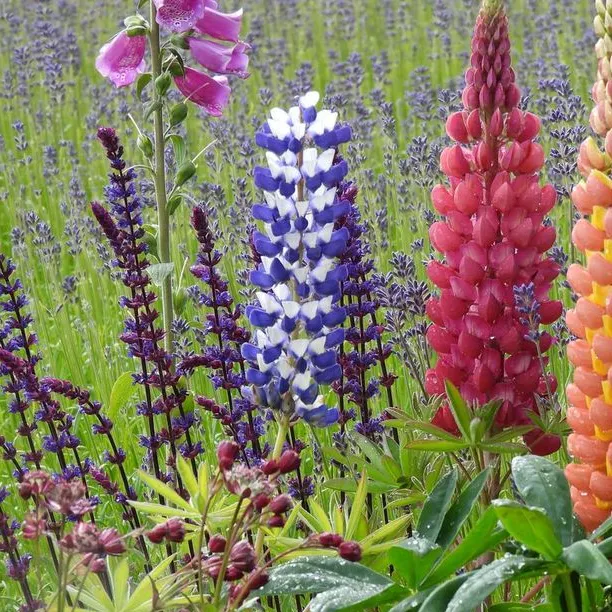
How Do You Grow Perennials Successfully in the UK?
Growing perennials successfully means understanding that these plants are long-term garden residents — choose the right plant for the right place, prepare the soil well, and most will reward you with years of reliable colour and structure. Unlike annuals, perennials die back in winter and regrow from their rootstock each spring, meaning the investment you make in year one pays dividends for a decade or more. This guide covers everything from soil preparation and planting to feeding, dividing, and choosing the best varieties for UK conditions.
Related guides
- Best Ground Cover Perennials
- Best Hardy Perennials for UK Gardens
- Low Maintenance Perennials for Borders
- Best Perennials for Shade
What Exactly Are Perennial Plants?
Perennials are plants that live for more than two years, dying back to their roots in winter and re-emerging each spring. This distinguishes them from annuals (which complete their life cycle in one season) and biennials (which take two years). Most garden perennials are herbaceous, meaning their top growth is soft and dies down in autumn, though some — like heucheras — are semi-evergreen and hold their foliage through milder winters.
The key advantage of perennials is their permanence. Once established, a well-chosen perennial clump requires minimal intervention: a tidy-up in late winter, perhaps a feed in spring, and division every three to five years to keep it vigorous. They form the backbone of mixed borders, working in combination with shrubs, bulbs, and seasonal bedding to deliver interest across the whole year.
For a deeper explanation of how perennials differ from bedding plants, see our guide: What Are Perennial Plants? Difference from Bedding Plants.
What Soil Do Perennials Need?
Most perennials thrive in reasonably fertile, free-draining soil with a pH of 6.0–7.0, though individual species vary considerably. Heavy clay and waterlogged ground are the most common causes of perennial failure in UK gardens — sitting in cold, wet soil over winter rots crowns and kills even robust varieties.
Before planting, dig the bed to a spade’s depth and incorporate organic matter — well-rotted garden compost, leaf mould, or composted bark — at roughly one bucketful per square metre. On clay, adding horticultural grit (at least a spade-load per square metre, worked in thoroughly) dramatically improves drainage. On thin, sandy soils, extra organic matter helps retain moisture and nutrients through summer droughts.
| Soil Type | Key Challenge | Improvement | Good Perennial Choices |
|---|---|---|---|
| Heavy clay | Waterlogging, compaction | Grit + compost; raised planting | Hostas, heucheras, astilbe |
| Sandy / free-draining | Drought, nutrient leaching | Generous compost; mulch annually | Agapanthus, salvia, verbena |
| Loam | Usually few — ideal | Maintain with annual mulch | Virtually all perennials |
| Chalk / alkaline | Low iron, dries fast | Compost; avoid ericaceous plants | Salvia, agapanthus, verbena |
When Is the Best Time to Plant Perennials in the UK?
The two main planting windows are autumn (September to November) and spring (March to May), and both work well for the majority of hardy perennials. Autumn planting gives roots time to establish while the soil is still warm, so plants are off to a fast start the following spring; spring planting suits less hardy types and gardeners in colder, northern regions where hard frosts persist.
Avoid planting during frozen ground, midsummer heat waves, or prolonged dry spells unless you can guarantee consistent watering. Container-grown perennials bought from nurseries (as opposed to bare-root) can technically be planted almost any time conditions allow, but autumn and spring remain the safest windows. For a full seasonal breakdown, see our detailed article: When is the Best Time for Planting Herbaceous Perennials.
How Do You Plant Perennials Step by Step?
Good planting technique makes a significant difference to how quickly a perennial establishes and how well it performs long term. The basic principle is simple: dig a hole at least twice the diameter of the rootball, plant at the same depth the plant sat in its pot, firm in well, and water thoroughly.
Here is the full process:
- Soak the rootball — Stand the pot in a bucket of water for 20–30 minutes before planting. A dry rootball can struggle to absorb water even in moist soil.
- Prepare the hole — Dig a hole wider than the pot and roughly the same depth. Loosen the base and sides with a fork to help roots penetrate surrounding soil.
- Position the plant — Place the plant so the crown (where roots meet stems) sits at soil level — not buried, not raised above it. Hostas can sit slightly proud on heavy soils to aid drainage.
- Backfill and firm — Return the soil, firming gently in layers to eliminate air pockets. Avoid compacting so hard that drainage is impeded.
- Water in thoroughly — Even if rain is forecast, water immediately after planting to settle soil around the roots.
- Mulch around (not over) the crown — Apply a 5–7 cm layer of compost or composted bark, keeping it clear of the crown to prevent rot.
Spacing matters as much as technique. Perennials planted too close will compete for light, water, and nutrients — and a border that looks sparse in year one often looks perfectly balanced by year three. As a general rule, allow plants space equivalent to two-thirds of their expected mature height.
How Should You Feed and Water Perennials?
Established perennials in improved soil need surprisingly little feeding — an annual top-dressing of well-rotted compost or a balanced granular fertiliser in early spring is usually sufficient. Over-feeding, particularly with high-nitrogen fertilisers, produces lush leafy growth at the expense of flowers and can make plants floppy and more susceptible to pest and disease attack.
Watering requirements vary by species and season. Newly planted perennials need regular watering for their first growing season until their root systems are properly established. After that, most hardy perennials cope well with UK rainfall, though during prolonged dry spells a thorough soaking once or twice a week (rather than a daily sprinkle) encourages deep rooting. Drought-tolerant types like salvias and verbenas often prefer to go slightly dry between waterings once established.
| Plant | Watering Needs | Feeding Needs | Notes |
|---|---|---|---|
| Hostas | Moderate–high | Balanced feed, spring | Excellent in damp shade |
| Agapanthus | Moderate; dry in winter | High-potash in summer | Slight root restriction improves flowering |
| Heucheras | Low–moderate | Light balanced feed, spring | Tolerates dry shade well |
| Salvias | Low once established | Minimal; avoid high nitrogen | Excellent drought tolerance |
| Verbenas | Low–moderate | Light feed, spring | Long flowering season |
When and How Should You Cut Back Perennials?
The timing of cutting back depends on your priorities: tidy garden or wildlife habitat. Most perennials are best cut back in late winter (February to early March) rather than in autumn, as the old stems provide shelter for overwintering insects and the seed heads feed birds through the coldest months. Cutting back too early also risks exposing new crowns to frost damage.
When you do cut back, remove all the previous year’s top growth down to where fresh shoots are emerging — usually 5–10 cm above soil level. Some gardeners leave evergreen or semi-evergreen perennials (like heucheras) largely untouched, simply removing any tatty outer leaves in spring. Ornamental grasses are generally cut back hard in late February or early March before new growth begins — combing them through by hand first removes dead material without cutting the new growth.
A technique called the “Chelsea chop” — cutting plants back by roughly a third in late May — is useful for tall perennials prone to flopping, such as tall sedums and heleniums. It delays flowering by two to three weeks and produces sturdier, more compact plants.
How and When Do You Divide Perennials?
Division is the most important maintenance task for perennials — it keeps plants vigorous, stops them becoming woody and unproductive at the centre, and gives you free plants to expand your borders. Most perennials benefit from division every three to five years, though some fast growers (like some ornamental grasses) may need it sooner.
The best times to divide are autumn (September–October) and early spring (March–April). Autumn suits most species, as the soil is still warm enough for roots to re-establish before winter. Spring is safer for late-emerging perennials and less hardy types. Avoid dividing during summer heat or during flower.
How to divide a clump:
- Lift the whole clump with a fork, working around the outside to avoid cutting roots unnecessarily.
- Use two garden forks inserted back-to-back to lever the clump apart, or a sharp spade for tough, fibrous crowns.
- Discard the old, woody centre — it is usually exhausted. Replant only vigorous sections from the outer edges, each containing several healthy shoots and a good root system.
- Replant divisions immediately into refreshed soil, at the correct depth, and water in well.
For a full step-by-step guide, see: How to Divide Herbaceous Perennial Plants.
Which Perennials Are Best for UK Gardens?
The best perennials for UK gardens combine reliable hardiness, long season of interest, and low maintenance once established. Below are some top performers across different categories, all available from Ashridge Trees.
| Variety | Type | Position | Key Feature |
|---|---|---|---|
| Agapanthus ‘Ever Sapphire’ | Agapanthus | Sun, well-drained | Repeat-flowering; evergreen |
| Heuchera ‘Black Beauty’ | Heuchera | Part shade to shade | Dark foliage; year-round interest |
| Heuchera ‘Lime Marmalade’ | Heuchera | Part shade | Bright lime foliage; lights up dark spots |
| Agapanthus ‘Fireworks’ | Agapanthus | Full sun | Bicolour blue-and-white flowers |
| Heuchera ‘Forever Purple’ | Heuchera | Sun or part shade | Deep purple; reliable and robust |
| Agapanthus ‘Poppin’ Purple’ | Agapanthus | Full sun | Compact; ideal for pots |
If you would prefer a curated selection, our Mixed Perennial Collections are an excellent way to start a new border with a balanced range of plants, already chosen to complement each other.
For a comprehensive guide to the hardiest and most reliable varieties for UK conditions, see: Best Hardy Perennials for UK Gardens.
Which Perennials Work Best in Sun Versus Shade?
Matching plant to position is the single most important factor in perennial success. A sun-lover planted in shade will become drawn and rarely flower; a shade-lover in full sun will scorch, wilt, and struggle through every summer. Below is a guide to the best options for each situation.
| Position | Recommended Perennials | Tips |
|---|---|---|
| Full sun, well-drained | Agapanthus, salvia, verbena | Mulch to conserve moisture; avoid overfeeding |
| Part shade (2–4 hrs sun) | Heucheras, astilbe, foxglove | Moisture-retentive soil ideal; avoid deep dry shade |
| Full shade | Hostas, epimedium, pulmonaria | Improve soil with compost; water in dry spells |
| Exposed / windy | Ornamental grasses, kniphofia, achillea | Choose shorter varieties; stake taller types |
Can You Grow Perennials in Pots?
Yes — many perennials perform extremely well in containers, giving you flexibility to move colour around the garden and to grow plants that might not suit your native soil. The key is choosing a pot large enough to accommodate the rootball with room to grow, using a good quality loam-based compost (mixed with a little grit for drainage-sensitive types), and not letting pots dry out completely in summer.
Agapanthus are perhaps the best-known perennial pot plant, and actually flower more freely when their roots are slightly restricted — a 30–40 cm pot suits most varieties well. Try Agapanthus ‘Poppin’ Purple’ or Agapanthus ‘Brilliant Blue’ for compact, free-flowering pot specimens. Heuchera ‘Cherry Cola’ and Heuchera ‘Crème Brûlée’ are also excellent in containers, offering year-round foliage interest even on a shaded doorstep.
In winter, raise pots off the ground on feet to aid drainage and consider moving less hardy varieties to a frost-free but cool greenhouse or garage if temperatures are forecast to drop below −5°C for extended periods.
What Are the Most Common Problems with Perennials and How Do You Fix Them?
Most perennial problems stem from poor siting, drainage issues, or pest pressure — and the majority are easily managed once identified. Here are the issues UK gardeners encounter most frequently:
- Crown rot: Almost always caused by waterlogged soil or planting too deep. Improve drainage and replant at the correct level. Choose species suited to your soil type.
- Slugs and snails: The main enemy of hostas and other soft-leaved perennials. Lay copper barriers around pots, use wildlife-safe pellets, or go out at night after rain with a torch. Encouraging hedgehogs and birds into the garden helps too.
- Vine weevil: Grubs eat roots, causing plants to suddenly wilt and die. Check compost for C-shaped cream grubs when re-potting. Biological nematode controls applied in late summer are effective.
- Flopping: Caused by too much shade, over-feeding, or not cutting back in time. Use the Chelsea chop technique, stake tall varieties early with grow-through supports, and reduce nitrogen feeding.
- Failure to flower: Common in agapanthus if plants are moved too frequently, planted in heavy shade, or over-potted. A potassium-rich feed in spring and early summer helps.
- Heuchera vine weevil: Heucheras are particularly susceptible. Lift and inspect the crown in autumn; replant in fresh compost after removing any grubs.
Which Perennials Make Good Ground Cover?
Perennials that spread to form low, weed-suppressing mats are invaluable for reducing maintenance under trees and shrubs and on awkward slopes. The best ground cover perennials establish quickly, tolerate competition from tree roots, and need little annual attention. Heucheras, hostas, and ornamental grasses all make excellent ground-covering clumps; for spreading species that link together across the ground, options include ajuga, epimedium, and geranium (cranesbill).
For detailed variety recommendations tailored specifically to ground cover purposes, see our full guide: Best Ground Cover Perennials.
Frequently Asked Questions
How long do perennials live?
Most hardy perennials live for ten years or more when well-managed. Regular division every three to five years keeps them vigorous. Some, like peonies, can persist for generations if left undisturbed in a suitable site.
Do perennials come back every year?
Yes — that is the defining characteristic of a perennial. Herbaceous types die back to ground level in autumn and regrow from the root system each spring, provided they are hardy and have survived winter in good condition.
How quickly do perennials establish?
As a useful rule, think “sleep, creep, leap”: in year one plants consolidate their roots, year two they begin to spread, and by year three most are performing at full potential. Patience in the first season pays off handsomely afterwards.
Can perennials be grown from seed?
Many can, though it is slower than buying plants. Some perennials, particularly named cultivars of heuchera and agapanthus, do not come true from seed — purchasing named varieties as plants is the only reliable way to get the exact colour and form you want.
Are perennials better than annuals?
Neither is strictly better — they serve different purposes. Perennials provide reliable structure and return year after year with minimal cost; annuals give instant, season-long colour. Most experienced gardeners use a combination of both.
Which perennials are best for pollinators?
Salvias, verbenas, agapanthus, and ornamental grasses (for seed-eating birds) are all excellent choices for supporting wildlife through the growing season into autumn.
Do perennials need staking?
Taller varieties — over 60–70 cm — often benefit from early staking to prevent wind damage and flopping. Place grow-through supports in spring before plants reach 30 cm, so they grow up through the support and hide it completely by summer.
How do I stop perennials spreading too far?
Divide clumps regularly to control size, remove self-sown seedlings promptly, and choose naturally compact or clump-forming varieties for smaller gardens. Some perennials, such as certain ornamental grasses, spread more than others — check mature spread before planting.
Can I grow agapanthus outside in the UK year-round?
Deciduous agapanthus are generally hardy to around −10°C; evergreen types to −5°C or so. In mild areas of the UK, most modern deciduous varieties, like Agapanthus ‘Lapis Lazuli’, overwinter outdoors with a dry mulch over the crown. In colder regions, pot culture with winter protection is safer.
How do I choose the right heuchera?
Consider your light conditions first: most heucheras tolerate part shade well. Then choose by foliage colour — from lime green (‘Lime Marmalade’) through caramel tones (‘Marmalade’) to deep near-black (‘Black Beauty’). All provide year-round interest.
Should I deadhead perennials?
Deadheading prolongs flowering in many perennials by preventing seed set. However, leaving seed heads on plants like ornamental grasses and agapanthus in autumn provides wildlife food and winter structure — a good reason not to deadhead everything.
What is the easiest perennial to grow for beginners?
Heucheras are hard to beat for beginners: tolerant of most soils and light conditions, semi-evergreen, virtually pest-free (aside from vine weevil), and available in a huge range of colours. See the full Heuchera collection for options.
Related Products
- Shop All Perennial Plants
- Mixed Perennial Collections
- Agapanthus (African Lily)
- Agapanthus ‘Ever Sapphire’
- Agapanthus ‘Fireworks’
- Mixed Agapanthus — Three Varieties
- Agapanthus ‘Ever White’
- Agapanthus ‘Black Jack’
- Heucheras (Coral Bells)
- Heuchera ‘Cherry Truffles’
- Heuchera ‘Crème Brûlée’
- Hostas
- Salvia (Ornamental Sage)
- Verbena (Vervain)
- Ornamental Grasses

Leave a Reply