
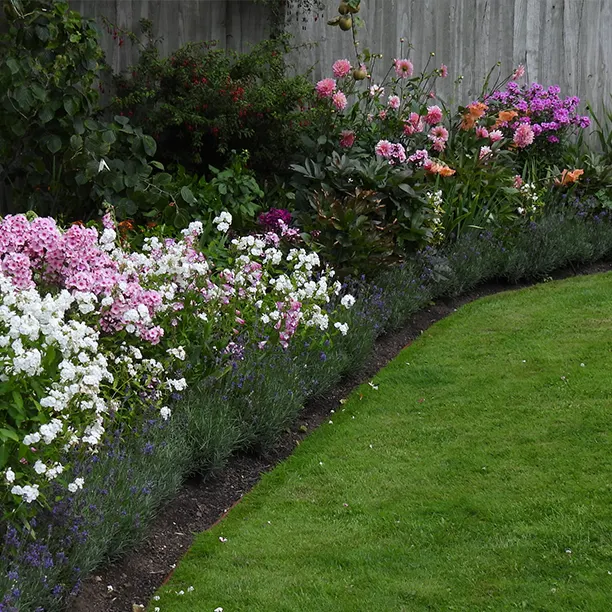
What Should You Plant with Dahlias for the Best Garden Display?
Dahlias are bold, generous bloomers that flower from midsummer right through to the first frosts, making them one of the most valuable plants in a British garden. Choosing the right companions maximises colour continuity, improves pest management, and creates the kind of layered planting that looks considered rather than accidental. The best dahlia companions share similar growing conditions — full sun, fertile well-drained soil — while offering contrasting textures, heights, or flowering times that set the dahlias off to their greatest advantage.
Related guides
What Design Principles Should Guide Dahlia Companion Planting?
Think in terms of foliage contrast, colour harmony, and structural layering before you choose specific plants. Dahlias are mid-to-back-of-border plants that need something lower at their feet, something airy alongside them, and something with persistent foliage or seedheads behind them for visual depth.
A few principles that consistently work:
- Contrast texture. Dahlias have bold, solid blooms. Pair them with feathery, wispy, or fine-leaved plants to avoid the border looking heavy.
- Repeat a colour thread. Pick one or two colours from the dahlia flower and echo them in neighbouring plants rather than trying to match precisely.
- Bridge the season. Dahlias don’t really get going until late July. Companions that peak in June — salvias, penstemons, alliums going to seed — give the border something to look at while tubers are establishing.
- Consider foliage dahlias. Varieties with dark or bronze foliage, such as the famous Bishop of Llandaff series, bring their own foliage interest and are particularly effective next to silver or green-leaved companions.
| Design Goal | What to Look For in a Companion | Example Plant Types |
|---|---|---|
| Textural contrast | Fine, wispy or grass-like foliage | Grasses, fennel, cosmos, verbena bonariensis |
| Colour harmony | Flowers that echo dahlia tones | Salvias, heleniums, rudbeckias, penstemons |
| Season bridging | Peak in June–July, attractive in late summer | Alliums, roses, hardy geraniums, echinaceas |
| Ground cover at dahlia feet | Low, spreading, not invasive | Lobelia, alyssum, low salvias, creeping zinnia |
| Structural backdrop | Height, upright habit, persistent interest | Grasses, tithonia, tall verbascum, shrub roses |
Which Annual Flowers Work Best Alongside Dahlias?
Annuals are the ideal dahlia companions because they are quick to establish, long-flowering, and inexpensive to swap out if a colour scheme isn’t working. They also fill gaps while dahlias are still growing away from their tubers in early summer.
Cosmos bipinnatus is perhaps the single best annual companion for dahlias. Its feathery foliage and open, saucer-shaped flowers create exactly the airy contrast that dahlias need, and it flowers prolifically from June onwards. Whites and pale pinks are superb alongside deep red or burgundy dahlias such as Baccara or Brown Sugar.
Verbena bonariensis is tall, airy, and almost transparent — it can weave between dahlias without competing with them. Its tiny purple flowers harmonise with virtually every dahlia colour and it self-seeds reliably in most UK gardens.
Zinnia elegans shares dahlias’ love of heat and good drainage. Shorter varieties work at the front of a dahlia border; taller cutting types sit alongside mid-height dahlias such as Beatrice or Boom Boom White.
Tithonia rotundifolia (Mexican sunflower) grows to 1.2–1.5 m and produces vivid tangerine-orange flowers that are stunning behind cactus dahlias in yellows and oranges, or dramatically contrasted against deep purple varieties.
Nicotiana sylvestris — the tall tobacco plant — offers evening scent and large, architectural leaves that make a pale, luminous backdrop for richly coloured dahlias.
| Annual Companion | Height | Best Dahlia Colour Pairings | Key Benefit |
|---|---|---|---|
| Cosmos bipinnatus | 60–120 cm | Deep reds, purples, burgundy | Fine texture, long season |
| Verbena bonariensis | 100–150 cm | All colours | Airy, self-seeds, pollinators |
| Zinnia elegans | 30–90 cm | Whites, oranges, yellows | Heat-loving, long-flowering |
| Tithonia rotundifolia | 100–150 cm | Oranges, yellows, deep purples | Bold architectural backdrop |
| Nicotiana sylvestris | 120–150 cm | Rich reds, burnt oranges | Scent, architectural leaves |
Which Perennials Make the Best Long-Term Dahlia Partners?
Perennials give permanence and structure to a dahlia planting scheme, meaning you are not starting from scratch every spring. The trick is to choose perennials whose peak season either precedes or overlaps with dahlias rather than competing in the same August–October window.
Salvia nemorosa and its cultivars flower in June–July, providing rich purple spires before dahlias have really hit their stride. They often produce a second flush in September just as dahlias are at their most spectacular. The purple tones harmonise especially well with orange and yellow ball dahlias.
Helenium (sneezeweed) flowers in late summer alongside dahlias in warm golds, burnt oranges and russets. It is a particularly reliable partner for American Sun or golden-toned decorative types. Both plants enjoy the same sunny, moisture-retentive but well-drained conditions.
Rudbeckia offers rich yellow and brown daisy flowers from late July through to October and bridges the gap between dahlias with great confidence. The black central cone adds textural interest that contrasts beautifully with the full, geometric heads of dinnerplate dahlias.
Echinacea purpurea flowers slightly earlier but its architectural seedheads persist into autumn, providing excellent structure alongside late-season dahlias. Bold pink echinaceas pair particularly well with the purple-toned Bishop of Auckland or Bishop of Leicester.
Hardy geraniums (cranesbills) serve as excellent ground cover under taller dahlias, suppressing weeds and providing a low carpet of colour in the first half of summer. Many have excellent autumn leaf colour as a bonus.
Penstemon is a superb mid-border perennial that flowers from June to October in the right conditions — a similar season to dahlias and available in every colour from white to near-black. It associates particularly well with waterlily dahlias, where the tubular penstemon flowers contrast elegantly with the flat, open dahlia blooms.
Do Ornamental Grasses Work Well with Dahlias?
Ornamental grasses are among the most effective dahlia companions, providing exactly the light, feathery, movement-filled contrast that solid dahlia blooms demand. They also look superb in autumn when most perennials are declining.
Miscanthus sinensis cultivars grow into substantial clumps of upright, arching foliage topped with silky plumes from late summer — perfectly timed to coincide with the dahlia peak season. Their warm buff tones are especially effective behind deep red or burgundy dahlias such as Baccara.
Stipa gigantea (golden oats) is evergreen, airy and architectural. Its tall, shimmering golden flowerheads catch the light magnificently and provide a see-through screen alongside medium-height dahlias.
Panicum virgatum (switch grass) turns amber and red in autumn and its fine, upright habit works beautifully alongside Arbatax or other richly coloured varieties.
Pennisetum (fountain grass) forms low, fountain-like clumps and is excellent in front of mid-height dahlias. Its bottlebrush seedheads from late summer add charm without overwhelming smaller companions.
How Do You Build a Colour-Themed Dahlia Border?
Working within a defined colour palette — even a loosely defined one — tends to produce more satisfying results than mixing every available dahlia colour indiscriminately. Here are four reliable colour combinations with specific dahlia and companion suggestions.
| Colour Theme | Dahlia Varieties | Companion Plants |
|---|---|---|
| Hot tropical — reds, oranges, golds | Bishop of Llandaff, American Sun, Break Out | Tithonia, Helenium, red Crocosmia, Rudbeckia, Miscanthus |
| Jewel tones — deep purples, burgundy, magenta | Ambition, Baccara, Bishop of York | Salvia nemorosa, Verbena bonariensis, dark-leaved Cannas, Cosmos ‘Dazzler’ |
| Soft romantic — blush, cream, pale yellow | Boom Boom White, Beatrice, Ariston | White Cosmos, pale Penstemon, Echinacea ‘White Swan’, silver Stachys |
| Warm autumnal — bronze, copper, burnt orange | Brown Sugar, Bergers Record, Bora Bora | Panicum virgatum, Helenium ‘Moerheim Beauty’, Kniphofia, Physalis |
Which Companions Help Attract Pollinators to a Dahlia Border?
Open-centred, single or semi-double dahlias are the most pollinator-friendly forms, while fully double varieties are harder for bees and hoverflies to access. Mixing pollinator-friendly companions throughout a dahlia border helps ensure insects have food sources even where densely petalled varieties dominate.
The dark-foliaged Bishop series — including Bishop of Llandaff, Bishop of Auckland, and Bishop of Leicester — are all single or semi-double and among the best dahlias for pollinators. Planted alongside verbena bonariensis, echinacea, and single salvias, they create a genuinely wildlife-rich late-summer border.
Marigolds (Tagetes patula) deserve special mention: they are excellent companions not only for pollinators but also because their root secretions deter soil nematodes and their scent is thought to confuse aphids. Planted densely at the feet of dahlias, they provide ground cover, colour, and a degree of pest protection simultaneously.
Can Dahlias Be Planted with Roses?
Roses and dahlias are excellent bedfellows provided the roses are not so vigorous that they shade out the dahlia tubers. The combination works particularly well because many roses have a mid-summer hiatus — the so-called ‘rose gap’ in late July — just as dahlias are beginning their main flush of growth. Together they ensure a border that never looks empty between June and October.
Shrub roses and repeat-flowering roses in the apricot, blush, crimson, or yellow range associate most naturally with dahlias. A pale apricot rose behind Brown Sugar or Bora Bora is one of the most beautiful combinations in a late-summer border. Avoid very large, spreading roses that will create too much shade.
Ensure the soil between roses and dahlias is well improved with organic matter before planting, as both are hungry feeders and will compete if soil nutrition is poor. A generous mulch of well-rotted compost benefits both.
Which Foliage Plants Complement Dahlias Best?
Foliage plants provide the calm backdrop that prevents a dahlia border looking too busy. They earn their keep from late spring onwards, long before dahlias are in bloom.
Cannas are arguably the most dramatic dahlia companion available. Their large, paddle-shaped leaves — available in green, bronze, red, or striped — create a bold tropical backdrop perfectly in keeping with the dahlia’s own generous character. Dark bronze canna foliage is particularly striking behind orange or red dahlias.
Ricinus communis (castor oil plant) grows very quickly to 1.5–2 m and its enormous lobed leaves in dark bronze-red are spectacular behind large dinnerplate dahlias. Note that all parts are toxic; grow with care in gardens used by children or animals.
Eupatorium maculatum ‘Atropurpureum’ (Joe Pye weed) provides tall, dark-stemmed structure and dusty mauve flowers in late summer that work remarkably well behind deep-toned dahlias.
Stachys byzantina (lamb’s ears) creates a soft silver carpet at the front of any dahlia planting and is especially useful with blush, pale pink, or white varieties such as Boom Boom White.
What Should You Avoid Planting Alongside Dahlias?
Certain plants either compete too aggressively, create problematic conditions, or simply clash in ways that are difficult to correct mid-season. Knowing what to avoid saves wasted effort.
| Plant to Avoid | Reason |
|---|---|
| Large spreading shrubs | Shade the tubers and compete for water and nutrients |
| Invasive ground cover (e.g. Lamium in quantity) | Can overwhelm emerging dahlia shoots in spring |
| Deep-rooted tap-rooted perennials | Difficult to remove without disturbing dahlia tubers |
| Heavy moisture-lovers (e.g. Astilbe, Ligularia) | Require consistently moist soil; dahlias prefer well-drained conditions |
| Very tall, dense growers (e.g. large Miscanthus next to small dahlias) | Can swamp lower dahlias and reduce airflow, increasing disease risk |
What Can You Plant with Dahlias in Containers?
Container dahlias benefit enormously from companions that trail, tumble, or provide a low skirt of colour around the base of the pot, hiding the often rather bare stems of the dahlia itself. Choose compact dahlias — pom pom or ball varieties are excellent — and pair them with one or two of the following:
- Trailing Lobelia — provides a waterfall of blue, purple, or white that contrasts sharply with orange, red, or yellow dahlias.
- Bidens ferulifolia — fine yellow daisy flowers on spreading stems; associates beautifully with warm-toned dahlias.
- Calibrachoa — small, petunia-like flowers available in an enormous colour range; long-flowering and compact.
- Sweet potato vine (Ipomoea batatas) — purple or chartreuse foliage trails dramatically over the pot rim and acts as living mulch on the soil surface.
- Scaevola aemula — fan-shaped flowers in blues and mauves, very heat-tolerant, excellent alongside hot-coloured dahlias.
For more detail on growing dahlias in containers, see our guide to Growing Dahlias in Pots.
Frequently Asked Questions
What is the best companion plant for dahlias overall?
Cosmos bipinnatus is widely regarded as the best all-round dahlia companion. Its feathery texture contrasts beautifully with solid dahlia blooms, it flowers all summer, and is available in colours that complement virtually every dahlia variety.
Do dahlias grow well with marigolds?
Yes. French marigolds (Tagetes patula) are excellent companions: they deter soil pests, attract pollinators, provide ground cover at dahlia feet, and flower reliably all summer in warm, complementary colours.
Can you mix dahlias with roses?
Absolutely. Roses and dahlias complement each other beautifully — roses fill the early summer gap and dahlias peak as roses rest. Both need fertile, well-drained soil, so their requirements align well.
What grows well in front of tall dahlias?
Low salvias, hardy geraniums, French marigolds, Stachys byzantina (lamb’s ears), trailing lobelia, and compact penstemons all work well at the feet of taller decorative or dinnerplate dahlias.
Are there companion plants that deter slugs near dahlias?
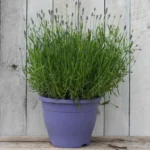
No plant reliably repels slugs, but growing aromatic herbs such as rosemary or lavender nearby may offer minor deterrence. Physical controls and copper tape around pots remain the most effective measures for protecting emerging dahlia shoots.
Do dahlias grow well with ornamental grasses?
Yes — ornamental grasses are ideal. Their fine, airy foliage contrasts perfectly with bold dahlia blooms, and many grasses peak in late summer and autumn, exactly when dahlias are at their finest.
Which dahlias are best for a pollinator-friendly border?
Single and semi-double varieties give the best access for bees. The Bishop series — including Bishop of Llandaff and Bishop of Auckland — are excellent choices with the added bonus of striking dark foliage.
Can I plant dahlias with sunflowers?
Yes, though be cautious about scale. Very tall sunflowers can shade out dahlias. Medium-height, branching sunflower varieties work better, flowering slightly ahead of dahlias and complementing warm-toned golden dahlias.
What herbs can I plant near dahlias?
Fennel, in particular, is a beautiful companion — its airy bronze or green foliage provides excellent textural contrast, and its flat-topped flowerheads attract beneficial insects. Avoid very spreading herbs that could overwhelm tubers.
Do I need to consider soil when choosing dahlia companions?
Yes. Dahlias need fertile, well-drained soil in full sun. Choose companions with similar requirements. Avoid moisture-loving plants like Astilbe or Ligularia, which prefer consistently moist conditions and will struggle in the same bed.
Which dahlias work best in a hot tropical-themed border?
Bishop of Llandaff is the classic choice: red flowers, dark foliage. Combine with American Sun and Break Out alongside cannas, tithonia, and red crocosmia for full tropical effect.
How many different companion plants should I use with dahlias?
Limit yourself to three or four companion species in any one planting area. Too many different plants creates visual noise. Repetition — the same companion appearing at intervals along a border — creates cohesion and makes dahlias the clear focal point.
Related Products
- Shop All Dahlias
- Decorative & Dinnerplate Dahlias
- Cactus Dahlias
- Ball Dahlias
- Pom Pom Dahlias
- Waterlily Dahlias
- Bishop of Llandaff Dahlia Tubers
- Baccara Dahlia Tubers
- Brown Sugar Dahlia Tubers
- Boom Boom White Dahlia Tubers
- American Sun Dahlia Tubers
Leave a Reply