Buying eating apple trees
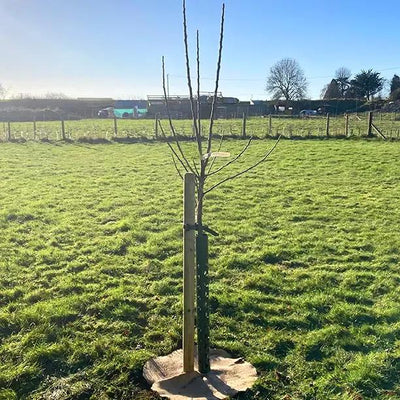
Plant bareroot apple trees from November to March. Bareroot trees are lifted from the nursery field while dormant and sent with no soil on their roots, which makes them the cheapest way to buy a tree and the quickest to settle in. Some varieties also come in pots, for planting at any time of year as long as you can water them through their first summer.
Once your order is lifted and packed, it travels by next-working-day courier. All bareroot trees are covered by our 1-year guarantee.
Choose by season
Picking dates are for the south of England; allow a week or two later further north.
- Early (pick late August to early September; keeps a week or two): Discovery, Beauty of Bath, Katy
- Mid season (pick in September; keeps until late October): James Grieve, Worcester Pearmain, Lord Lambourne, Red Windsor, Scrumptious, Egremont Russet
- Late (pick late September to October; keeps until December to February): Cox's Orange Pippin, Sunset, Fiesta, Red Falstaff, Spartan, Laxton's Superb
- Keepers (pick in October; keeps until January to March): Ashmead's Kernel, Christmas Pippin, Winter Gem
Early apples are at their best within days of picking and go soft quickly. If you want apples in the fruit bowl in January, you need a late keeper, not a bigger tree.
Which eating apple should you grow?
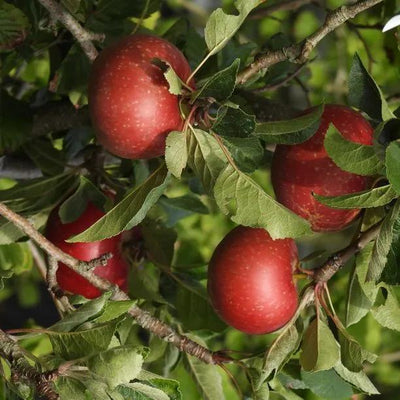
For the West, Red Windsor. It crops young, stays compact, and copes with the wetter western climate better than most dessert apples.
For the East, Red Falstaff. Self-fertile, heavy cropping, and its blossom shrugs off late frosts, which matters in the drier, colder East.
For one tree that does everything, James Grieve. Raised in Edinburgh in the 1890s, it is juicy, reliable on difficult sites, and good for eating, cooking and juicing. It bruises if you look at it, which is why you will never see one in a shop.
For Cox flavour without Cox trouble, Sunset or Fiesta. Cox's Orange Pippin is still the benchmark for aroma, but it wants a warm, sheltered, well-drained site and suffers from scab, canker and mildew in wet gardens. Sunset and Fiesta both have Cox as a parent and are far easier to grow.
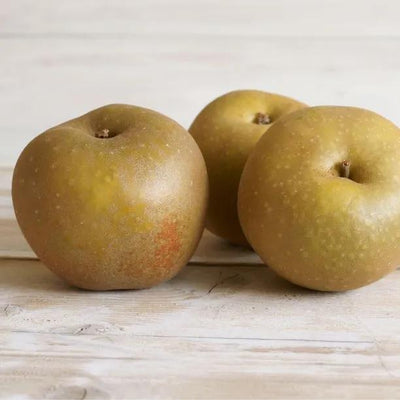
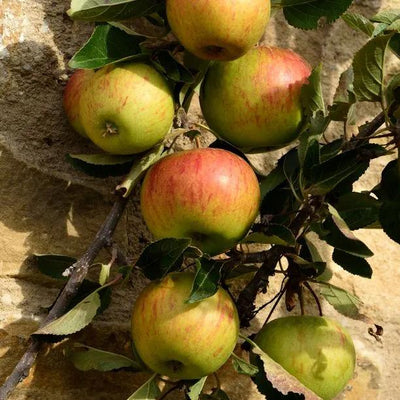
For russets, Norfolk Royal Russet. Egremont Russet is the one people know; Norfolk Royal Russet is the one we would plant. Ashmead's Kernel, an eighteenth-century Gloucester apple, has the finest flavour of the lot but crops lightly, so grow it alongside something more generous.
For children, Pitmaston Pineapple. Small, honeyed fruit with a hint of pineapple, sized for a lunch box.
The supermarket names (Gala, Golden Delicious, Braeburn, Granny Smith) all taste better home-grown. Braeburn and Granny Smith need a long, warm season to ripen, so only plant them in a sunny, sheltered spot in the South.
Pollination
Most eating apples need a different apple variety flowering at the same time nearby, and bees to carry the pollen. In towns and villages a neighbour's tree or a crab apple usually does the job, so a single tree often crops well.
If yours will be the only apple for some distance, plant two varieties from the same or a neighbouring pollination group, or choose a self-fertile variety such as Red Falstaff or Scrumptious. Triploid varieties need two partners and do not pollinate others; each product page says which group a variety is in. Browse by group: A, B, C, D, E.
Growing eating apples
Sweetness comes from sun, so give dessert apples the sunniest spot you have; cooking and cider apples are more forgiving of shade. In a frost pocket, choose a late-flowering variety, and use the Frost Pockets filter above.
Thin the fruitlets after the June drop to one or two per cluster, about 10–15cm apart. A tree left to carry every apple gives you lots of small ones, and often a poor crop the following year.
If you want to train cordons or espaliers, buy a maiden (a one-year-old, unbranched tree) of a spur-bearing variety. Worcester Pearmain fruits mainly at the branch tips, so it is better grown as a bush or half-standard.
Questions
Which eating apple is easiest for a beginner? Red Falstaff or Red Windsor: both crop reliably, resist disease better than most, and forgive mistakes.
How long until I get apples? On our MM106 rootstock, a bush or half-standard usually crops in its second or third summer, and a maiden a year or so later. Remove the first year's fruitlets so the tree puts its energy into roots.
Can I grow an eating apple in a pot? Yes, in a container of 50–60 litres or more, but MM106 is not a dwarfing rootstock, so you will water daily in summer and repot every few years. A cordon trained from a maiden against a fence is usually the better answer for a small space.
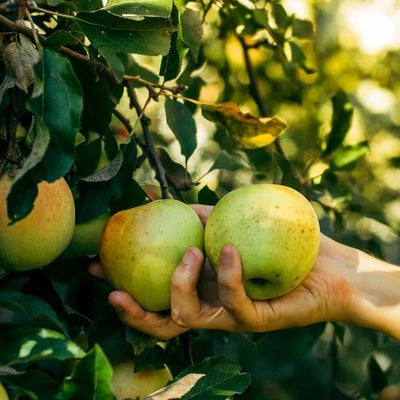
When is an apple ready to pick? When it comes away with a gentle lift and twist. If you have to pull, it isn't ready.
See also: Cooking Apple Trees · Cider Apple Trees · All Apple Trees


 Sign In
 Saved items




 5 Star Service Rating





 Secure, One-Tap Checkout
 5 Star Feefo Rating
 Hand Picked, Delivered to Your Door!
 Platinum Trusted Service Award 2026
 Mail Order Plant Experts - Est. 1949
 1 Year Bulb Guarantee